Myworldoffootball
Jurriën Timber injury news hits Arsenal UCL plans
Jurriën Timber injury news deepens Arsenal worries as Arteta rules him and Ødegaard out vs Bayer Leverkusen, with the League Cup final also in doubt.
Jurriën Timber injury news deepens Arsenal worries as Arteta rules him and Ødegaard out vs Bayer Leverkusen, with the League Cup final also in doubt.
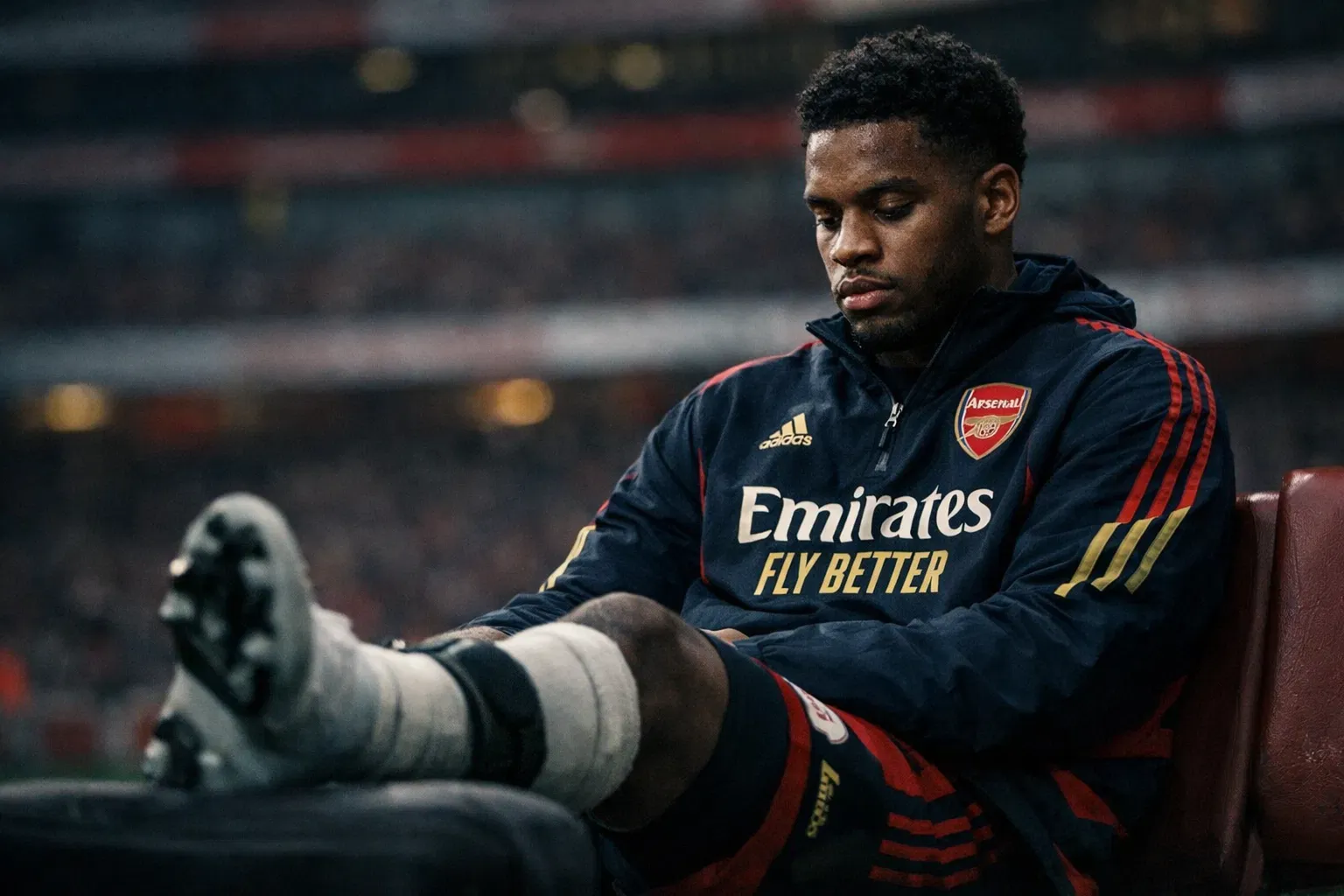
Arsenal’s 2-0 win over Everton should have been filed as a professional, stress-free afternoon, but it ended with the kind of silence that spreads faster than any chant. The Jurriën Timber injury news landed like a cold splash, because it arrived at the exact moment the calendar turns unforgiving. Mikel Arteta quickly confirmed the defender will miss the Arsenal Champions League trip to Bayer Leverkusen, and captain Martin Ødegaard is out too. Suddenly, what looked like momentum now feels like a puzzle.
Everton tested Arsenal’s patience more than their structure, yet the match still produced the detail nobody wanted: Timber leaving with clear discomfort. The Jurriën Timber injury news mattered instantly because his value is not just defensive, but connective, the kind of player who turns transitions into controlled waves. Arsenal closed out the 2-0, but the Emirates mood shifted from celebration to calculation. In a season of fine margins, losing a multifunctional defender changes everything.
Arteta’s post-match tone carried that familiar blend of calm and concern, and it only amplified the Jurriën Timber injury news. He did not dramatize, but he didn’t sell false certainty either, describing the situation as one that needs monitoring. Arsenal fans have learned to read between those lines, especially when a player’s movement looks compromised. With the Bayer Leverkusen tie looming and cup commitments stacking up, the timing feels particularly cruel.
The incident itself didn’t need slow-motion theatre to look serious, because Timber’s body language did the talking. He tried to play through it, then stopped trusting the stride, and that’s usually the moment medical staff win the argument. Jurriën Timber injury news often starts with a grimace and ends with a scan, and Arsenal now live in that anxious space in between. Even a “minor” issue can become major when matches arrive every three days.
At the Mikel Arteta press conference, the manager confirmed Timber will miss Leverkusen, which instantly made the Jurriën Timber injury news more than speculation. He also suggested the return date is uncertain, a phrase that tends to stretch longer than supporters hope. Arteta is careful with language, but he was clear on availability, and that’s what matters most. Arsenal’s staff will manage the load, yet the schedule doesn’t offer much mercy.
As if the Jurriën Timber injury news wasn’t enough, Arteta paired it with a blunt Ødegaard injury update: the captain will also miss the Champions League meeting. Ødegaard’s absence is not simply about creativity, but about tempo control and emotional leadership when an away stadium tries to tilt the pitch. Arsenal can replace positions, but replacing influence is harder. The double blow changes how Arsenal must build attacks and how they must defend momentum swings.
The Mikel Arteta press conference also revealed a manager trying to keep the group’s focus from splintering. He stressed energy, clarity, and the need for supporters to push, even from afar, which tells you he expects a demanding night in Germany. The Jurriën Timber injury news sits inside that message as a test of resilience rather than an excuse. Arsenal’s best sides under Arteta have responded to setbacks with structure, not panic.
Without Ødegaard, Arsenal’s passing triangles can still function, but they often lose the final layer of deception. The Ødegaard injury update forces others to take responsibility for receiving under pressure, turning, and playing forward early, especially when Leverkusen press aggressively. It also affects Arsenal’s counter-press, where Ødegaard sets the tone with immediate intensity after turnovers. Combined with Jurriën Timber injury news, the team’s “glue” players are suddenly missing in tandem.
Arteta’s insistence on energy is tactical as much as emotional, because Bayer Leverkusen thrive when games become frantic. Arsenal need legs to cover wide spaces, composure to resist the first press, and togetherness when the stadium roars after a turnover. The Jurriën Timber injury news complicates that, as Timber’s mobility and duel-winning help calm dangerous transitions. Arteta knows the tie will hinge on who controls the temperature, not just the ball.
The previous 1-1 draw between Arsenal and Bayer Leverkusen offered a clear lesson: Leverkusen are too well-coached to be beaten by reputation alone. They press in coordinated waves, they rotate midfield positions to pull markers out of shape, and they punish sloppy clearances with quick second balls. The Arsenal vs Bayer Leverkusen preview now gets rewritten by the Jurriën Timber injury news, because Arsenal lose a defender who thrives against chaotic transitions. Familiar patterns will reappear, but personnel changes everything.
Arsenal’s approach in that earlier meeting mixed control with moments of vulnerability, and Leverkusen will believe they can force more of those moments at home. The Arsenal Champions League context raises the stakes, because one poor spell can decide a group or a knockout tie. Jurriën Timber injury news also impacts Arsenal’s build-up options, especially if Arteta wanted Timber stepping into midfield to overload zones. Without him, Arsenal may need a simpler, more secure structure.
Leverkusen’s best work comes when they bait passes into the half-spaces, then collapse with speed and numbers. Arsenal were occasionally lured into playing one touch too many, and that’s where the next match will be decided. The Arsenal vs Bayer Leverkusen preview should focus on Arsenal’s first two passes after regaining possession, because that is where Leverkusen hunt. With Jurriën Timber injury news removing a calm outlet, Arsenal must find new pressure-release valves.
Timber’s absence alters duels on the flank and in the channel, where Leverkusen love to isolate defenders with angled runs. The Timber absence impact also shows up on the ball, because he can carry through pressure and turn defence into attack without needing a perfect passing lane. Meanwhile, the Ødegaard injury update shifts Arsenal’s right-side combinations and reduces their ability to pin opponents with sustained possession. In the Arsenal Champions League, those small shifts become decisive margins.
Fans are not wrong to worry about depth, because Arsenal’s system is built on specialists who can also play multiple roles. The Jurriën Timber injury news reignites the debate: is the squad deep, or just flexible until two key pieces fall at once? Timber was meant to be the safety net and the tactical weapon, a defender who lets Arteta change shapes mid-game. When that tool disappears, every other option becomes more exposed to scrutiny.
Cristhian Mosquera’s name has hovered around conversations as supporters scan the squad and the wider market for solutions. Whether he is viewed as a future target or a profile Arsenal admire, the point is the same: Arsenal want defenders who can defend wide and build centrally. The Jurriën Timber injury news sharpens that desire, because it highlights how rare that combination is. In the short term, Arsenal must solve it internally, with line-up choices that balance risk.
The Timber absence impact is felt most in that hybrid role where a full-back becomes a midfielder, or a centre-back becomes a wide defender in possession. Arteta can ask another player to mimic it, but mimicry is not mastery, and small delays invite presses. Jurriën Timber injury news therefore forces a decision: do Arsenal keep the same idea with a different player, or adapt the idea to fit the available skill set? The answer will shape the entire away performance.
Supporters see a season where Arsenal are asked to compete on multiple fronts, and they fear one injury becomes two, then three. The Jurriën Timber injury news is especially triggering because it feels like losing a solution, not just a starter. Yet Arsenal do have quality, and Arteta has coached patterns that can carry different personnel, even if the ceiling drops slightly. The challenge is psychological as much as tactical: belief must survive the disruption.
The calendar doesn’t pause for sympathy, and the League Cup final against Manchester City looms as a second wave of stress after the Jurriën Timber injury news. Arteta admitted Timber’s return is uncertain, which means Arsenal must prepare for the possibility of facing City without a defender built for high-level duels and recovery runs. City’s attacking rotations target hesitation, and Timber’s profile is exactly what you want in a game of constant re-positioning. Arsenal must plan as if he won’t make it, then adjust if he does.
Finals are often decided by who can survive the first 20 minutes, and that’s where Timber’s absence could bite. The Timber absence impact against City is not only defensive, but also about escaping pressure, because City suffocate opponents with counter-pressing and positional traps. Jurriën Timber injury news therefore becomes part of a wider narrative: Arsenal’s ability to absorb setbacks without losing their identity. If Arsenal can keep their structure and avoid cheap turnovers, they still have a path.
City love to create two-versus-one situations on the outside, then cut the ball back into the box when defenders collapse. Arsenal need defenders comfortable defending forward and backward, sprinting to the line and stepping into midfield, sometimes in the same phase. The Timber absence impact is obvious here, because Timber’s agility helps solve those overloads without constant help. Jurriën Timber injury news means Arsenal may have to defend with more conservative spacing, which can concede territory and invite waves.
Arteta must decide whether to pick the most stable back line, even if it limits build-up ambition, or to be brave and keep the aggressive in-possession structure. Jurriën Timber injury news removes one of the few players who allows bravery without recklessness. The Mikel Arteta press conference messaging suggests he wants intensity and conviction, but finals punish naive risks. Arsenal’s best route might be controlled aggression: press in moments, sit in moments, and avoid being stretched into a track meet.
The upcoming international friendlies against Norway and Ecuador add another layer of complication, because they pull players into different environments at the exact time Arsenal want calm routines. The Jurriën Timber injury news makes load management a headline, not a footnote, because every minute played by a replacement increases the risk of another issue. Arteta will want his staff coordinating with national teams, even if that coordination is never perfect. Arsenal’s season could hinge on who returns fresh, and who returns fatigued.
These windows also influence the dressing-room mood, because players feel the pressure of club responsibility while juggling national pride. The Ødegaard injury update is relevant here too, as Norway’s captaincy and leadership demands can weigh heavily even when he is not fit. Jurriën Timber injury news similarly creates a recovery race, where the goal is not just to return, but to return at full confidence in the body. Arsenal’s medical team will prioritize long-term health, even if supporters beg for short-term heroics.
Friendlies can look harmless on paper, but they often become intense because players are auditioning for roles, places, and trust. That intensity can turn a “light” match into a heavy load, especially for those covering extra minutes due to injuries at club level. Jurriën Timber injury news increases the minutes burden on others, and the international break can compound it. Arsenal’s coaches will hope for sensible substitutions, but they can’t control everything once players leave London.
The most frustrating part of Jurriën Timber injury news is that timelines can change after one scan, one training session, or one awkward movement. Arsenal will assess swelling, strength, and functional movement before even considering match sharpness, because returning too early risks a longer absence. Arteta’s guarded language fits that reality, and supporters should read it as caution rather than secrecy. With the Arsenal Champions League and domestic finals in view, the smartest decision may be the hardest: patience.
Arsenal’s season is not defined by one injury, but the Jurriën Timber injury news arrives at a moment when every match feels like a referendum on progress. Losing Timber and Ødegaard for the Bayer Leverkusen trip forces Arteta to lean on structure, squad trust, and a fanbase that can handle bad luck without spiralling into doom. The Arsenal vs Bayer Leverkusen preview now carries extra edge, because it’s also a test of adaptability. If Arsenal respond with clarity and courage, this setback can still become a statement.

Julian Mercer is a lifelong student of the game whose passion for football was sparked at an early age, after stepping onto the grass of Camp Nou as a six-year-old — a moment that left a lasting impression and set him on a permanent path into the sport. Since then, football has been both his lens on the world and his favourite language. Blending traditional fandom with a deep interest in tactics, squad building, and long-term team development, Julian has spent decades analysing the game from every angle. His fascination with football strategy was further shaped through years of immersive play in Football Manager, a series he has followed since the mid-1990s, developing a sharp eye for patterns, player profiles, and the fine margins that define success. At My World Of Football, Julian focuses on the stories beneath the surface — from tactical evolutions and managerial philosophies to the narratives that connect clubs, players, and supporters across generations. His writing aims to balance insight with accessibility, always grounded in a genuine love for the game.
Continue reading more football news