Myworldoffootball
Khvicha Kvaratskhelia Ajax mistake reignited at PSG
Khvicha Kvaratskhelia’s PSG heroics vs Chelsea revive the Ajax transfer blunder of 2021, as his market value rise hits €90m in the UCL.
Khvicha Kvaratskhelia’s PSG heroics vs Chelsea revive the Ajax transfer blunder of 2021, as his market value rise hits €90m in the UCL.
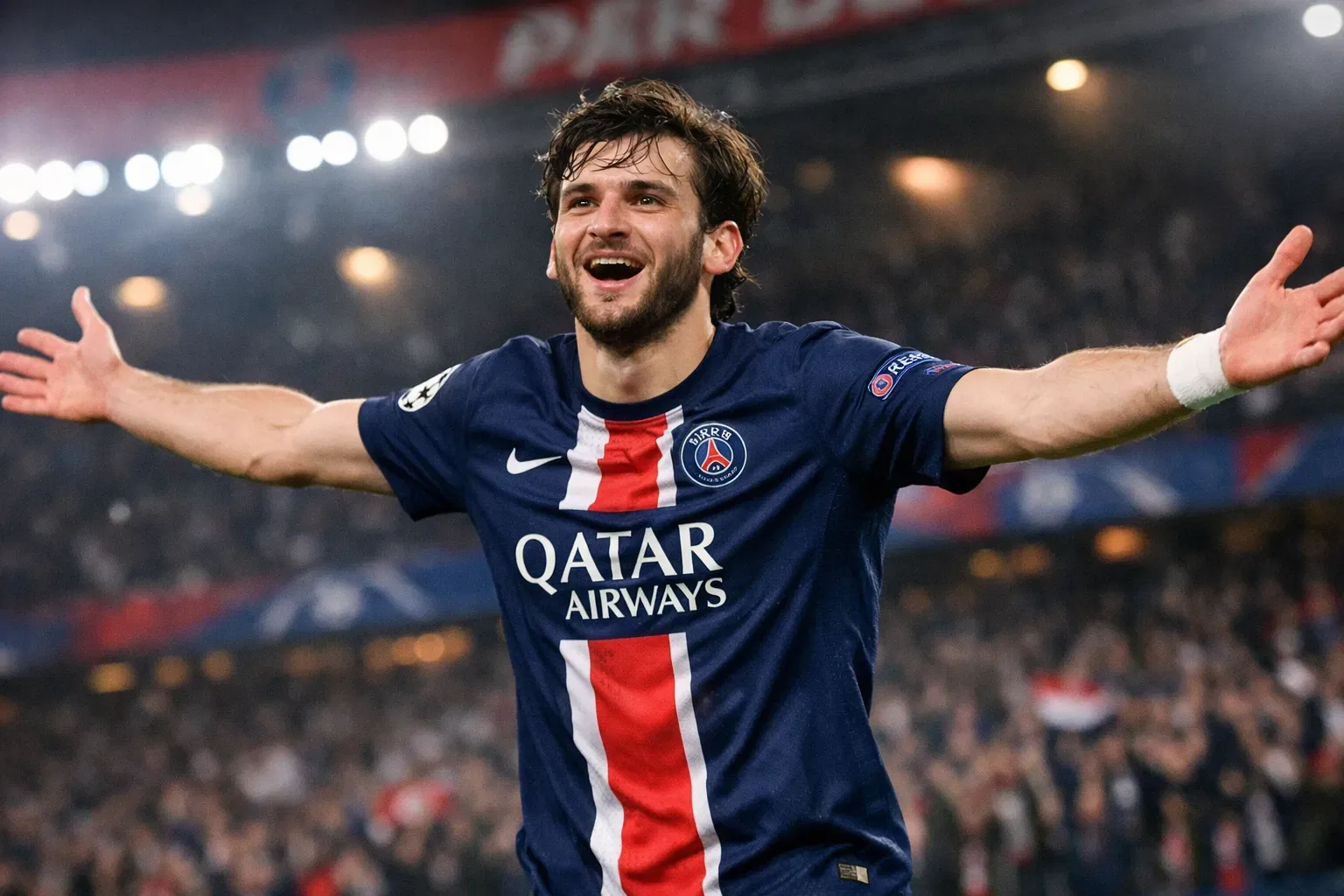
Khvicha Kvaratskhelia’s night against Chelsea felt like a highlight reel designed to haunt recruitment departments across Europe, and especially Amsterdam. In Paris, the winger delivered the kind of decisive moments that swing Champions League ties, mixing street football imagination with elite end product. The Khvicha Kvaratskhelia Ajax mistake narrative has returned because the numbers now scream as loudly as the dribbles. When a €15 million price tag once seemed steep, a €90 million valuation now looks like football’s cruelest receipt.
The PSG Chelsea highlights were not just pretty touches; they were game-shaping actions delivered at the sharp end of the Champions League. Kvaratskhelia bent the match toward Paris with a stunning assist, then followed it with a spectacular goal that changed the emotional temperature inside the stadium. Every time he isolated a full-back, Chelsea’s defensive line sank a step deeper, terrified of the next feint. The Khvicha Kvaratskhelia Ajax mistake suddenly felt less like gossip and more like a case study.
What made the performance so striking was how quickly he turned small advantages into irreversible damage. One shoulder drop created a yard, one burst created a crossing lane, and suddenly PSG were playing downhill. His Champions League goals tally this season is not a coincidence; it’s the product of a winger who has learned when to improvise and when to simplify. The Khvicha Kvaratskhelia Ajax mistake comes alive because these are the exact match-winners Ajax once built their identity around.
The loudest post-match question was why Luis Enrique chose to use him as a substitute in a game demanding chaos and invention. PSG looked functional without him, but they looked frightening once he arrived, as if someone switched the lights on in the final third. Coaches love control in Europe, yet Kvaratskhelia thrives in disorder, and Chelsea struggled the moment he introduced unpredictability. The Khvicha Kvaratskhelia Ajax mistake angle grew because even PSG seemed to underuse a weapon Ajax once passed on entirely.
Vitinha’s role mattered because he fed the winger early, often, and in the right zones, which is how you maximize a dribbler’s value. Instead of forcing Kvaratskhelia to receive with his back to goal, PSG’s midfield found him on the half-turn, already facing the defender. That relationship turned possession into threat, and threat into goals, the purest Champions League currency. The Khvicha Kvaratskhelia Ajax mistake looks worse when you see how easily a smart passer can unlock his best traits.
Henk Spaan’s reminder hit like a cold splash: Ajax deemed Kvaratskhelia too expensive at around €15 million in 2021. In the Ajax ecosystem, every euro is interrogated, every fee weighed against resale value, wages, and pathway minutes for academy talent. Yet Ajax have also made their fortune by buying tomorrow’s stars before the market agrees. The Khvicha Kvaratskhelia Ajax mistake is painful because it wasn’t a scouting miss; it was a pricing decision.
Ajax’s logic at the time was familiar, especially in a post-pandemic market where clubs preached caution. The winger was exciting but not yet a household Champions League name, and the adaptation risk to Dutch football was part of the internal debate. Instead, Ajax reportedly opted for a lower offer, betting that patience and negotiation would bring the price down. The Khvicha Kvaratskhelia Ajax mistake is that the market didn’t blink; it moved on without them.
Talk of the Overmars decision era always circles back to one truth: Ajax were brilliant at buying potential, but they were also ruthless about value. Sometimes that discipline creates a golden run; sometimes it becomes paralysis when the opportunity demands speed. Kvaratskhelia’s case sits in that uncomfortable middle, where the “too expensive” label aged badly within 24 months. The Khvicha Kvaratskhelia Ajax mistake endures because it challenges the club’s self-image as the smartest shopper in Europe.
In 2021, Ajax were transitioning between cycles, selling stars and searching for the next set of difference-makers. Their best European nights were built on wide players who could beat a man, create overloads, and produce end product under pressure. Kvaratskhelia offered exactly that profile, with the extra bonus of drawing fouls and forcing defensive reshuffles. The Khvicha Kvaratskhelia Ajax mistake stings because it wasn’t a luxury signing; it was a structural fit.
Napoli later acquired him for around €10 million, a fee that now reads like a typo in an era of inflated valuations. The Napoli signing was a classic example of a club trusting its eyes and moving decisively before the hype tax arrived. In Serie A, Kvaratskhelia didn’t just adapt; he exploded, turning into a weekly event and a tactical nightmare. The Khvicha Kvaratskhelia Ajax mistake becomes sharper when you realize Napoli paid less than Ajax refused to pay.
Fast forward and the market value rise is staggering: roughly €90 million, with a Champions League résumé that keeps expanding. Valuations can be noisy, but elite production in elite matches silences debate, and his numbers this season back it up. Six Champions League goals and four assists is winger output that rivals the continent’s very best. The Khvicha Kvaratskhelia Ajax mistake is now measurable in tens of millions and in the prestige that follows stars.
Domestic leagues can make you famous, but Champions League goals make you unavoidable, and Kvaratskhelia has become unavoidable. Defenders now approach him with double-cover instincts, and coaches build entire game plans around limiting his touches. Yet he still finds ways to produce, which is the difference between a good winger and a defining one. The Khvicha Kvaratskhelia Ajax mistake looks brutal because Ajax’s whole business model is built on buying “unavoidable” before he becomes expensive.
There was a time when critics framed him as a highlights-first winger, a player who dazzled but didn’t always decide. That label has been stripped away by his efficiency in the final third, especially in knockout contexts where one action matters more than ten dribbles. Against Chelsea, he didn’t merely entertain; he closed the argument with an assist and a goal. The Khvicha Kvaratskhelia Ajax mistake grows louder when the player becomes not just exciting, but dependable.
The core of Kvaratskhelia’s threat is that he attacks defenders with ambiguity, disguising whether he wants the line, the inside lane, or the quick one-two. He manipulates spacing like a futsal player, using micro-touches to shift the defender’s weight before accelerating into the gap he created. His body shape sells one idea while his first step delivers another, and that’s why full-backs look a beat late. The Khvicha Kvaratskhelia Ajax mistake is also a stylistic miss: this is modern wing play at its most valuable.
He also brings a rare blend of artistry and bite, tracking back enough to keep coaches trusting him while saving his most explosive energy for decisive zones. That balance is why Luis Enrique can deploy him in different game states, even if the substitute decision raised eyebrows. In transition, he’s a blade; in settled possession, he’s a lockpick, always hunting the seam between full-back and centre-back. The Khvicha Kvaratskhelia Ajax mistake feels inevitable because Ajax historically thrive with exactly this kind of winger.
At PSG, the spacing around him is designed to turn his dribble into a shot or a cutback rather than a dead-end. Overlaps and underlaps pull markers away, and midfielders like Vitinha provide the early pass that lets him attack before the block is set. When he beats the first man, PSG have runners arriving, which converts flair into expected goals. The Khvicha Kvaratskhelia Ajax mistake becomes a tactical “what if,” because Ajax’s positional play could have amplified him similarly.
Elite attackers win battles before the ball arrives, and Kvaratskhelia does it with reputation and rhythm. Defenders start retreating earlier, wary of being clipped for a highlight, and that retreat gives him the half-yard he needs to pick a pass. Once he senses fear, he varies tempo, slowing to invite a lunge and then bursting past it. The Khvicha Kvaratskhelia Ajax mistake is partly psychological: you can’t price the intimidation factor until you see it in Europe.
Ajax sit in a market reality where they must sell to buy, and every transfer is judged by resale logic. That pressure can make €15 million feel like an enormous bet, especially when the player is not arriving from a league that Dutch clubs traditionally mine. Yet football inflation doesn’t wait for comfort, and the best talents jump price brackets quickly once they hit the Champions League stage. The Khvicha Kvaratskhelia Ajax mistake shows how hesitation can be more expensive than risk.
It also exposes the danger of assuming you can always negotiate a better deal later. Clubs like Napoli move fast, accept uncertainty, and trust their development environment to raise the player’s floor. Ajax usually do that too, which is why this case feels like an identity wobble rather than a simple miss. The Ajax transfer blunder label sticks because it contradicts the club’s reputation for conviction. The Khvicha Kvaratskhelia Ajax mistake is a reminder that “value” is sometimes a moving target you must catch early.
When fans debate a missed transfer, they often focus on resale profit, but the real cost can be competitive. A winger who delivers Champions League goals can change group-stage outcomes, seeding, and the entire spring calendar. One extra round in Europe can fund multiple signings, reshape a season, and keep key players believing in the project. The Khvicha Kvaratskhelia Ajax mistake isn’t just about €90 million; it’s about the alternate history of Ajax’s European trajectory.
Once a club is tagged with an Ajax transfer blunder, every next winger target gets compared to the one that got away. That creates internal pressure to “make up for it,” which can push fees up or lead to rushed decisions. Supporters don’t only want a good player; they want the club to prove it still sees the game early. The Khvicha Kvaratskhelia Ajax mistake now sits in the background of every Ajax scouting debate, like a caution sign.
For PSG, the Chelsea tie offered a glimpse of a team that can win in different ways: controlled phases, then sudden violence in the final third. Luis Enrique will argue that managing minutes is part of managing a season, but big European nights often demand your most decisive player earlier. If Kvaratskhelia keeps producing at this rate, the tactical question will shift from “when to use him” to “how to build around him.” The Khvicha Kvaratskhelia Ajax mistake will keep resurfacing every time he headlines.
For Ajax, the lesson is not simply “spend more,” but “spend with conviction when the profile is perfect.” The club can’t compete with PSG’s wages, yet they can still compete in timing, clarity, and development promise. The next Kvaratskhelia will appear somewhere unfashionable, priced just high enough to trigger doubt, and that’s the moment that defines elite recruitment. The Khvicha Kvaratskhelia Ajax mistake is ultimately a story about decisiveness, not just money.
PSG have had superstars before, but the Champions League has often punished them for being too predictable or too individualistic. Kvaratskhelia offers something slightly different: a winger who can create alone but also thrives in combinations, especially with midfield connectors like Vitinha. If Luis Enrique nails the balance between structure and freedom, PSG’s attack becomes less about reputation and more about repeatable patterns. The Khvicha Kvaratskhelia Ajax mistake then becomes a footnote to PSG’s bigger ambition.
Ajax supporters can accept selling stars; they struggle more with the sense that the club hesitated on a future star. Rebuilding that trust means landing the next high-upside winger before his market value rise becomes impossible, and then giving him the stage to grow. It also means learning from the Overmars decision era without becoming trapped by it, adapting to a faster, noisier market. The Khvicha Kvaratskhelia Ajax mistake will fade only when Ajax create a new success story of similar magnitude.
In the end, the fascination with the Khvicha Kvaratskhelia Ajax mistake isn’t just schadenfreude; it’s football’s obsession with sliding doors. One club saw a fee and blinked, another saw a player and acted, and now PSG are enjoying the finished product under Champions League floodlights. Against Chelsea, Kvaratskhelia reminded everyone that elite football is decided by a few unstoppable moments, not by cautious spreadsheets. Ajax can’t rewrite 2021, but they can decide how brave they want to be the next time genius has a price tag.

Julian Mercer is a lifelong student of the game whose passion for football was sparked at an early age, after stepping onto the grass of Camp Nou as a six-year-old — a moment that left a lasting impression and set him on a permanent path into the sport. Since then, football has been both his lens on the world and his favourite language. Blending traditional fandom with a deep interest in tactics, squad building, and long-term team development, Julian has spent decades analysing the game from every angle. His fascination with football strategy was further shaped through years of immersive play in Football Manager, a series he has followed since the mid-1990s, developing a sharp eye for patterns, player profiles, and the fine margins that define success. At My World Of Football, Julian focuses on the stories beneath the surface — from tactical evolutions and managerial philosophies to the narratives that connect clubs, players, and supporters across generations. His writing aims to balance insight with accessibility, always grounded in a genuine love for the game.
Continue reading more football news