Myworldoffootball
La Liga retro kits: Spain’s weekend of nostalgia
La Liga retro kits take over this weekend with vintage balls, retro broadcasts and referee kits, celebrating club history—minus Real Madrid and Barcelona.
La Liga retro kits take over this weekend with vintage balls, retro broadcasts and referee kits, celebrating club history—minus Real Madrid and Barcelona.
La Liga is about to feel like a time machine. This weekend, Spain’s top two divisions will lean hard into Spanish football nostalgia as most clubs swap modern designs for throwback strips, while broadcasts, match balls, and even officials join the vintage theme. It’s a bold, league-wide attempt to turn memory into matchday energy, and it lands at a moment when many supporters crave football traditions that feel personal again. The headline, though, is also what won’t happen: Real Madrid and Barcelona will sit out the kit switch.
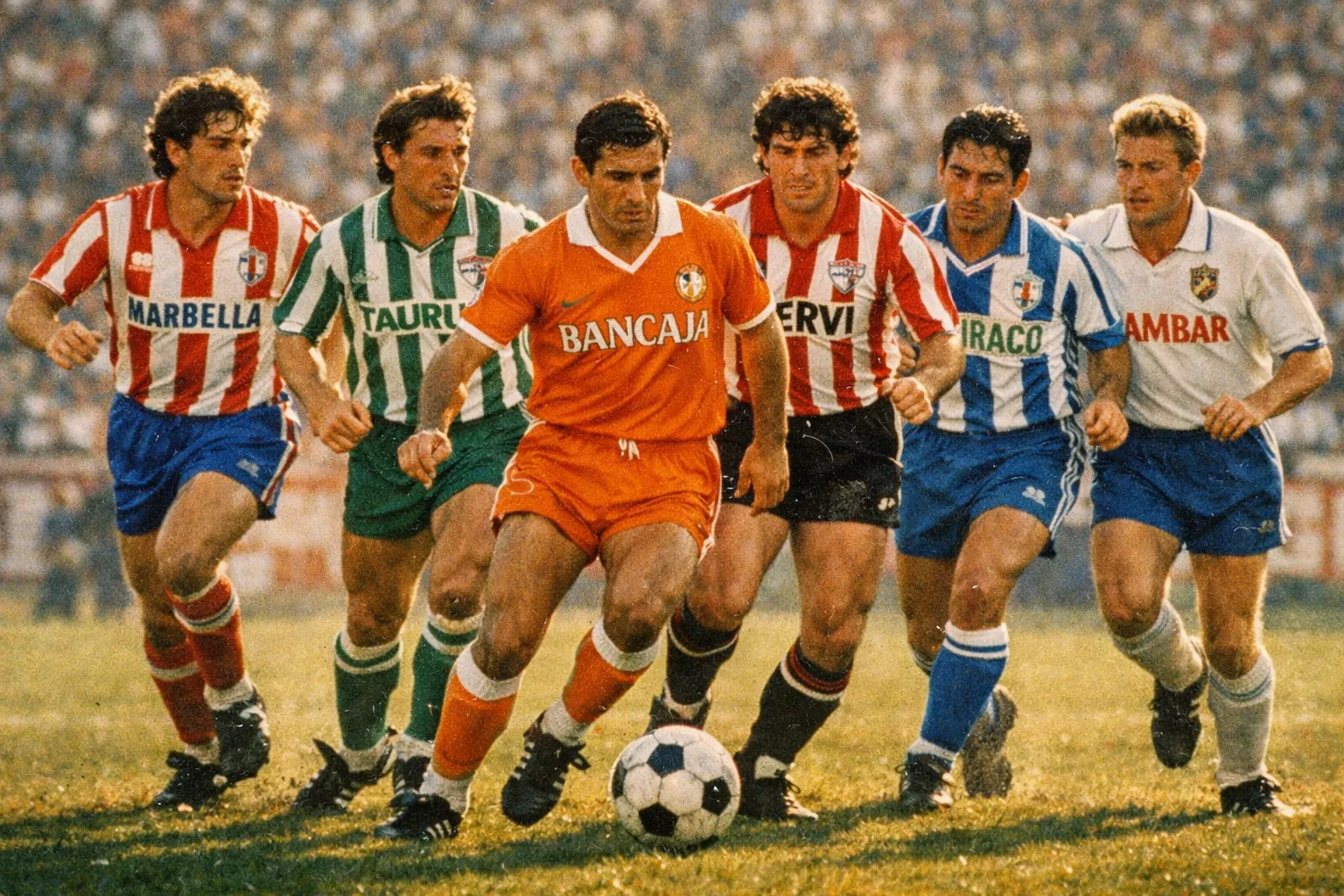
The headline act is simple and striking: La Liga retro kits will be worn across Spain’s top two tiers, a first-of-its-kind move among Europe’s elite leagues. It’s not just a single club anniversary or a one-off charity shirt, but a coordinated weekend designed to make the stadium look and feel different. By putting club history on the pitch, La Liga is betting that emotion can be as valuable as any tactical tweak.
What makes this campaign feel bigger than the usual “heritage drop” is how many layers it adds to the matchday ritual. La Liga retro kits are the visual hook, but the point is to reframe the entire experience so supporters notice details they normally speed past. The league wants fans talking about crests, collars, and old sponsor fonts with the same intensity they discuss pressing traps. That’s fan engagement built through memory, not just highlights.
England, Italy, and Germany have all flirted with retro soccer jerseys, but typically in isolated club releases or marketing campaigns that don’t touch the league’s core presentation. La Liga has chosen a more ambitious route, pushing a unified concept that makes every match feel like part of one shared story. The result is a rare, synchronized nod to football traditions, where the competition itself becomes curator of club history rather than merely a schedule-maker.
Spanish football nostalgia isn’t only about longing for a simpler era; it’s also a response to a modern game that can feel standardized. La Liga retro kits function like a shortcut to identity, reminding fans why their club’s colors and symbols matter beyond the table. In an age of rapid kit cycles and constant drops, a deliberate pause to honor club history can feel rebellious. It says the past still has authority in the present.
The unveiling at Madrid Fashion Week was more than a clever backdrop; it was a statement about where football culture sits in Spain’s wider identity. By presenting La Liga retro kits in a fashion setting, the league framed shirts as cultural objects, not just sports equipment. That crossover matters because retro soccer jerseys already live in streetwear, in music scenes, and in everyday wardrobes. La Liga is simply acknowledging what fans have been doing for years.
La Liga director Jaime Blanco positioned the campaign as an emotional bridge, a way to connect with supporters through shared memories and familiar symbols. In that sense, La Liga retro kits aren’t trying to replace modern branding, but to humanize it. The league’s message is that fan engagement grows when you respect the rituals that built the fanbase in the first place. Football traditions, after all, are not accessories; they’re the glue.
Retro soccer jerseys have moved from collectors’ cupboards to mainstream fashion because they carry stories people want to wear. A vintage collar can evoke a promotion party, a legendary derby, or a childhood season ticket, even for supporters too young to have lived it. La Liga retro kits tap that same idea, turning matchday into a runway where identity is the headline. It’s nostalgia, yes, but it’s also wearable belonging.
The league’s choice to apply a retro aesthetic to broadcasts is a subtle but powerful touch, because it shapes how fans remember what they’re seeing. If the visuals echo earlier eras, the goals and moments can feel like they belong to a longer timeline, not just a weekend’s content cycle. La Liga retro kits will look different on television when the whole package participates. It’s a reminder that football is also a media experience, not only a live one.
The campaign’s credibility depends on it being more than a wardrobe change, and La Liga has tried to deliver by adding a vintage match ball and special kits for referees. Those details matter because they make the throwback feel lived-in rather than staged. When the ball looks like it belongs to another decade, the match gains a tactile sense of time travel. La Liga retro kits are the headline, but the supporting cast sells the illusion.
Referees in retro-style uniforms are a smart twist, because officials are usually the most visually consistent part of any league. Changing their look signals that the weekend is a true league event, not a set of isolated club promotions. It also invites fans to consider how the entire ecosystem has evolved, from equipment to presentation. La Liga retro kits become a prompt to notice the sport’s small evolutions, not just its stars.
Supporters will inevitably ask whether a vintage match ball behaves differently, and even small differences can become talking points if a goalkeeper spills a shot or a free-kick dips unexpectedly. In practice, the ball will still meet modern standards, but the design can trick the mind into expecting old-school chaos. That’s part of the fun: La Liga retro kits and the vintage match ball invite fans to narrate matches like folklore, not just data.
Referees are often treated as interruptions, yet their inclusion in this campaign suggests they’re part of football’s shared theater. A retro kit on an official can evoke memories of famous matches, notorious decisions, and the changing relationship between fans and authority. It’s also a nod to the idea that football traditions include everyone on the pitch, not only the scorers. La Liga retro kits work better when the whole cast commits to the theme.
The biggest conversation starter might be the two clubs not joining the wardrobe shift. Real Madrid and Barcelona will not wear throwbacks, with Madrid reportedly choosing to stick to their standard 2025/26 kits rather than participate in the retro change. In a weekend designed around Spanish football nostalgia, their absence is loud, and it will shape how the initiative is judged. La Liga retro kits will still dominate, but the spotlight naturally finds the exceptions.
There are practical and commercial reasons why giants might prefer consistency, especially when global merchandising and brand guidelines are involved. Yet football is also about symbolism, and supporters will read meaning into any decision that breaks the shared script. For neutral fans, it may feel like a missed chance to see iconic clubs reconnect with their own club history in a playful way. For the league, La Liga retro kits must prove they can captivate even without the two biggest magnets.
When a league runs a coordinated campaign, it asks clubs to temporarily align their individual brands with a collective narrative. For superclubs, that can be a tough sell because they already operate like global entities with carefully planned visual calendars. Still, La Liga retro kits are precisely about collective storytelling, the sense that every club contributes to the same cultural weekend. The tension reveals a modern truth: unity is harder when brands are enormous.
Supporters rarely discuss kit choices as neutral business decisions; they interpret them as statements about identity and priorities. Some will defend Real Madrid and Barcelona for protecting current designs and commercial plans, while others will accuse them of skipping a rare league-wide tribute to football traditions. Either way, the debate keeps attention on the initiative itself, which is not a bad outcome. La Liga retro kits thrive on conversation, and controversy is still conversation.
For many supporters, the heart of Spanish football nostalgia lives beyond the superclubs, in neighborhoods and stadiums where club history is worn like a badge rather than sold like a product. That’s why teams such as Rayo Vallecano and Getafe can become unexpected stars of the weekend. Their retro soccer jerseys can feel less like a marketing stunt and more like a community photo album. La Liga retro kits, in these contexts, are about belonging and place.
Smaller clubs often have crests, color schemes, and kit eras that instantly trigger memories for local fans: a great cup run, a famous upset, or a season when the ground felt like a fortress. When those designs return, the nostalgia is specific, not generic, and that specificity fuels fan engagement. La Liga retro kits give these clubs a platform to tell their stories on equal visual footing. For one weekend, heritage can compete with hype.
Derbies and regional clashes are already saturated with memory, because every chant and banner references something that happened before. Add La Liga retro kits, and the match becomes layered: the present rivalry is literally dressed in the past. Fans can point to a shirt and remember an old away day, a legendary tackle, or a season-defining goal. In these fixtures, club history isn’t a museum exhibit; it’s an active ingredient in the atmosphere.
Modern attention often spikes around transfer windows, but that kind of engagement can be fleeting and transactional. A nostalgia campaign offers a different route, one based on identity rather than speculation. By leaning into football traditions, clubs can create content, conversation, and matchday anticipation without needing a superstar signing. La Liga retro kits are, in that sense, a fan engagement tool that rewards loyalty instead of shopping. It tells supporters their memories are valuable currency.
If this weekend lands well, La Liga may have found a repeatable template that blends spectacle with sincerity. The league can package club history in a way that feels celebratory rather than forced, and clubs can extend the story into museums, community events, and limited-edition drops. La Liga retro kits also offer broadcasters a new narrative angle, shifting discussion from pure tactics to the meaning behind symbols. It’s a reminder that football is culture, not just competition.
There’s also a bigger question about how leagues preserve identity in an era of constant reinvention. When kits change every season and sponsorships rotate, fans can feel like visual continuity disappears. A coordinated weekend of Spanish football nostalgia acts like a reset button, reminding everyone what endures beneath the marketing layers. La Liga retro kits could become an annual tradition, a scheduled moment when football traditions are prioritized over novelty. The smartest leagues will learn that heritage is renewable.
Yes, retro soccer jerseys will sell, and clubs will be tempted to treat the weekend as a retail bonanza. The challenge is keeping the tone respectful, so the campaign feels like a tribute rather than a cash grab. Authenticity can be protected through storytelling: explaining why a specific design matters, which era it represents, and how it connects to club history. La Liga retro kits work best when the purchase feels like participation, not consumption.
Because this is positioned as a first among Europe’s top leagues, rivals will monitor the response: stadium atmosphere, TV numbers, social engagement, and merchandise performance. If the weekend resonates, it could inspire similar league-wide experiments elsewhere, from coordinated anniversary rounds to themed broadcast packages. The key lesson is that football traditions can be scaled without being diluted, if handled with care. La Liga retro kits may become the reference point for nostalgia done properly.
By Sunday night, the table will still look like the table, and the goals will still count the same, but the weekend could linger in supporters’ minds for different reasons. La Liga retro kits invite fans to watch with two sets of eyes: one on the current season, and one on the decades that shaped each crest and color. Even with Real Madrid and Barcelona choosing not to participate in the shirt switch, the initiative can still succeed as a league-wide mood. Spanish football nostalgia isn’t about living in the past; it’s about remembering why the present matters.

Julian Mercer is a lifelong student of the game whose passion for football was sparked at an early age, after stepping onto the grass of Camp Nou as a six-year-old — a moment that left a lasting impression and set him on a permanent path into the sport. Since then, football has been both his lens on the world and his favourite language. Blending traditional fandom with a deep interest in tactics, squad building, and long-term team development, Julian has spent decades analysing the game from every angle. His fascination with football strategy was further shaped through years of immersive play in Football Manager, a series he has followed since the mid-1990s, developing a sharp eye for patterns, player profiles, and the fine margins that define success. At My World Of Football, Julian focuses on the stories beneath the surface — from tactical evolutions and managerial philosophies to the narratives that connect clubs, players, and supporters across generations. His writing aims to balance insight with accessibility, always grounded in a genuine love for the game.
Continue reading more football news