Myworldoffootball
Manchester City midfield overhaul: £190m Tonali plan
Manchester City midfield overhaul gathers pace with £190m earmarked for Sandro Tonali and Elliot Anderson as Rodri and Silva futures raise questions.
Manchester City midfield overhaul gathers pace with £190m earmarked for Sandro Tonali and Elliot Anderson as Rodri and Silva futures raise questions.
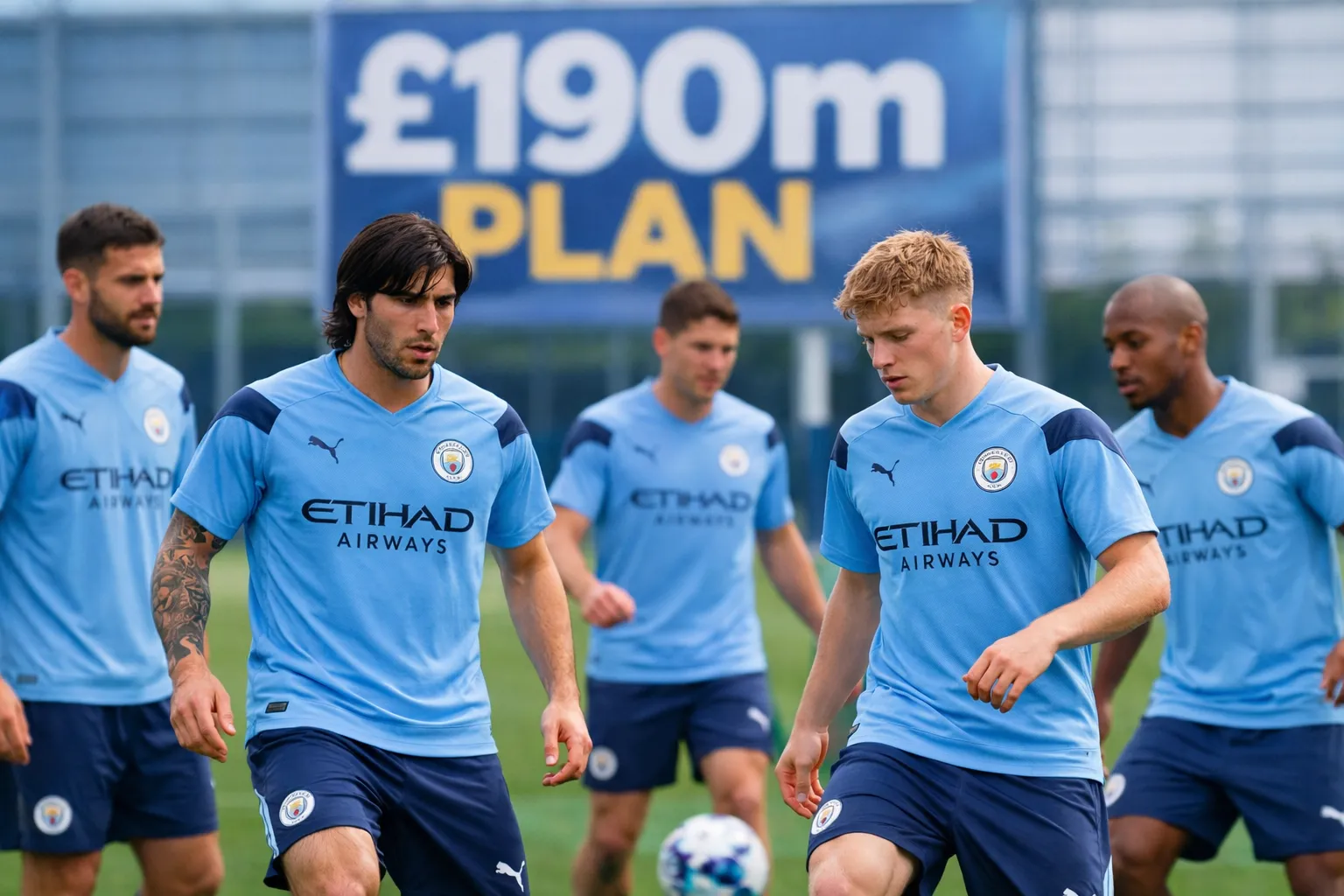
Manchester City are moving like a club that refuses to stand still, even while chasing trophies, and the talk around the Etihad is of a sweeping Manchester City midfield overhaul worth around £190 million. Sandro Tonali is the headline target, with Elliot Anderson also on the shortlist as Pep Guardiola prepares for a summer of hard decisions. Rodri’s recent comments have nudged anxiety levels upward, while Bernardo Silva’s long-running links away refuse to disappear. City, second and nine points behind Arsenal, still have the Premier League and FA Cup in their sights.
City’s planning has always been ruthless, and this Manchester City midfield overhaul feels like the next logical step in Guardiola’s cycle of renewal. The club’s recruitment team is looking at profiles that can handle City’s positional demands, press resistance, and tempo control, rather than simply collecting big names. With the squad’s core having played deep into multiple seasons, there’s an acceptance that freshness is a competitive edge. £190 million sounds enormous, but City view it as targeted insurance.
What makes this Manchester City midfield overhaul urgent is the unusual uncertainty around players who normally feel immovable. Rodri has been the metronome and the shield, yet any hint of future doubt changes the entire architecture of Guardiola’s system. Bernardo Silva’s situation has hovered for years, and each summer brings another round of speculation and tactical contingency planning. City are also aware that rivals are evolving quickly, and standing still is effectively moving backwards.
Rodri’s words have been interpreted as a warning sign because City’s dominance often begins with his availability and his rhythm. When he is missing, the team’s build-up becomes less secure, transitions become messier, and opponents find space to counter. That reality is exactly why the Manchester City midfield overhaul is being framed as both succession planning and leverage against uncertainty. Even if Rodri stays, adding another elite controller reduces the risk of one absence derailing everything.
Guardiola’s best teams have always been built one step ahead, and the current Pep Guardiola strategy is to refresh without losing the club’s identity. The Manchester City midfield overhaul is less about replacing legends overnight and more about creating a new rotation that can win 60-game seasons. City want midfielders who can play in multiple lanes: as a six, an eight, or even as a wide connector. That flexibility is how Guardiola keeps opponents guessing and his own standards intact.
The Sandro Tonali transfer is being discussed as the centrepiece of this Manchester City midfield overhaul, and it’s easy to see why. Tonali brings a rare blend of aggression and composure, capable of playing through pressure while also snapping into tackles and dictating duels. City like midfielders who can receive on the half-turn and keep the ball moving at speed, and Tonali’s range of passing fits that brief. He would also add a different kind of edge, a midfielder who plays with bite.
From City’s perspective, the Sandro Tonali transfer is not just about talent, but about timing and opportunity. Newcastle United are ambitious, yet their squad management has to balance financial realities and the pull of Champions League-calibre clubs. If there is truly a gentleman’s agreement in place, City will see it as a door worth pushing open. In a Manchester City midfield overhaul, landing Tonali would feel like both a sporting win and a market flex.
Newcastle United transfers have often carried an air of defiance since the takeover era began, but even the richest projects have moments of negotiation. The suggestion of a gentleman’s agreement changes the tone, because it implies Tonali’s camp believes there is a pathway out under certain conditions. City will test that boundary with a proposal that respects Newcastle’s valuation while offering solutions they can sell to their own supporters. This is where the Manchester City midfield overhaul meets the politics of elite recruitment.
Tonali’s appeal to Guardiola is that he can play as a controlling eight or as a deeper pivot, depending on the game state. In settled possession, he can step into the second line to create triangles with the full-back and winger, while also having the discipline to hold position when City invert. Without the ball, he reads passing lanes well and can press forward aggressively, which is essential in a Manchester City midfield overhaul designed to keep City’s counter-press suffocating.
Elliot Anderson news has accelerated because City are hunting for more than immediate starters in this Manchester City midfield overhaul. They want a player who can grow into the system, accept coaching, and eventually become a reliable option across multiple roles. Anderson’s energy, ball-carrying, and willingness to receive under pressure stand out, especially in matches that become chaotic. City’s scouts value those traits because Guardiola’s football is about controlling chaos, not avoiding it.
Nottingham Forest would understandably resist losing an emerging talent, but City’s pitch is always seductive: elite coaching, trophies, and a clear development pathway. In a Manchester City midfield overhaul, Anderson would represent the “next wave” rather than the finished product, a signing that protects City against future exits and fatigue. He also adds homegrown value, which matters in squad registration and long-term planning. The question is price, and whether Forest see a deal as unavoidable.
Forest’s leverage is that Anderson can still be framed as central to their own project, and they can point to the premium paid for young, Premier League-ready midfielders. City, though, are experts at structuring deals with add-ons, sell-on clauses, and performance triggers that make numbers feel more palatable. The Manchester City midfield overhaul budget suggests they are prepared to pay, but they will still look for value in the fine print. Negotiations could hinge on whether Forest get certainty up front.
Anderson’s best moments often come when the game needs a spark: a surge through midfield, a brave dribble into traffic, or a quick combination that breaks a press. Guardiola can refine that rawness into repeatable patterns, teaching him where to stand, when to release, and how to scan before receiving. In the Manchester City midfield overhaul, Anderson is the type of player who can become a trusted rotation piece by December rather than a long-term project that never lands.
City’s willingness to discuss players in part-exchange is a reminder that this Manchester City midfield overhaul is being run with cold pragmatism. James Trafford is highly rated, and goalkeepers with his profile can solve problems for clubs looking to modernise their build-up and distribution. Rico Lewis, meanwhile, is a unique tactical tool, capable of stepping into midfield and playing Guardiola’s hybrid roles. Including either in talks would be a serious concession, but City know swaps can unlock negotiations.
Newcastle United transfers could be particularly sensitive to this approach because they need talent that improves the first team quickly. Trafford offers long-term upside and Premier League familiarity, while Lewis could slot into multiple positions and immediately raise technical standards. City, however, will not want to weaken their own depth too much, especially with the Premier League and FA Cup still in play. The Manchester City midfield overhaul has to be balanced against the reality of competing on multiple fronts.
For Newcastle, a swap can be framed as smart squad management rather than selling a star. If they receive a ready-made contributor, the narrative shifts from “we lost Tonali” to “we upgraded two positions and improved our squad depth.” That’s why the Manchester City midfield overhaul discussions feel more like a multi-piece puzzle than a simple cash bid. Newcastle’s recruitment team will also consider wages, resale value, and how quickly new arrivals can adapt to their style.
Guardiola hates thin squads, and City’s recent seasons have shown how one or two injuries can turn a title race into a scramble. Any Manchester City midfield overhaul that involves outgoing players must preserve the manager’s ability to rotate without dropping standards. Lewis, in particular, is the kind of player Guardiola trusts in big games because he understands spacing and tempo. If City include him, they will want guarantees of immediate midfield quality in return, not just potential.
The strangest part of this Manchester City midfield overhaul is that it’s happening while City are still fighting for the biggest prizes. Sitting second and nine points behind Arsenal is not a comfortable place for a team used to setting the pace, and every dropped point now feels amplified. Yet City’s leadership believes elite clubs must plan in parallel: win today, build tomorrow. That dual focus is why transfer stories don’t wait for the final whistle of the season.
Premier League updates around City often swing between panic and inevitability, but the truth is more nuanced. Guardiola’s teams can go on relentless runs, yet the margin for error shrinks when the leader is consistent. The Manchester City midfield overhaul talk can also be read as a message to the dressing room: nobody is guaranteed a future place, and standards remain non-negotiable. That kind of pressure can sharpen focus, but it can also create noise if not handled carefully.
The FA Cup matters to City because it’s both silverware and a test of squad depth, especially in the rounds where intensity spikes. Rotation is not just about resting legs; it’s about maintaining tactical coherence when key players sit. The Manchester City midfield overhaul is influenced by those realities, because City want midfielders who can start cup ties and still look like City. A new signing who needs months to learn patterns can cost you a semi-final.
If Rodri’s situation becomes a genuine concern, Guardiola has to consider alternative structures, like using a double pivot or leaning more on a full-back stepping inside. If Silva’s future remains cloudy, City may prioritise an eight who can knit play in tight spaces and press like a forward. That is where the Manchester City midfield overhaul becomes tactical triage, not just squad building. City’s adaptability is a strength, but they prefer solutions that feel natural rather than improvised.
Manchester City news often lands with a sense of inevitability because the club rarely makes half-steps in the market. If the Sandro Tonali transfer and an Elliot Anderson move both progress, City could reshape their midfield rotation in one window, creating layers of options for different opponents. The Manchester City midfield overhaul would then be about blending profiles: a controller, a carrier, a presser, and a connector. That variety is how Guardiola keeps the same system but changes the questions rivals must answer.
The most interesting part of this Manchester City midfield overhaul is how it could extend City’s dominance beyond the current cycle. Guardiola’s best midfield units have always had internal competition, where one player’s strengths force another to raise their level. Adding Tonali could protect City against Rodri uncertainty, while Anderson could become the kind of relentless runner who turns close matches into controlled wins. City are not just buying players; they are buying future solutions to problems that haven’t fully arrived yet.
Success for City isn’t simply landing targets; it’s integrating them without disrupting the chase for the Premier League and FA Cup. The Manchester City midfield overhaul will be judged by whether the team’s control remains intact, whether big-game composure stays elite, and whether the squad feels fresher by spring. Guardiola wants newcomers who can contribute quickly, but also accept that learning City’s automatisms takes time. The sweet spot is a signing who improves the present and future simultaneously.
Deals of this size are rarely decided by one phone call, and the Manchester City midfield overhaul will hinge on timing as much as money. Newcastle and Nottingham Forest will want clarity early, while City may prefer to keep focus on the run-in before accelerating negotiations. Wages, agent fees, and performance bonuses can become the real battleground, even when the headline fee is agreed. If City can move quickly, they can also prevent rivals from entering the race and inflating costs.
Whatever happens next, the direction is clear: the Manchester City midfield overhaul is being framed as the next great Guardiola evolution rather than a panic response. City are chasing Arsenal in the Premier League, eyeing the FA Cup, and still behaving like a club that assumes tomorrow’s challenges will be tougher than today’s. If the Sandro Tonali transfer advances and Elliot Anderson news turns into a formal bid, the summer could redefine the squad’s spine. For City, that’s not drama—it’s the job.

Julian Mercer is a lifelong student of the game whose passion for football was sparked at an early age, after stepping onto the grass of Camp Nou as a six-year-old — a moment that left a lasting impression and set him on a permanent path into the sport. Since then, football has been both his lens on the world and his favourite language. Blending traditional fandom with a deep interest in tactics, squad building, and long-term team development, Julian has spent decades analysing the game from every angle. His fascination with football strategy was further shaped through years of immersive play in Football Manager, a series he has followed since the mid-1990s, developing a sharp eye for patterns, player profiles, and the fine margins that define success. At My World Of Football, Julian focuses on the stories beneath the surface — from tactical evolutions and managerial philosophies to the narratives that connect clubs, players, and supporters across generations. His writing aims to balance insight with accessibility, always grounded in a genuine love for the game.
Continue reading more football news