https://www.xaviervilajoana.com/en/about-xavier/
Marcus Rashford Barcelona future: Vilajoana’s warning
Xavier Vilajoana questions a Marcus Rashford deal, urges Barcelona to weigh Jan Virgili and even Harry Kane as the 2026 election nears.
Xavier Vilajoana questions a Marcus Rashford deal, urges Barcelona to weigh Jan Virgili and even Harry Kane as the 2026 election nears.
Few storylines in La Liga have gathered as much sustained attention this season as the debate surrounding Marcus Rashford’s long-term place at Barcelona. It sits at the intersection of performance, politics and identity. On loan, the England international has looked revitalised, delivering 10 goals and 13 assists while adding a level of directness the team has often lacked.
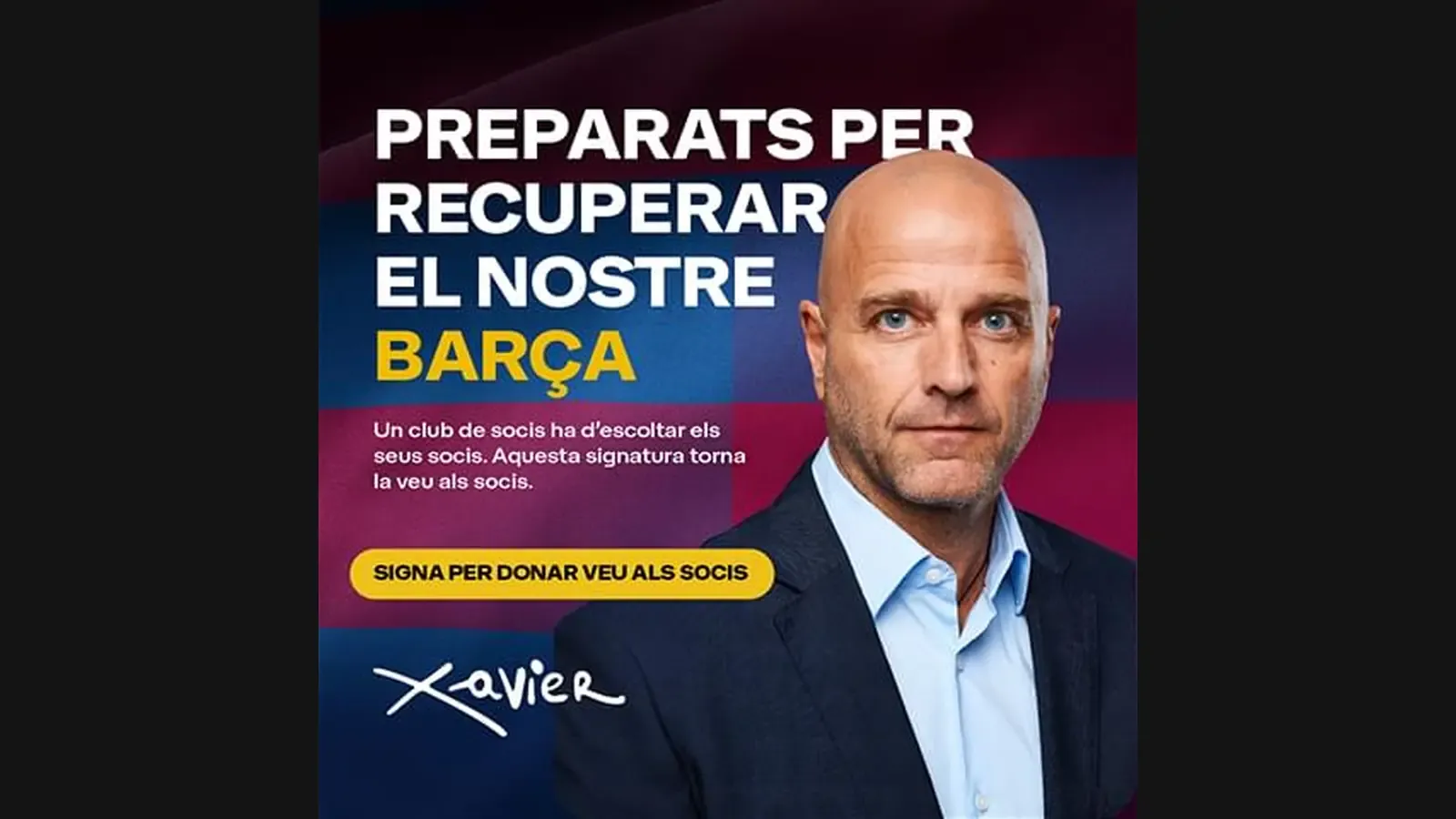
Yet presidential candidate Xavier Vilajoana has urged caution, suggesting that a commitment in the region of €26 million cannot be justified purely on momentum or emotion. With the Barcelona presidential election scheduled for March 2026, even routine transfer discussions now sound like campaign messaging.
Vilajoana’s comments are not simply about one forward. He frames the situation as a broader test of governance. For him, this is about whether Barcelona can resist the temptation of an immediate solution and instead prioritise sustainable planning.
The loan spell has undeniably been a sporting success. The forward stretches defensive lines, attacks the far post and thrives in transitional phases. His output confirms that impact. But Vilajoana’s central question remains: is this the right long-term investment, or is this the moment to evaluate alternatives carefully?
During an election year, those questions grow louder. Every financial decision becomes political.
At Barcelona, transfer policy is rarely just about football. Signings represent ambition, competence and identity.
By calling for internal assessment before triggering the buy option, Vilajoana positions himself as fiscally responsible without dismissing the player’s contribution. It is a calculated balance: acknowledge success, question permanence.
The reported £26 million clause is not excessive by modern standards. However, the headline figure only tells part of the story. Wages, bonuses and squad balance define the true cost. If Barcelona believe they can reproduce most of the attacking output internally, the financial calculus shifts dramatically.
The numbers are strong: 10 goals and 13 assists while adapting to a new league and tactical system. But beyond statistics, the fit has been notable.
Barcelona have used him as a wide forward who can drift centrally while also serving as a vertical outlet against high defensive lines. In matches where possession becomes predictable, he offers acceleration and decisiveness. One pass into space, one burst forward, one clinical action.
The structure has amplified his strengths. Overlapping full-backs stretch the pitch. Midfield interiors combine in tight spaces. The central striker draws defenders away, opening channels to exploit. In that context, pace becomes a weapon rather than a gamble.
Still, the attacking line is competitive. Tactical adjustments can quickly change starting roles. If minutes become rotational rather than guaranteed, the financial argument becomes more complicated.
Vilajoana sharpened the debate by referencing Jan Virgili, reframing the discussion as a choice between immediate reinforcement and long-term development.
This touches the philosophical core of Barcelona’s identity.
The club’s greatest eras were shaped not only by signings but by belief in youth development. From Johan Cruyff’s ideological foundations to Pep Guardiola’s golden period, internal growth defined the institution’s success. Promoting or reclaiming talent carries symbolic weight, especially during an election year.
Virgili’s situation reportedly includes a buy-back clause following his move to Mallorca. Such mechanisms fit a modern, option-based strategy: allow development elsewhere while retaining future control. It reduces risk and preserves flexibility.
Mallorca provides a demanding environment. Mid-table intensity in La Liga requires discipline and tactical maturity. If Virgili proves capable there, Barcelona can argue they already possess a solution within reach.
The romantic choice may also be the pragmatic one.
Vilajoana also mentioned Harry Kane, currently at Bayern Munich. The suggestion was ambitious but tactically coherent.
Barcelona arguably need a striker capable of linking play, occupying central defenders and elevating runners around him. Kane fits that description. He drops into deeper pockets, creates third-man runs and unlocks compact blocks.
If such a signing materialised, the English loanee’s role would evolve. He would complement a central reference point rather than act as the focal solution. However, feasibility is another matter. Bayern would demand a significant fee, wages would be substantial and financial controls remain strict.
The mention of Kane may reflect vision, rhetoric or both.
Manchester United remain central to the outcome. The buy option is only one element of the negotiation landscape. The player’s resurgence has restored his market value, strengthening United’s hand.
If Barcelona hesitate, alternative bidders could emerge. If they move decisively, they must be certain.
The player’s preference to remain in Spain adds another layer. Personal desire can influence negotiations, but clubs rarely concede value easily. Time may either lower the price or increase competition.
Even if a transfer fee is agreed, La Liga’s registration and wage regulations add complexity. Barcelona must ensure room within their salary structure. Departures and payroll adjustments must align with any commitment.
This reinforces Vilajoana’s broader argument: decisions must align with structure, not emotion.
The March 2026 presidential election looms over every strategic move. Supporters will evaluate leadership based on identity, sustainability and competitiveness.
Backing the forward signals ambition. Questioning the purchase signals caution.
But football remains emotional. A decisive goal in a title race or European knockout tie could rapidly shift public opinion. Performances on major nights may ultimately influence debate more than campaign speeches.
Transfer discussions become political messaging, and political messaging becomes transfer speculation.
Once the election concludes, clarity will be essential. Is he a cornerstone, a rotation asset or a negotiable piece within a broader strategy?
Uncertainty carries financial and sporting cost.
Ultimately, this is not merely about activating a clause. It is about defining Barcelona’s next phase: immediate reinforcement versus long-term architecture, star power versus structural continuity.
With Manchester United holding leverage and political stakes rising in Catalonia, each performance now carries institutional consequences. The decision will shape not just the squad, but the direction of the club’s next chapter.

Julian Mercer is a lifelong student of the game whose passion for football was sparked at an early age, after stepping onto the grass of Camp Nou as a six-year-old — a moment that left a lasting impression and set him on a permanent path into the sport. Since then, football has been both his lens on the world and his favourite language. Blending traditional fandom with a deep interest in tactics, squad building, and long-term team development, Julian has spent decades analysing the game from every angle. His fascination with football strategy was further shaped through years of immersive play in Football Manager, a series he has followed since the mid-1990s, developing a sharp eye for patterns, player profiles, and the fine margins that define success. At My World Of Football, Julian focuses on the stories beneath the surface — from tactical evolutions and managerial philosophies to the narratives that connect clubs, players, and supporters across generations. His writing aims to balance insight with accessibility, always grounded in a genuine love for the game.
Continue reading more football news