Myworldoffootball
Martin Odegaard injury update: Arsenal’s key worry
Martin Odegaard injury update as Arsenal sweat on their captain’s fitness after Sporting Lisbon. Arteta speaks, with Bournemouth and Man City looming.
Martin Odegaard injury update as Arsenal sweat on their captain’s fitness after Sporting Lisbon. Arteta speaks, with Bournemouth and Man City looming.
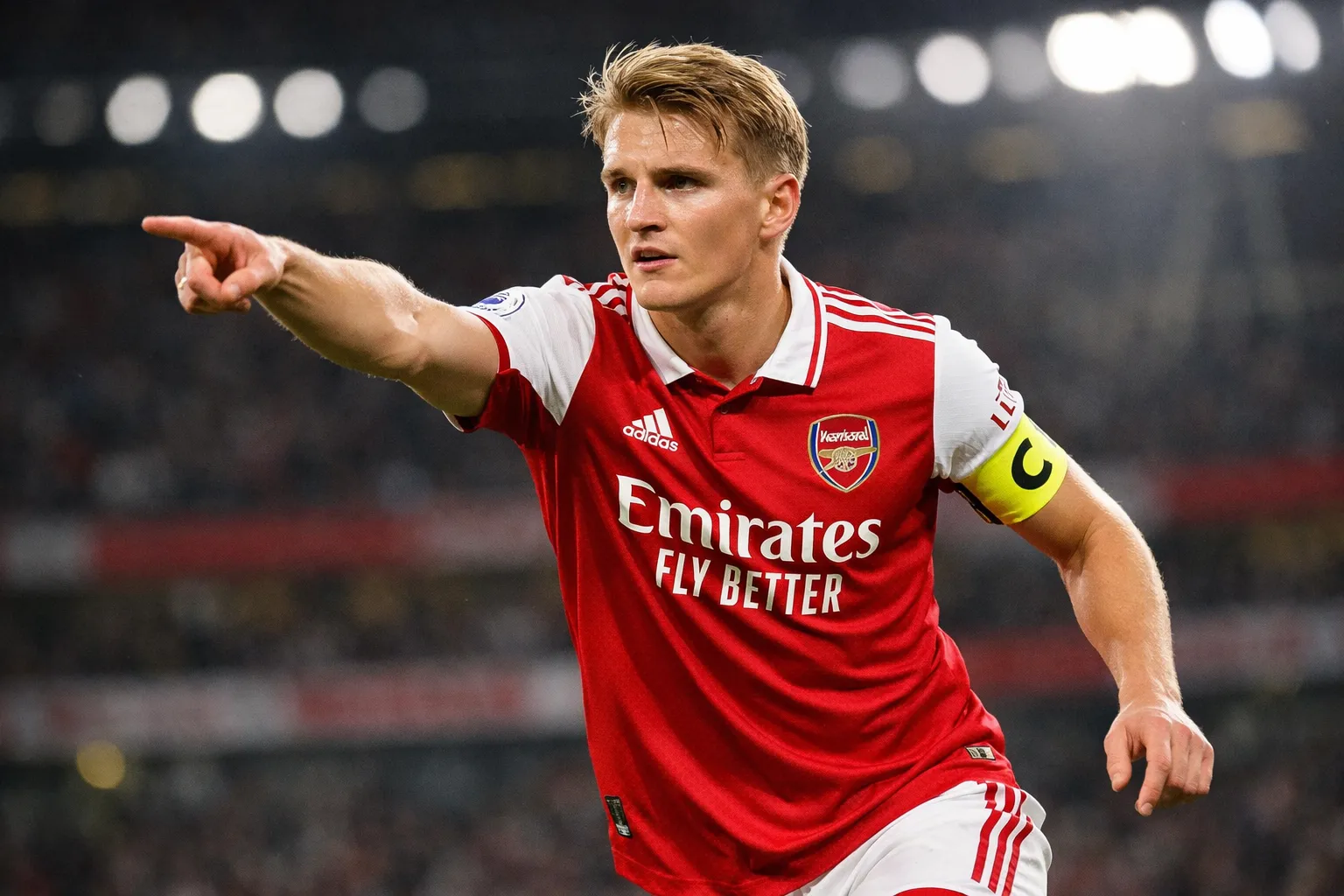
Arsenal’s season has started to feel like a weekly negotiation with the treatment room, and the biggest conversation is the Martin Odegaard injury update. The captain has been sidelined five separate times in 2025/26, turning Arsenal’s rhythm into a stop-start puzzle for Mikel Arteta. Odegaard’s return in the FA Cup against Southampton was meant to signal momentum, yet his limp in the Champions League against Sporting Lisbon reopened anxiety. With Bournemouth and Manchester City next, Arsenal’s title chase hinges on his body holding up.
The Arsenal captain injury narrative around Odegaard is unusual because it isn’t one long absence, but a series of interruptions that keep breaking continuity. Five different stoppages have forced Arteta to reshuffle roles, minutes, and pressing triggers, especially in games where Arsenal need control rather than chaos. Every Martin Odegaard injury update feels like a mini transfer window: fans recalibrate expectations, and teammates adjust patterns. That uncertainty has become a theme of Arsenal’s campaign.
What makes this Martin Odegaard injury update particularly tense is how central he is to Arsenal’s identity. When he plays, Arsenal can pin opponents with positional rotations, third-man runs, and those disguised passes that open a low block. When he doesn’t, the team can still win, but the attack often becomes more direct and less patient. In a Premier League title race where margins are razor-thin, rhythm is currency, and injuries keep stealing it.
Missing five matches across multiple spells suggests the issue is less about one catastrophic injury and more about accumulation, fatigue, and risk management. Each Martin Odegaard injury update has carried a slightly different context, which can be frustrating for supporters looking for a clear timeline. For Arsenal’s medical staff, it’s a balancing act between short-term availability and long-term durability. For Arteta, it’s about protecting his captain without sacrificing the league’s most unforgiving points.
Without Odegaard, Arsenal’s right-sided combinations can lose their metronome, and the press can look less coordinated in the first wave. Arteta often compensates by asking others to shoulder creative responsibility, but that can dilute what makes Arsenal so hard to defend. The Martin Odegaard injury update matters because it affects not just one position, but the entire geometry of Arsenal’s buildup. In big games, those micro-adjustments can decide whether Arsenal dominate or merely survive.
The latest Martin Odegaard injury update turned heads because it arrived at the worst possible time: during a Champions League night when Arsenal needed calm and control. Odegaard’s substitution after he appeared to limp off against Sporting Lisbon instantly sparked worry, not just in the stands but across social media. Arsenal had only just welcomed him back, and the idea of another setback felt like cruel repetition. In Europe, where game states swing quickly, losing your organiser can change everything.
Arsenal’s concern wasn’t only the sight of Odegaard limping, but the timing within his comeback arc. He had featured in the FA Cup against Southampton, a match that often serves as a controlled environment to rebuild sharpness and confidence. The Sporting Lisbon appearance, however, carried higher intensity, more duels, and more transitional sprints. This Martin Odegaard injury update is therefore about load as much as pain, and whether the jump in intensity was a step too soon.
Returning via the FA Cup can be ideal because minutes can be managed, and the opponent’s pressure can be predicted. Yet the Champions League is a different animal, and Sporting Lisbon’s tempo forced Arsenal into repeated accelerations and recoveries. That’s why this Martin Odegaard injury update feels so significant: it tests whether his body can handle the sharpest demands. Arsenal need him for the biggest nights, but those nights also carry the highest re-injury risk.
Supporters have become conditioned to read body language like a second coaching badge, and a limp is football’s universal alarm bell. Even if the issue is minor, the image sticks, and it shapes the mood around upcoming fixtures. The Martin Odegaard injury update became less about a diagnosis and more about fear of another cycle of “back, then out again.” In a title run-in, anxiety spreads fast, and it can seep into expectations before a ball is kicked.
Mikel Arteta comments after the Sporting Lisbon match aimed to cool the temperature, stressing that the substitution was precautionary. In a season full of tight turnarounds, managers often protect players from pushing through discomfort that could become something bigger. Still, every Martin Odegaard injury update invites skepticism because of the pattern of repeated absences. Arteta’s tone suggested control, but fans know that “precaution” can sometimes be the first step in a longer story.
Arteta’s approach reflects modern squad management, where the best teams treat availability like a long-term investment. Arsenal are fighting on multiple fronts, and the captain’s minutes have to be handled with care, especially when he’s returning from setbacks. The Martin Odegaard injury update is therefore part medical, part strategic, and part psychological. Arteta wants Odegaard to feel trusted, but also protected, and that line is thin when the fixtures are relentless.
Top clubs increasingly lean on physical metrics, recovery markers, and sprint load to guide decisions that once relied on gut feeling. Arteta has shown he will listen to the numbers, even if it means making an unpopular early substitution. That context matters in this Martin Odegaard injury update, because it hints the staff saw something that raised a flag. Arsenal’s priority is not winning one night at the cost of losing Odegaard for a month.
Fans have heard the word “precautionary” before, and sometimes it truly means nothing more than caution. But when a player has had multiple stop-start issues, the same word can feel like a placeholder until scans or swelling settle. This Martin Odegaard injury update sits in that uneasy space where reassurance and uncertainty coexist. Arsenal supporters want clarity, yet football injuries rarely offer it immediately, especially with matches coming every few days.
In the Premier League title race, Arsenal don’t have the luxury of waiting for perfect conditions, because the table punishes hesitation. Bournemouth may not carry the glamour of a top-six rivalry, but games like that are where titles are protected through professionalism and depth. The Martin Odegaard injury update matters because it shapes how Arsenal approach control, tempo, and chance creation. Without him, Arsenal can still win, but the margin for error gets slimmer.
Then comes Manchester City, the fixture that tends to define seasons and expose weaknesses. Against City, Arsenal need their best press resistance, their best decision-making in tight spaces, and their best emotional control. Odegaard is built for those moments, and that’s why the Martin Odegaard injury update feels like a headline with real consequences. If he’s limited, Arsenal’s plan changes; if he’s absent, Arsenal’s entire match script may need rewriting.
Bournemouth games can become awkward if Arsenal don’t score early, because the opponent can settle into a compact shape and turn the afternoon into a test of patience. Odegaard’s value is his ability to keep Arsenal calm while still accelerating the attack at the right moment. This Martin Odegaard injury update will influence whether Arteta starts him, benches him, or uses him as a second-half accelerator. The decision isn’t just about fitness, but about game management.
City matches often come down to who can play through pressure and who can sustain intensity without losing structure. Odegaard’s leadership and technical security are huge in those phases, particularly when Arsenal need to escape the first wave and keep the ball in advanced areas. That’s why this Martin Odegaard injury update is being treated like a title-race subplot rather than a simple fitness note. Arsenal’s belief grows when their captain is on the pitch, directing traffic.
Arsenal’s Champions League hopes add another layer to the Martin Odegaard injury update because European nights demand a slightly different toolkit. The tempo can be more tactical, but the intensity spikes are sharper, and the punishment for small mistakes is immediate. Arsenal need Odegaard’s composure to manage those moments, especially away from home where control is harder to maintain. Yet the same European intensity is also where fragile fitness can be exposed quickly.
Squad depth is supposed to soften the blow, but replacing a captain is rarely a like-for-like swap. Arsenal can redistribute creativity across the midfield line, but the team’s best version still feels Odegaard-shaped. The Martin Odegaard injury update therefore becomes a question of how Arsenal rotate without blunting their edge. Arteta must keep Arsenal competitive in Europe while ensuring Odegaard isn’t rushed into minutes that his body can’t yet tolerate.
When Odegaard is missing or limited, Arsenal often ask other midfielders to play slightly outside their natural instincts, whether that means more risk in passing or more responsibility in pressing. Those tweaks can work, but they can also affect spacing and timing, especially against elite opponents. This Martin Odegaard injury update is key because it determines whether Arsenal can keep roles stable or must keep improvising. Stability is often the hidden advantage in knockout football.
Odegaard’s leadership is not only vocal; it’s expressed through tempo control, pressing cues, and the willingness to demand the ball under pressure. If he’s unavailable, Arsenal need others to take on that organising role, and that isn’t always automatic. The Martin Odegaard injury update therefore touches the emotional side of Arsenal’s season, not just the tactical one. In tight Champions League ties, calm leadership can be as decisive as a goal.
Odegaard fitness concerns are now less about one match and more about building a sustainable run of availability. Arsenal can’t afford another cycle of return, flare-up, and absence, particularly with the Premier League title race reaching its sharpest phase. The Martin Odegaard injury update should be viewed through that long lens: the goal is not merely to get him through Bournemouth, but to keep him intact for City and beyond. That requires discipline from everyone involved.
Arsenal’s best-case scenario is a managed reintegration where Odegaard plays, but not at the expense of his recovery curve. That might mean shorter starts, planned substitutions, or even holding him back for a fixture that suits his readiness. The Martin Odegaard injury update will likely evolve day-by-day, and Arteta’s choices will be scrutinised either way. Fans may crave certainty, but the smartest route is often cautious, especially with recurring issues.
Modern football’s calendar makes patience feel like a luxury, yet it’s often the difference between a niggle and a month out. Arsenal will monitor how Odegaard responds to training intensity, change-of-direction work, and repeated accelerations, because those are common triggers for discomfort. This Martin Odegaard injury update is therefore as much about what happens between matches as during them. If Arsenal get the load right, they can unlock Odegaard’s quality without gambling his season.
Selection clues can reveal as much as press conferences, especially when Arteta is trying to protect a key player. If Odegaard is named on the bench, it might signal caution rather than crisis, while an early substitution could be pre-planned regardless of the scoreline. The Martin Odegaard injury update will be interpreted through those decisions, because supporters want to see progress, not another setback. The biggest sign of improvement will be consistency: multiple appearances without visible discomfort.
Arsenal’s ambitions remain alive on all fronts, but the season’s emotional temperature keeps rising with every Martin Odegaard injury update. The captain’s limp against Sporting Lisbon reminded everyone how quickly optimism can turn into apprehension, even when Mikel Arteta comments insist it’s precautionary. Bournemouth and Manchester City will test Arsenal’s depth, planning, and nerve, and they may also decide the shape of the title race. If Odegaard stays fit, Arsenal’s ceiling rises; if not, their margins shrink fast.

Julian Mercer is a lifelong student of the game whose passion for football was sparked at an early age, after stepping onto the grass of Camp Nou as a six-year-old — a moment that left a lasting impression and set him on a permanent path into the sport. Since then, football has been both his lens on the world and his favourite language. Blending traditional fandom with a deep interest in tactics, squad building, and long-term team development, Julian has spent decades analysing the game from every angle. His fascination with football strategy was further shaped through years of immersive play in Football Manager, a series he has followed since the mid-1990s, developing a sharp eye for patterns, player profiles, and the fine margins that define success. At My World Of Football, Julian focuses on the stories beneath the surface — from tactical evolutions and managerial philosophies to the narratives that connect clubs, players, and supporters across generations. His writing aims to balance insight with accessibility, always grounded in a genuine love for the game.
Continue reading more football news