Myworldoffootball
Michael Olise transfer news: Real Madrid €150m bid
Michael Olise transfer news as Florentino Pérez lines up a €150m bid, with Bayern Munich insisting the winger is not for sale and tied to 2029.
Michael Olise transfer news as Florentino Pérez lines up a €150m bid, with Bayern Munich insisting the winger is not for sale and tied to 2029.
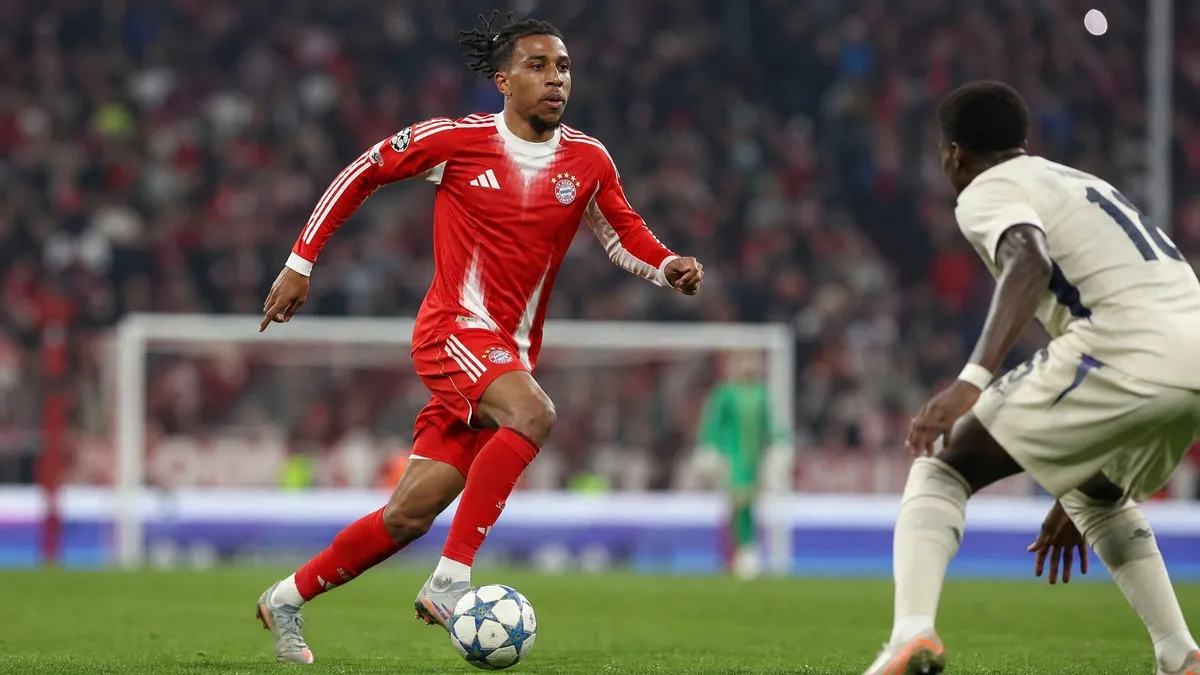
Michael Olise transfer news has taken a surreal turn, with Real Madrid president Florentino Pérez reportedly announcing a €150 million bid for Bayern Munich’s new attacking jewel while publicly distancing himself from the story. The contradiction is exactly what fuels modern football transfer rumors: bold numbers briefed to signal intent, followed by careful denials to protect relationships. Bayern, through sporting director Max Eberl, has responded with a flat refusal and a reminder that Olise is tied down until 2029. Yet the noise persists, and Madrid’s interest feels anything but accidental.
Michael Olise transfer news rarely arrives with a figure as loud as €150 million, but Pérez’s name attached to that number instantly raises the temperature. Madrid’s recruitment has long mixed discretion with theatre, and this episode fits the pattern: a headline-grabbing bid floated to test the market, then a swift attempt to control the narrative. In Spain, the message reads as ambition; in Germany, it reads as provocation. Either way, it puts Olise at the centre of summer conversation.
What makes this Real Madrid transfer story unusual is the reported escalation baked into it, with talk of a €175 million offer being prepared behind the scenes. That kind of money is not simply a negotiation tactic; it is a statement about who Madrid believe Olise can become. Michael Olise transfer news is being framed less as opportunism and more as strategic succession planning for the next attacking era. Madrid are not shopping, they are supposedly choosing a cornerstone.
Pérez has also batted away speculation about Erling Haaland and Harry Kane, and that matters because it narrows the focus of the current Michael Olise transfer news cycle. Madrid’s message is that this is not a scattergun window chasing every superstar with a marketing halo. By denying other pursuits, Pérez effectively tells supporters and rivals that the club’s resources and attention are aimed at a specific profile. It is a subtle way of making the Olise chase feel planned rather than impulsive.
Once a €175 million figure enters the Real Madrid transfer conversation, everything around it becomes distorted, including expectations inside Bayern’s boardroom. Michael Olise transfer news at that price point invites questions about what “not for sale” truly means when record sums are dangled. Even if Bayern refuse, the rumour can unsettle wage structures and agent conversations across the squad. Madrid also know that a bigger number forces intermediaries to pick up the phone, whether clubs like it or not.
Bayern Munich news has been remarkably consistent from Max Eberl: there are no talks, no interest in negotiating, and no intention of letting Olise go. That clarity is not just for the media; it is a signal to agents, rival executives, and even Bayern’s own dressing room. When a club spends big and sells quickly, it can look like a stepping-stone. By slamming the door, Bayern try to protect the idea that the Allianz Arena is a destination.
The firmness also reflects timing, because Olise has only just arrived from Crystal Palace for €53 million and immediately become a focal point. Bayern’s project needs continuity, not another summer of reshuffling the attacking hierarchy. Michael Olise transfer news may be entertaining externally, but internally Bayern will see it as a threat to momentum. Eberl’s stance says Bayern want to build around Olise, not showcase him for Europe’s richest buyers.
Olise contract details are the key weapon in Bayern’s response, because a deal running to 2029 shifts power dramatically toward the selling club. With no release clause reported, Bayern can set a price that effectively means “no,” even if Madrid insist they are serious. Michael Olise transfer news becomes less about a player forcing a move and more about whether Madrid can invent a number Bayern cannot ignore. Long contracts don’t stop transfers, but they make them painful.
Bundesliga transfers have often been framed through the lens of talent leaving for Spain or England, and Bayern are sensitive to that storyline. Keeping Olise would be a statement that the league’s biggest club can still resist the gravitational pull of Madrid. Michael Olise transfer news therefore becomes symbolic, not just transactional, because Bayern’s stance is about prestige as much as performance. Eberl is effectively defending Bayern’s status in the European hierarchy.
It is easy to see why Michael Olise transfer news is so explosive when you look at the output being quoted: 53 goal contributions in 52 games. That is elite production, especially for a player still settling into a new league and tactical environment. Bayern signed him for €53 million, which already suggested they believed his ceiling was enormous. If those numbers hold, every giant club will feel they are watching a future Ballon d’Or contender.
Olise’s appeal is not only about goals and assists, but about the way he creates advantages in possession. He can receive wide, drift inside, and still deliver the decisive final action, which is exactly what Madrid crave against low blocks in La Liga and deep defensive lines in Europe. Real Madrid transfer planning often targets players who can decide tight matches with one moment. Michael Olise transfer news is essentially Madrid saying they want more match-winners, not just more names.
Madrid love attackers who combine elegance with end product, and Olise offers that blend with a modern twist: he can play as a winger, a narrow creator, or even as a hybrid No.10 depending on the phase. Michael Olise transfer news has traction because fans can instantly imagine him in white, receiving between the lines and feeding runners. He also carries the kind of calm in the final third that translates across leagues. That portability is priceless at the top level.
Even with those headline numbers, smart clubs interrogate context, because output can spike when a system is tailored to a player’s strengths. Bayern’s structure, teammates, and dominance in many Bundesliga matches can inflate attacking statistics. Michael Olise transfer news should therefore include the caution that Madrid would be buying not just a performer but a role adaptation. The Bernabéu can be less forgiving, and expectations can change how a player plays. That risk is part of the price.
Real Madrid transfer strategy in recent seasons has leaned toward younger, high-ceiling signings who can grow into leadership rather than arrive as finished icons. That is why Michael Olise transfer news feels consistent with the broader plan, even if the fee sounds outrageous. Madrid want players who can be shaped into the next generation of headline-makers, while still contributing immediately in Champions League knockout rounds. Olise fits the age curve, the versatility, and the commercial appeal of a new superstar.
There is also a tactical logic: Madrid have increasingly valued attackers who can create without sacrificing defensive structure. Olise’s ability to retain the ball under pressure and choose the right moment to accelerate a move can help control matches, not just win them. Michael Olise transfer news is being sold as a football decision, not merely a branding play. If Madrid believe he can be a long-term solution on the right side or as a central creator, the spend becomes easier to justify.
Madrid’s right side has often alternated between direct runners and support players, but Olise offers a different profile: a steady supply of high-quality final passes and cut-backs, plus the ability to shoot from the edge. Michael Olise transfer news resonates because supporters can picture a more balanced attack, with creativity coming from both wings rather than one dominant channel. In big European nights, that balance can be the difference between predictable possession and genuine threat. Olise would add variety, not just volume.
A €150 million bid inevitably drags wage expectations and status into the conversation, because a fee that large usually comes with star-level salary and influence. That can strain an existing hierarchy if the newcomer is immediately positioned as a central figure. Michael Olise transfer news therefore isn’t only about Bayern resisting; it’s about whether Madrid can integrate another focal point without destabilising roles. Pérez has managed these dynamics for years, but every new superstar tests the balance. The biggest teams win on chemistry as much as talent.
The most important detail in this saga may be the simplest: there is no release clause, and Bayern hold the contract until 2029. That means a €150 million bid is not a trigger, it is merely an invitation. Michael Olise transfer news can sound decisive in headlines, but in the boardroom it becomes a slow grind of leverage, timing, and the player’s own preferences. Bayern can wait, because time is on their side. Madrid must decide how badly they want to force the issue.
In these situations, clubs often use indirect pressure: public interest to test the player’s headspace, intermediaries to explore willingness, and escalating bids to see if the seller’s stance softens. Bayern’s response suggests they are prepared for that playbook. Michael Olise transfer news will likely swing between “breakthrough” and “impossible” depending on who briefs whom in a given week. The truth usually sits in the middle: Bayern won’t sell easily, but every club has a number, even if they won’t admit it.
If Bayern ever entertained a negotiation, it would likely involve more than a straight cash fee, because replacing a player like Olise is not simply a shopping trip. They would need certainty on a successor, wage room, and a plan that keeps the squad competitive immediately. Michael Olise transfer news often focuses on the headline bid, but Bayern’s real concern is sporting continuity. Selling a cornerstone can cost trophies, and trophies are worth more than transfer profit. That is why “not for sale” is credible.
Madrid’s best chance, if they truly push, would be to craft terms that reduce Bayern’s risk: a massive upfront payment, achievable add-ons, and perhaps a player component that fits Bayern’s needs. Still, Bayern are unlikely to accept a swap that disrupts their own wage structure or tactical plan. Michael Olise transfer news will keep circling because Madrid can make deals feel creative, but Bayern can still say no. The only irresistible offer is one that makes Bayern stronger immediately, not weaker. That is a high bar.
The next phase of Michael Olise transfer news will hinge on whether the story becomes formal—paperwork, official contact, and clear signals from the player’s camp—or remains a media duel between Madrid ambition and Bayern resistance. If Madrid submit an official bid, Bayern will have to decide whether to reject instantly or use it to reset Olise’s contract terms and status internally. If no bid arrives, Bayern’s hard line will look vindicated. Either outcome shapes perceptions across Europe’s elite.
Player agency is the wild card, because even the strongest contracts can be tested if a player makes it clear he wants a specific move. Yet Olise has just joined Bayern, and the club can offer him Champions League spotlight, domestic dominance, and a system built to maximise his output. Michael Olise transfer news will therefore include constant speculation about his mindset, but there is no obvious reason for him to force an exit immediately. Madrid may have to wait, and waiting is not always their style.
If Bayern start the season flying, the club’s resolve to keep Olise becomes even easier, because success reinforces the idea that the project is working. If results wobble, outside noise grows louder, and players can become more receptive to alternative futures. Michael Olise transfer news will track Bayern’s early form as much as any transfer briefing, because sporting confidence is negotiation power. Eberl’s stance is strongest when the team is winning and the dressing room is settled. That is when “not for sale” truly means it.
For supporters trying to decode the chaos, the safest reading is this: Madrid’s interest is real, the money being floated is designed to shock, and Bayern’s contract position is genuinely strong. Michael Olise transfer news will keep generating dramatic updates because it sits at the intersection of ambition and control. Until Bayern choose to engage, every number is just a test of resolve. Madrid can dream, Bayern can refuse, and Olise can keep playing like a superstar. In the end, performances may be the loudest negotiation tool of all.
Michael Olise transfer news is the kind of story that grows because it contains everything fans love: a colossal fee, a powerful president, a defiant selling club, and a player whose numbers demand attention. Pérez’s reported €150 million bid and the whispered €175 million follow-up feel like Madrid trying to bend reality, while Eberl’s 2029 contract shield insists reality won’t move. For now, the most honest conclusion is that Bayern hold the cards, Madrid have the cash, and Olise has the talent to make both sides believe they’re right.

Julian Mercer is a lifelong student of the game whose passion for football was sparked at an early age, after stepping onto the grass of Camp Nou as a six-year-old — a moment that left a lasting impression and set him on a permanent path into the sport. Since then, football has been both his lens on the world and his favourite language. Blending traditional fandom with a deep interest in tactics, squad building, and long-term team development, Julian has spent decades analysing the game from every angle. His fascination with football strategy was further shaped through years of immersive play in Football Manager, a series he has followed since the mid-1990s, developing a sharp eye for patterns, player profiles, and the fine margins that define success. At My World Of Football, Julian focuses on the stories beneath the surface — from tactical evolutions and managerial philosophies to the narratives that connect clubs, players, and supporters across generations. His writing aims to balance insight with accessibility, always grounded in a genuine love for the game.
Continue reading more football news