Myworldoffootball
Míchel Ajax deal nears: two-year plan for revival
Míchel Ajax deal is close as Ajax reach a verbal agreement on a two-year contract. What it means for Eredivisie revival and Europe.
Míchel Ajax deal is close as Ajax reach a verbal agreement on a two-year contract. What it means for Eredivisie revival and Europe.
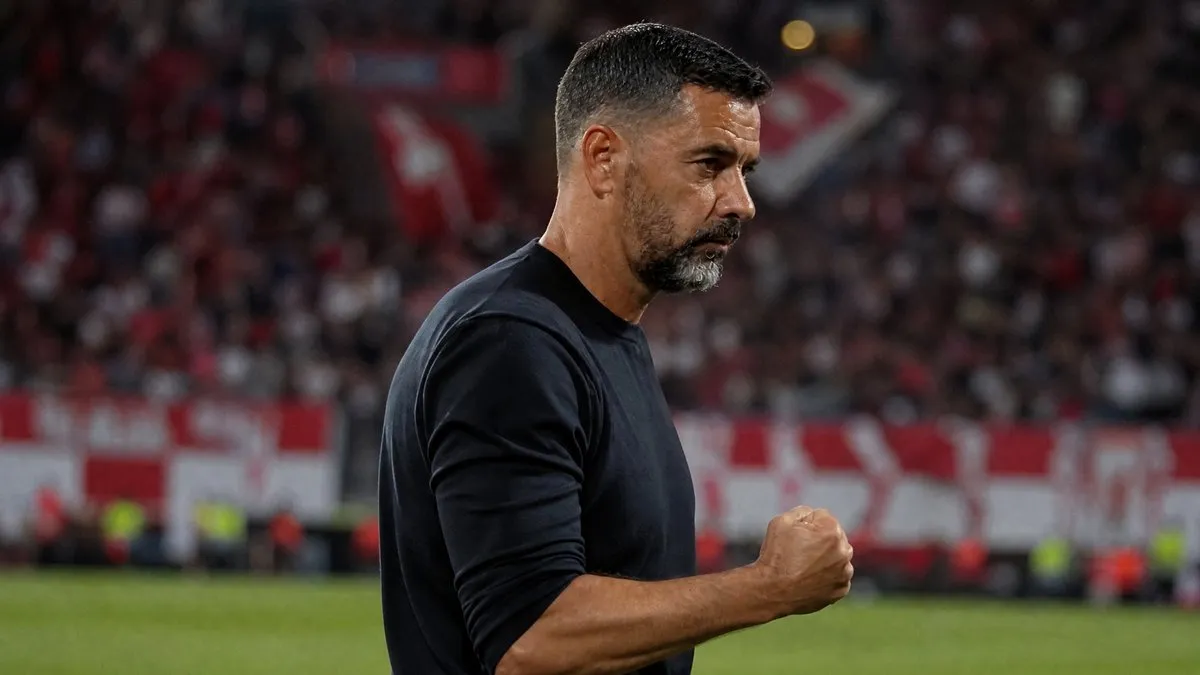
Ajax are moving quickly to turn a bruising season into a reset, and the Míchel Ajax deal now looks like the first big statement of that rebuild. Multiple outlets, including De Telegraaf and transfer insider Fabrizio Romano, report a verbal agreement that would take the Spanish coach to the Johan Cruijff ArenA on a two-year contract. For supporters craving clarity, the timeline feels immediate: get the coach in, set the principles, and attack the Conference League qualifiers with purpose.
The noise around the Míchel Ajax deal has shifted from speculation to near-certainty because the reporting is unusually aligned across major channels. De Telegraaf’s confirmation matters in the Dutch market, while Romano’s “verbal agreement” language signals the final stretch rather than the starting line. Ajax coach news often moves in bursts, but this one has the feel of a coordinated rollout. The expectation is that paperwork and formalities are now the only hurdles.
What makes the Míchel Ajax deal especially intriguing is how it fits Ajax’s urgency after a disappointing campaign that left the club chasing its own standards. The boardroom message is simple: the Eredivisie cannot be treated like a recovery room for long. A two-year term suggests a defined project rather than an open-ended experiment, with early benchmarks likely tied to European qualification. Ajax transfer news will follow, but the coach choice sets the tone first.
In a market where rumors can run wild, dual confirmation recalibrates the conversation from “if” to “how.” De Telegraaf’s reporting tends to reflect strong local sourcing, while Romano’s updates usually arrive when the final framework is agreed between parties. That combination gives the Míchel Ajax deal a level of credibility that fans can plan around. It also pressures Ajax to communicate clearly, because expectations rise the moment the story feels done.
The reported Míchel contract length is revealing: two years is long enough to install a model, but short enough to demand immediate traction. Ajax have lived through coaching churn before, yet this looks like a measured compromise between patience and accountability. If the Míchel Ajax deal is finalized as expected, year one becomes about stabilizing performances and identity, while year two becomes about pushing the ceiling. In that sense, the contract is a roadmap, not just a signature.
Ajax’s technical director Jordi Cruijff has been central to the club’s attempt to modernize recruitment and coaching alignment, and the Míchel Ajax deal fits that philosophy neatly. Cruijff’s background and network make him a natural bridge to Spanish football, where positional play ideas overlap with Ajax tradition but are expressed in contemporary ways. This is not just Ajax coach news for headlines; it is a structural decision aimed at restoring coherence from academy to first team.
The Míchel Ajax deal also suggests Cruijff wants a coach comfortable with both development and results, because Ajax cannot abandon youth pathways even while chasing trophies. Míchel’s reputation is built on building systems rather than relying on isolated stars, which aligns with how Ajax prefer to sell talent and reload. If Cruijff is the internal advocate, he is likely selling a vision of controlled aggression: dominate the ball, press with purpose, and create repeatable chances. That’s the Ajax identity, updated.
Cruijff’s influence is most visible when Ajax choose ideas over names, and the Míchel Ajax deal reads like that kind of decision. Míchel’s teams are typically organized in possession, brave in buildup, and clear about spacing, which echoes Ajax’s historic principles without copying them. The appeal is that the coach can speak the language of positional discipline while still adapting to Eredivisie chaos. In other words, this is a fit that can be explained on the training pitch, not only in press conferences.
Ajax are rarely shy about ambition, but the last season exposed how quickly spending without clarity can backfire. The Míchel Ajax deal looks designed to restore value: define a style, then recruit players who amplify it, rather than collecting profiles that don’t connect. That matters for Ajax transfer news because every incoming and outgoing move will be judged against the coach’s needs. If the club sells key assets, the system must remain stable enough to survive turnover.
Míchel arrives with a reputation sharpened by his work as Girona coach, where he helped craft one of Europe’s most compelling stories. Guiding Girona into the Champions League conversation elevated him from respected tactician to sought-after project builder. Ajax have watched rivals find modern coaching edges, and the Míchel Ajax deal is an attempt to import that edge without losing the club’s own identity. The Dutch stage is different, but the demand for proactive football is familiar.
There is also a psychological element to the Míchel Ajax deal: Ajax want a coach who has recently lived the pressure of overachieving, not just maintaining. Girona’s rise required weekly problem-solving, rotating solutions, and keeping a squad convinced it belonged at the top table. That experience translates to Amsterdam, where the expectation is always top two and trophies, yet the squad may need rebuilding. Míchel’s credibility comes from making players better and making plans stick.
Girona’s surge was not a fluke of form; it was the product of clear automatisms, brave pressing triggers, and an attacking structure that created chances from multiple zones. That is why the Míchel Ajax deal excites fans who are tired of improvisation and disjointed buildup. The Champions League aspirations angle matters because Ajax measure themselves by European nights, even when the current route runs through qualifiers. If Míchel can bottle Girona’s collective belief, the ArenA will respond quickly.
Coaches moving leagues must translate principles into new rhythms, and Míchel’s past suggests he can adjust without abandoning his core. His teams tend to value the ball, but they also show pragmatism in game management, which Ajax have sometimes lacked in transitional periods. The Míchel Ajax deal is therefore a bet on flexible conviction: keep the attacking intent, but tighten the margins that decide title races. Eredivisie updates will quickly reveal whether the balance is working.
Ajax do not get gentle rebuilds, because every dropped point becomes a national story and every wobble invites rivals to pounce. After a disappointing season, the club needs a coach who can restore routine dominance while also surviving the scrutiny that comes with it. The Míchel Ajax deal is framed as a turning point, but it will be judged in the coldest terms: points, performances, and whether Ajax look like Ajax again. In Amsterdam, style buys time only when results follow.
The Eredivisie landscape is also evolving, with opponents increasingly organized and unafraid to press high against traditional giants. That means the Míchel Ajax deal cannot rely on reputation; it must produce solutions for low blocks, aggressive transitions, and the emotional swings of domestic football. Ajax coach news is fun in June, but by September the conversation becomes about patterns, not promises. If Míchel can build repeatable attacking mechanisms, Ajax can climb quickly.
Ajax’s identity is tied to youth integration, and any coach who blocks that pathway risks losing the dressing room’s culture as well as the club’s economic engine. The Míchel Ajax deal will be judged partly on whether young players receive clear roles and coaching, not just minutes in desperation. Míchel’s system-based approach could help talents understand spacing and decision-making faster, because structure can be a form of freedom. If that clicks, Ajax’s ceiling rises without a massive spend.
Once the Míchel Ajax deal is official, Ajax transfer news will likely pivot toward profiles that fit positional demands: press-resistant midfielders, full-backs who can invert or overlap, and forwards comfortable rotating across lines. The club may also prioritize leaders who can stabilize matches when the crowd grows anxious. A coach with a clear framework makes recruitment simpler, but it also makes mistakes more obvious. If Ajax sign players who don’t suit the model, the system will expose them quickly.
The immediate calendar is unforgiving, because European qualifiers compress preparation time and punish slow starts. That is why the Míchel Ajax deal matters right now rather than later; Ajax need a coach installed early enough to shape preseason and implement pressing and buildup routines. The Conference League qualifiers may not be the glamorous stage Ajax crave, but they can become a laboratory for identity. Win cleanly, and confidence returns; stumble, and the noise doubles.
European nights also bring tactical variety, and that could help Míchel accelerate Ajax’s learning curve. In qualifiers, opponents often defend deep, counter fast, and treat the match like a final, which tests Ajax’s patience and rest defense. The Míchel Ajax deal will be evaluated on whether Ajax can control these games without panic, especially away from home. For supporters, it’s about seeing a team with a plan, even when the plan is challenged.
Ajax fans are knowledgeable and emotionally invested, and they can sense quickly whether a coach is building something coherent. If the Míchel Ajax deal leads to crisp patterns—third-man runs, coordinated pressing, and secure rest defense—then even imperfect results may be tolerated early. But qualifiers offer little margin for error, and a single chaotic performance can sour the mood. That makes the first European tie a narrative moment, not just a fixture.
Ajax’s history makes every European campaign feel like a referendum on the club’s stature, even when the competition is the Conference League. The Míchel Ajax deal is partly about closing the gap between identity and reality, restoring habits that translate to higher levels. Supporters want Champions League aspirations again, but the pathway is incremental: win qualifiers, build coefficient momentum, and re-establish competitive credibility. Míchel’s job is to make that progression feel intentional rather than accidental.
With a verbal agreement widely reported, the next step is the official reveal, likely paired with carefully framed messaging about ambition, patience, and style. Ajax will want the announcement to feel like a fresh start, while Míchel will want clarity on sporting control and squad planning. The Míchel Ajax deal, once signed, becomes a public contract with fans as much as a legal one with the club. Every press conference answer will be mined for tactical hints and transfer priorities.
On the pitch, the early clues will come from how Ajax build from the back and how they defend transitions, two areas that often define whether a possession team is stable. If Míchel brings the best of his Girona coach blueprint, Ajax may look to create overloads in midfield and attack half-spaces with runners arriving at speed. The Míchel Ajax deal could also reshape leadership dynamics, as certain players thrive under structure while others struggle without improvisational freedom. Preseason will be the first real evidence.
Fans should watch for coordinated pressing triggers—when the front line jumps, how midfielders lock passing lanes, and whether the back line holds a brave position. In possession, the Míchel Ajax deal should translate into clear spacing: full-backs deciding when to go high, midfielders offering angles, and attackers rotating to unbalance blocks. Width may come from wingers hugging the touchline or from full-backs, depending on personnel. These are small details that reveal big intentions.
Year one of the Míchel contract should be judged on restoration: a consistent style, a return to top-level domestic competitiveness, and a credible European run that rebuilds confidence. Year two is where the Míchel Ajax deal must prove it was more than a reset, pushing toward titles and renewed Champions League aspirations. Ajax will want measurable progress in chance creation, defensive stability, and youth development outcomes. If those metrics improve, the project can extend; if not, the clock will feel loud.
Ajax are close to turning a rumor into a defining decision, and the Míchel Ajax deal has the potential to reset both mood and method at the Johan Cruijff ArenA. With De Telegraaf and Fabrizio Romano pointing to a verbal agreement, the remaining steps look procedural, yet the consequences will be anything but. Míchel arrives with Girona credibility and a modern coaching profile, while Jordi Cruijff’s role suggests a deliberate stylistic plan. Now Ajax must translate agreement into identity, quickly and convincingly.

Julian Mercer is a lifelong student of the game whose passion for football was sparked at an early age, after stepping onto the grass of Camp Nou as a six-year-old — a moment that left a lasting impression and set him on a permanent path into the sport. Since then, football has been both his lens on the world and his favourite language. Blending traditional fandom with a deep interest in tactics, squad building, and long-term team development, Julian has spent decades analysing the game from every angle. His fascination with football strategy was further shaped through years of immersive play in Football Manager, a series he has followed since the mid-1990s, developing a sharp eye for patterns, player profiles, and the fine margins that define success. At My World Of Football, Julian focuses on the stories beneath the surface — from tactical evolutions and managerial philosophies to the narratives that connect clubs, players, and supporters across generations. His writing aims to balance insight with accessibility, always grounded in a genuine love for the game.
Continue reading more football news