Mika Godts Belgium national team: Ajax star’s case
Mika Godts is flying at Ajax with 14 goals and 9 assists. As Rudi García names Belgium’s squad, can he force a national-team debut?
Mika Godts is flying at Ajax with 14 goals and 9 assists. As Rudi García names Belgium’s squad, can he force a national-team debut?
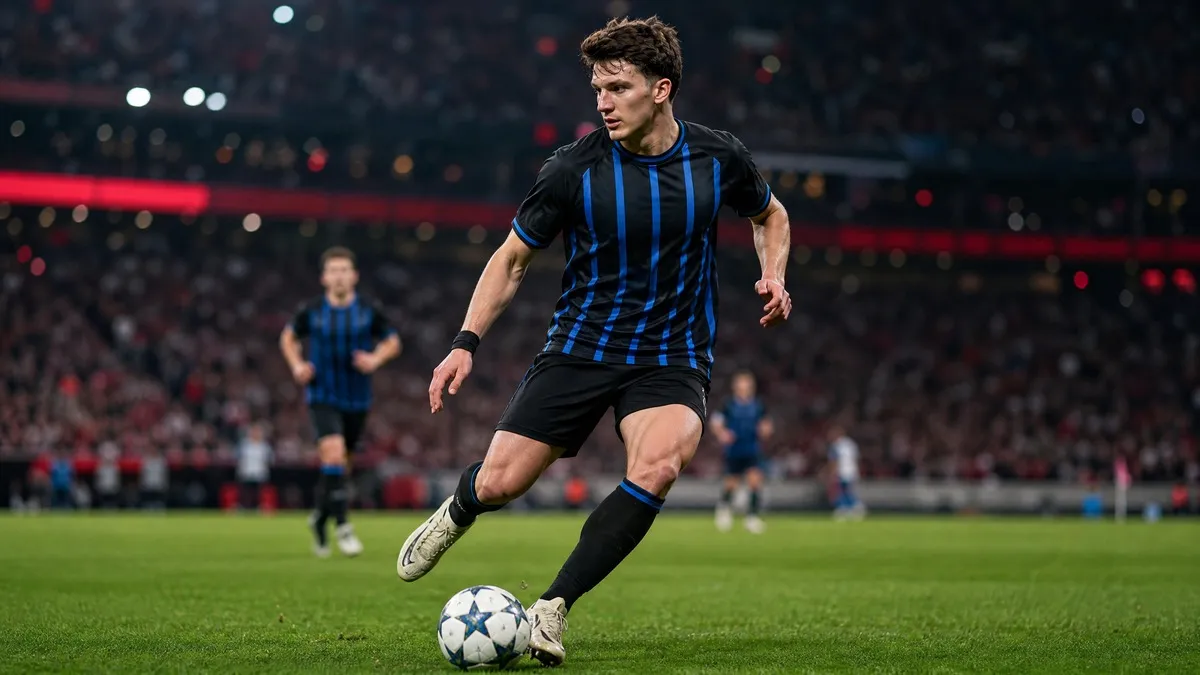
Mika Godts is doing the one thing that makes every selection debate unavoidable: producing numbers that scream international football. With Ajax, the winger has turned the Eredivisie into his personal highlight reel, posting 14 goals and nine assists while looking increasingly decisive in big moments. Now Rudi García is close to announcing Belgium’s next squad, and the conversation has sharpened around one question: is the Mika Godts Belgium national team moment finally here, or has his earlier U21 Belgium refusals complicated a breakthrough that his form demands?
Ajax have had seasons where the system made attackers look better than they were, but this feels different because Godts is manufacturing end product from chaos. Fourteen goals and nine assists in the Eredivisie is not “promising”; it is elite production for a wide forward, especially one who is often asked to create against set blocks. The Mika Godts Belgium national team debate starts with that blunt truth: he is deciding games.
What stands out in the football statistics is the variety of his contribution rather than one repeatable trick. Some goals are the classic winger’s finish across the keeper, others are late arrivals at the back post, and the assists range from cut-backs to disguised slips through crowded lanes. Ajax’s attack has leaned on his ability to accelerate the tempo, and that translates well to international football where margins are thin and transitions are king.
Godts is not a chalk-on-boots wide man who waits for overlapping full-backs to do the heavy lifting. He starts wide, but he hunts inside pockets, receiving on the half-turn and attacking the space between full-back and centre-back with real intent. That positional flexibility is exactly what a national coach like Rudi García values, because it allows Belgium to shift shapes mid-match without making substitutions.
It is easy to throw around totals, but the context is that Ajax have not been a smooth, dominant machine every week. When rhythm breaks, you need individuals who can create advantages with one carry, one feint, or one early pass. Those 14 goals and nine assists are not padded in dead rubbers; they are often the difference between frustration and control. That’s why the Mika Godts Belgium national team conversation keeps resurfacing.
Belgium’s depth in wide areas is both a blessing and a barrier, because a newcomer must be clearly better than established options to justify disruption. Leandro Trossard brings Arsenal-level tactical discipline and an eye for combination play, while Jérémy Doku offers Manchester City explosiveness and one-versus-one chaos that few defenders can survive. For the Mika Godts Belgium national team case to win, it must answer a simple coaching question: what does he add that they don’t?
The answer may be that Godts offers a hybrid of both, plus a more ruthless relationship with the penalty area than people assume. He can stretch the pitch like Doku, but he also drifts into finishing zones with the timing of a second striker, which is where Trossard often excels. If García wants Belgium to be less predictable, integrating a third profile who can swap flanks and attack the box could be a genuine tactical upgrade.
The left-wing spot is the obvious battlefield because that’s where both Doku and Trossard are most comfortable, and it’s also where Godts’ best Ajax work has come. Doku’s ceiling is terrifying, but his end product can fluctuate, while Trossard offers steadier decision-making and clever movement around a central striker. The Mika Godts Belgium national team argument hinges on whether García wants a spark off the bench or a different starter who changes the rhythm.
International managers rarely build around a debutant, but they can integrate one smartly through roles that match the player’s current strengths. Godts could be used as a second-half finisher, arriving when legs are heavy and the box is open, or as part of a dual-wing system where he and Doku swap sides to isolate full-backs. If García prioritises adaptability, the Mika Godts Belgium national team pathway becomes clearer: earn minutes through tactical utility first, then force a bigger role.
Godts’ story is not just goals and assists; it includes the uncomfortable footnote of earlier decisions to decline U21 Belgium invitations. In a national setup, those moments matter because they shape trust, relationships, and the perceived willingness to buy into a long-term project. Fans can argue that a player should choose what is best for development, but coaches often see it as a signal about commitment. That tension hangs over the Mika Godts Belgium national team discussion.
There is also the practical consequence: fewer international minutes means fewer chances to learn the language of a national team, from pressing triggers to set-piece routines. Players who come through the youth sides arrive with a built-in familiarity, while late entrants must catch up quickly under intense scrutiny. Godts can absolutely do that, but the margin for error is smaller, and every training session becomes an audition. It’s a self-inflicted pressure that could have been avoided.
International football is a short-term environment dressed up as a long-term project. Coaches have limited time, so they lean on players they trust to absorb information fast and keep the dressing room aligned. When a player has previously said “no,” even for understandable reasons, it creates a perception problem that must be repaired through communication and consistent professionalism. For the Mika Godts Belgium national team dream, rebuilding that trust is almost as important as scoring.
Selectors are pragmatic, and the simplest truth is that goals and assists can soften almost any narrative. If a player is clearly improving the team, coaches find ways to move on, especially when public pressure grows and analysts start making the case loudly. The key is whether Godts and the federation can frame the U21 Belgium issue as a learning moment rather than a standoff. If that happens, the Mika Godts Belgium national team door is not just open; it’s swinging.
In the Netherlands, few debates stay quiet when Ajax are involved, and Godts’ rise has pulled pundits into familiar arguments about timing and level. Aad de Mos has been emphatic that it is time for him to debut, essentially treating the football statistics as a selection mandate rather than a suggestion. That view resonates with fans who see Belgium needing freshness and finishing from wide areas. It also amplifies the Mika Godts Belgium national team conversation beyond Belgian media.
Valentijn Driessen’s angle is sharper: he suggests Godts has outgrown the Eredivisie, implying that the league can no longer stress-test him properly. That is both compliment and warning, because international football is not a development lab; it is a results business. If he truly has moved beyond domestic challenges, then the logical next steps are European nights, bigger opponents, and, yes, national-team minutes. The Mika Godts Belgium national team question becomes a litmus test of how Belgium values current form versus established reputation.
Every generation has this argument: do you pick the player in form or the player already proven at the top level? Godts’ supporters point to his end product and say Belgium can’t afford to ignore a winger who is constantly creating goals. Skeptics counter that the Eredivisie can inflate numbers, and that he must show the same impact against Champions League-calibre full-backs. The Mika Godts Belgium national team debate is essentially that philosophical split.
Outgrowing the Eredivisie doesn’t necessarily mean you must move immediately; it can also mean you are ready for higher-level responsibilities within your current environment. For Belgium, that could translate into calling him now to integrate him before a transfer raises the noise and expectations. If he moves to a bigger league and struggles initially, the national team might hesitate, and momentum can vanish quickly. In that sense, the Mika Godts Belgium national team window may be best attacked while his confidence is peaking.
Belgium’s recent iterations have searched for balance between possession control and transition threat, sometimes leaning too heavily on individual brilliance. Godts offers a directness that could reduce sterile spells, because he plays with forward intent and attacks the box rather than circling it. At Ajax, he has shown he can create a shot for himself quickly, which is valuable when international games tighten and chances shrink. The Mika Godts Belgium national team case strengthens when you imagine him as a solution to low-block frustration.
Yet the step up will demand cleaner decisions under pressure, especially in defensive phases where international opponents punish positional mistakes. Belgium’s wide players are often asked to track full-backs, protect half-spaces, and press on specific cues rather than chasing instinctively. Godts has the work rate, but he will need to show he can execute a strict plan, not just improvise. If he proves that in camp, the Mika Godts Belgium national team storyline shifts from “should he be called?” to “how quickly can he start?”
Rudi García will likely use training to probe the unglamorous parts of Godts’ game: how he presses in tandem with the striker, whether he blocks passing lanes intelligently, and how quickly he recovers when possession is lost. These are the details that determine trust for wide players, because one late press can expose a midfield. If Godts nails those habits, he becomes more than a highlights pick. That’s the practical route into the Mika Godts Belgium national team rotation.
International attacks often depend on instant chemistry, and Godts’ best chance is to simplify: combine quickly, attack the far post, and pick moments to dribble rather than forcing it. Belgium’s creators thrive when wingers make decisive runs that open lanes for cut-backs and second balls. Godts already lives in that world at Ajax, where his assists often come from sharp choices in crowded areas. If that translates, the Mika Godts Belgium national team addition could make Belgium less one-dimensional in big games.
Whenever a player dominates the Eredivisie, the next conversation is about where he belongs, and Ajax are used to being the launchpad. Arsenal are relevant here not only because Trossard plays there, but because Premier League clubs value wingers who can both finish and create. A move would intensify scrutiny and could either validate Godts as top-level or expose areas that need refining. Either way, it would feed directly into the Mika Godts Belgium national team narrative.
Manchester City are part of the story because Doku’s presence sets a benchmark: if you want minutes on Belgium’s left side, you are competing with a player forged in Pep Guardiola’s demanding system. That doesn’t mean Godts must copy Doku, but it does mean he must offer a clear alternative, like more consistent finishing or better box movement. Transfers can accelerate or stall that case, depending on adaptation. For now, the safest truth is that his Ajax output has earned him the right to be judged at Belgium level.
It’s tempting to treat the Premier League as the only stamp of approval, but international football often rewards specific tools rather than brand names. A winger who can create one decisive moment can be more valuable than a bigger-club player who fits a different system. Belgium don’t need Godts to be a weekly superstar in England to be useful; they need him to solve specific match problems. That’s why the Mika Godts Belgium national team conversation should not be postponed solely until after a transfer.
If García includes him, it signals more than form recognition; it suggests Belgium are willing to reset relationships and prioritise the next cycle. It would also tell Godts that the path is open if he meets standards, regardless of earlier U21 Belgium complications. For supporters, it would feel like a meritocratic selection, and for rivals like Trossard and Doku, it would raise competitive intensity. The Mika Godts Belgium national team call-up would be a statement that Belgium are evolving.
Ultimately, the Mika Godts Belgium national team question is a perfect storm of timing, numbers, and narrative. Ajax have given him a stage, the Eredivisie has provided the platform for 14 goals and nine assists, and Belgium now have a coach in Rudi García who must decide whether form outweighs history. The left wing is crowded with Leandro Trossard and Jérémy Doku, but competition is not a reason to ignore a player; it’s a reason to pick the best options. If Godts is serious about rewriting the story, the next squad list is where it begins.

Julian Mercer is a lifelong student of the game whose passion for football was sparked at an early age, after stepping onto the grass of Camp Nou as a six-year-old — a moment that left a lasting impression and set him on a permanent path into the sport. Since then, football has been both his lens on the world and his favourite language. Blending traditional fandom with a deep interest in tactics, squad building, and long-term team development, Julian has spent decades analysing the game from every angle. His fascination with football strategy was further shaped through years of immersive play in Football Manager, a series he has followed since the mid-1990s, developing a sharp eye for patterns, player profiles, and the fine margins that define success. At My World Of Football, Julian focuses on the stories beneath the surface — from tactical evolutions and managerial philosophies to the narratives that connect clubs, players, and supporters across generations. His writing aims to balance insight with accessibility, always grounded in a genuine love for the game.
Continue reading more football news