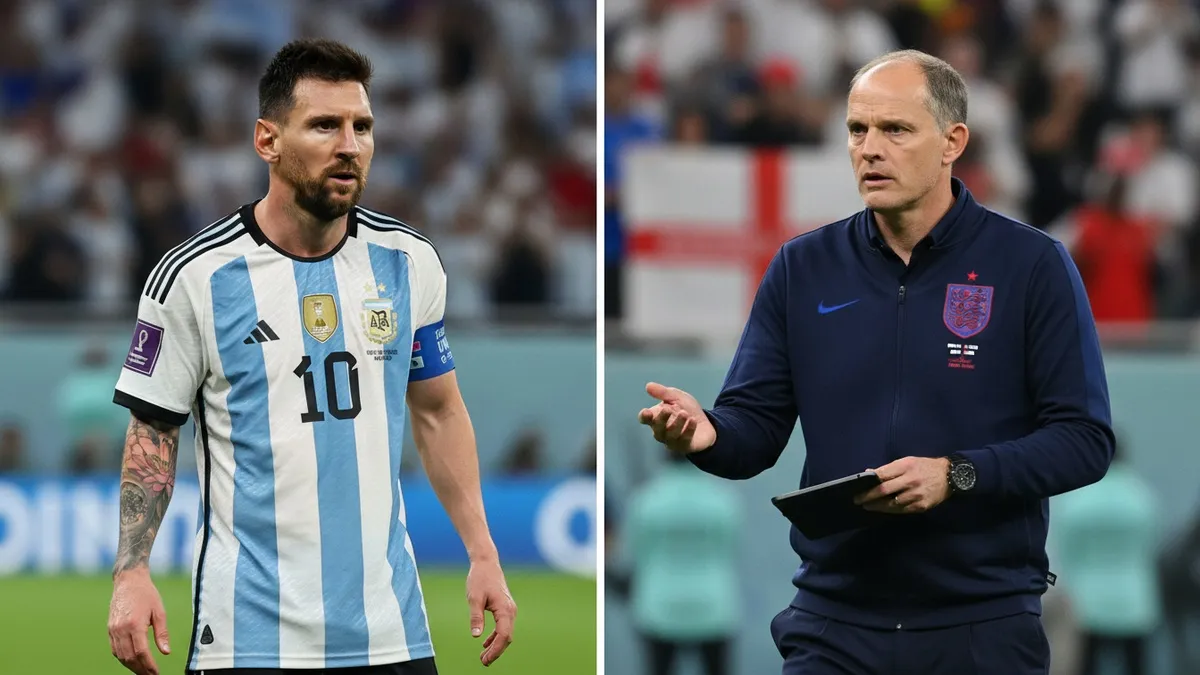
Mikel Arteta tactical approach backed by Pirlo
Andrea Pirlo Arsenal praise grows as Mikel Arteta tactical approach meets PSG in the Champions League final, testing identity, set-pieces, and control.
Andrea Pirlo Arsenal praise grows as Mikel Arteta tactical approach meets PSG in the Champions League final, testing identity, set-pieces, and control.
Andrea Pirlo doesn’t hand out tactical compliments lightly, so his defence of Arsenal’s manager lands with real weight ahead of a historic night. As the Gunners prepare for a first modern-era Champions League final against Paris Saint-Germain, Pirlo has pushed back on the lazy idea that Arsenal are only dangerous from dead balls. He argues the Mikel Arteta tactical approach has created an identity built on collective movement, defensive clarity, and controlled ambition. Now, that identity faces its loudest European examination.
Pirlo’s perspective matters because he reads football like a conductor reads a score, hearing patterns before they become obvious. In his view, the Mikel Arteta tactical approach has turned Arsenal into a side that can win in multiple ways, rather than a team living off rehearsed routines. He points to how Arsenal manage tempo without panicking, and how their defensive spacing protects the centre even when full-backs step high. That blend, Pirlo insists, is identity, not opportunism.
What Pirlo is really defending is the idea that pragmatism can be a virtue when it’s intentional and repeatable. Arsenal have been labelled rigid, even joyless at times, yet Pirlo sees a team that knows exactly when to accelerate and when to suffocate a match. The Mikel Arteta tactical approach, as he frames it, is about collective strength: the press triggers together, the rest defence is pre-set, and attacks are constructed with clear occupation of zones.
Arsenal set-pieces have been a headline all season, but headlines often flatten the truth into something clickable. Pirlo argues that strong set-plays are usually a symptom of organisation, not a substitute for creativity, and Arsenal’s work without the ball proves that. The Mikel Arteta tactical approach uses restarts as one weapon in a full arsenal, while open-play patterns still revolve around third-man runs, wide overloads, and controlled entries into the box.
In England, physicality and pace can disguise structural flaws, but Europe tends to expose them under pressure and in slower, more tactical games. Pirlo believes Arteta identity travels because it is based on spacing and timing rather than constant chaos. The Mikel Arteta tactical approach seeks to win the middle of the pitch through positioning, then win the penalty areas through detail. Against PSG, that “European language” will need to be spoken fluently.
The core of the Mikel Arteta tactical approach is control, and control starts with what happens after Arsenal lose the ball. Their rest defence is built like scaffolding: centre-backs split but remain connected, a holding midfielder protects the zone in front, and the far-side full-back tucks in to deny counters. That structure allows Arsenal to attack with numbers without feeling reckless, because the recovery routes are mapped in advance.
Collective strength is not a motivational slogan here; it’s a mechanical advantage created by repeated behaviours. Arsenal’s press is less about individual duels and more about guiding opponents into predictable exits, then collapsing on the second pass. The Mikel Arteta tactical approach also prizes defensive solidity in the box, where runners are tracked early rather than late. It’s why Arsenal can look calm under siege, even when the crowd senses panic.
Critics hear “organisation” and assume restraint, but Arsenal’s best moments come when structure releases flair rather than suppressing it. The Mikel Arteta tactical approach often uses wide rotations to free a winger for a one-v-one, while an underlapping run drags a full-back inside. Those are choreographed triggers, yet the final action remains human: a feint, a disguised pass, a finish. Pirlo’s point is that planning can amplify spontaneity.
Finals are rarely won by the side with the prettiest passing sequence; they’re won by the team that survives the worst five minutes. Arsenal’s defensive solidity is central to the Mikel Arteta tactical approach, especially in how they defend transitions after losing the ball near the box. They foul smartly, they recover into shape quickly, and they protect the central lane before chasing wide. Against PSG, those habits could decide everything.
Luis Enrique will not allow Arsenal to play a comfortable, metronomic final, because his PSG teams are built to disrupt rhythm and force constant decisions. The PSG vs Arsenal battle will hinge on whether Arsenal can keep their build-up clean under aggressive presses and shifting cover shadows. The Mikel Arteta tactical approach depends on crisp first touches and brave angles into midfield, and PSG will try to turn those angles into traps near the touchline.
There’s also the question of how Arsenal manage PSG’s ability to pin teams back with sustained possession. When PSG circulate the ball, they tempt opponents to chase, then punish the first defender who steps out late. The Mikel Arteta tactical approach typically answers that by defending space first and duels second, keeping the block compact and the distances short. But a final is emotional, and emotion is exactly what a possession team tries to manipulate.
Arsenal’s wide rotations are designed to create advantages, yet they can also open lanes for counters if the timing is off. Luis Enrique may instruct PSG to jump on the moment Arsenal’s full-back inverts and the winger stays high, aiming for the space behind the first press. The Mikel Arteta tactical approach will need clean “rest” positions to stop those breaks, especially if PSG lure midfielders forward and then play through the vacated zone.
Even possession-heavy sides can be vulnerable when the game becomes messy in specific, planned ways. Arteta can create controlled chaos by targeting second balls around PSG’s midfield line, forcing repeated defensive sprints and hurried clearances. The Mikel Arteta tactical approach often includes deliberate shots or crosses that generate rebounds, turning possession into pressure without overcommitting. In a Champions League final, one ricochet can be worth ten perfect passing moves.
It’s true that Arsenal set-pieces have become a reliable route to goals, but reliability is not the same as dependency. Arsenal also create chances through patient circulation, pulling opponents side to side until a half-space pass breaks the line. The Mikel Arteta tactical approach uses pauses as bait, slowing the game to invite pressure, then accelerating through a quick wall pass or a switch. That’s not sterile; it’s calculated storytelling.
The “overly pragmatic” critique often comes from fans who equate entertainment with constant risk, yet the highest level is about choosing risks wisely. Arsenal’s pragmatism is visible in how they defend leads, how they manage game states, and how they avoid turning matches into coin flips. The Mikel Arteta tactical approach values repeatable advantages: territory, rest defence, and set-piece pressure that forces opponents into mistakes. Pirlo sees that as maturity, not fear.
Arteta identity is clearest in the details that casual viewers feel but don’t always name. Watch how Arsenal create triangles on the flank, then use a third-man run to bypass the immediate pressure and enter the half-space. The Mikel Arteta tactical approach is obsessed with timing: the pass arrives as the runner moves, not after, and the receiver already knows the next option. That pre-connection is what makes their play look “inevitable” on good days.
Pragmatism can be psychological warfare, and Arsenal have learned to frustrate opponents into self-sabotage. By keeping the ball safely and defending transitions well, they force rivals to chase and overextend, then punish the first emotional step. The Mikel Arteta tactical approach is built to provoke impatience, especially in big games where the opponent feels the need to “do something.” In a final, that impatience can become a red card, a penalty, or a fatal turnover.
Arsenal have been discussed in the same breath as Premier League winners because their league form has shown consistency, not just flashes. Yet Europe demands a different kind of proof, where one moment can rewrite a season’s narrative. The Mikel Arteta tactical approach has been designed for sustainability, but finals are about adaptability within that framework. Arteta must decide when to stick to principles and when to bend them without breaking the team’s confidence.
This is also a personal managerial exam, because Arteta’s reputation has grown alongside his tactical influence. Win, and the Mikel Arteta tactical approach becomes a modern blueprint; lose, and critics will quickly frame it as over-coached or conservative. Pirlo’s defence is important here, because it reminds us that elite football is not a style contest but a problem-solving exercise. The final will judge which problems were anticipated and which were ignored.
Game-state management is where finals are decided, and it’s where managers earn their medals. The Mikel Arteta tactical approach must account for the emotional swings: an early goal, a controversial decision, or a spell of PSG dominance that threatens to tilt the pitch. Arsenal will need clear protocols for when to press high, when to drop into a mid-block, and when to slow the tempo with longer possessions. Those decisions must be made in seconds, not speeches.
Every final tempts a manager to chase the game with changes that look brave but actually remove structure. Arteta’s challenge is to keep the Mikel Arteta tactical approach intact while adjusting matchups, especially if PSG’s rotations start to overload one side. Substitutions should reinforce the collective behaviours—press triggers, tracking responsibilities, and distances between lines—rather than introduce confusion. The worst mistake is not losing a duel; it’s losing the map of the match.
Pirlo always returns to midfield because that’s where matches are directed, disguised, and decided. He believes Arsenal’s best chance comes from controlling central access, preventing PSG from receiving between the lines and turning toward goal. The Mikel Arteta tactical approach often uses a compact midfield box to guard the half-spaces, then springs forward when the ball is forced wide. If that central gate stays closed, PSG’s possession becomes safer, slower, and less deadly.
Arsenal also need courage in the centre, because closing access is only half the job; the other half is using the ball to escape pressure. Pirlo’s admiration for the Mikel Arteta tactical approach is tied to how Arsenal build through midfield without always needing long clearances. They create short options, play through the first wave, and then attack the space behind PSG’s midfield line. In a final, those “escape passes” can become the launchpad for the decisive attack.
When PSG press, the first pass forward becomes priceless, because it turns defence into immediate threat. Arsenal must be brave enough to receive on the half-turn and clean enough to play into the next line without gifting turnovers. The Mikel Arteta tactical approach is designed for these moments, with close support angles and rehearsed outlets that reduce panic. If Arsenal can break the press two or three times early, PSG may hesitate, and hesitation is space.
Even the best defensive sequence can fail if the second phase isn’t controlled, and PSG thrive on recycling attacks. Arsenal must win the next duel after the first clearance, squeeze the edge of the box, and step out together to keep distances compact. The Mikel Arteta tactical approach relies on collective stepping, not individual lunges, so that rebounds fall to red shirts rather than blue. In finals, the “ugly” second ball is often the prettiest trophy moment.
Whatever happens in the Champions League final, Pirlo’s defence frames Arsenal in a more accurate light: not a team surviving on Arsenal set-pieces, but one shaped by an intentional, modern identity. The Mikel Arteta tactical approach has blended defensive solidity with enough attacking flair to frighten anyone, and PSG will be the sharpest test of that balance. If Arteta’s plan holds under the brightest lights, it won’t just win a match; it will validate a philosophy built on collective strength.

Julian Mercer is a lifelong student of the game whose passion for football was sparked at an early age, after stepping onto the grass of Camp Nou as a six-year-old — a moment that left a lasting impression and set him on a permanent path into the sport. Since then, football has been both his lens on the world and his favourite language. Blending traditional fandom with a deep interest in tactics, squad building, and long-term team development, Julian has spent decades analysing the game from every angle. His fascination with football strategy was further shaped through years of immersive play in Football Manager, a series he has followed since the mid-1990s, developing a sharp eye for patterns, player profiles, and the fine margins that define success. At My World Of Football, Julian focuses on the stories beneath the surface — from tactical evolutions and managerial philosophies to the narratives that connect clubs, players, and supporters across generations. His writing aims to balance insight with accessibility, always grounded in a genuine love for the game.
Continue reading more football news