Myworldoffootball
Mohamed Salah injury update: Liverpool brace for City
Mohamed Salah injury update as Liverpool weigh his FA Cup return vs Man City, manage Alisson and Chiesa issues, and chase Champions League hopes.
Mohamed Salah injury update as Liverpool weigh his FA Cup return vs Man City, manage Alisson and Chiesa issues, and chase Champions League hopes.
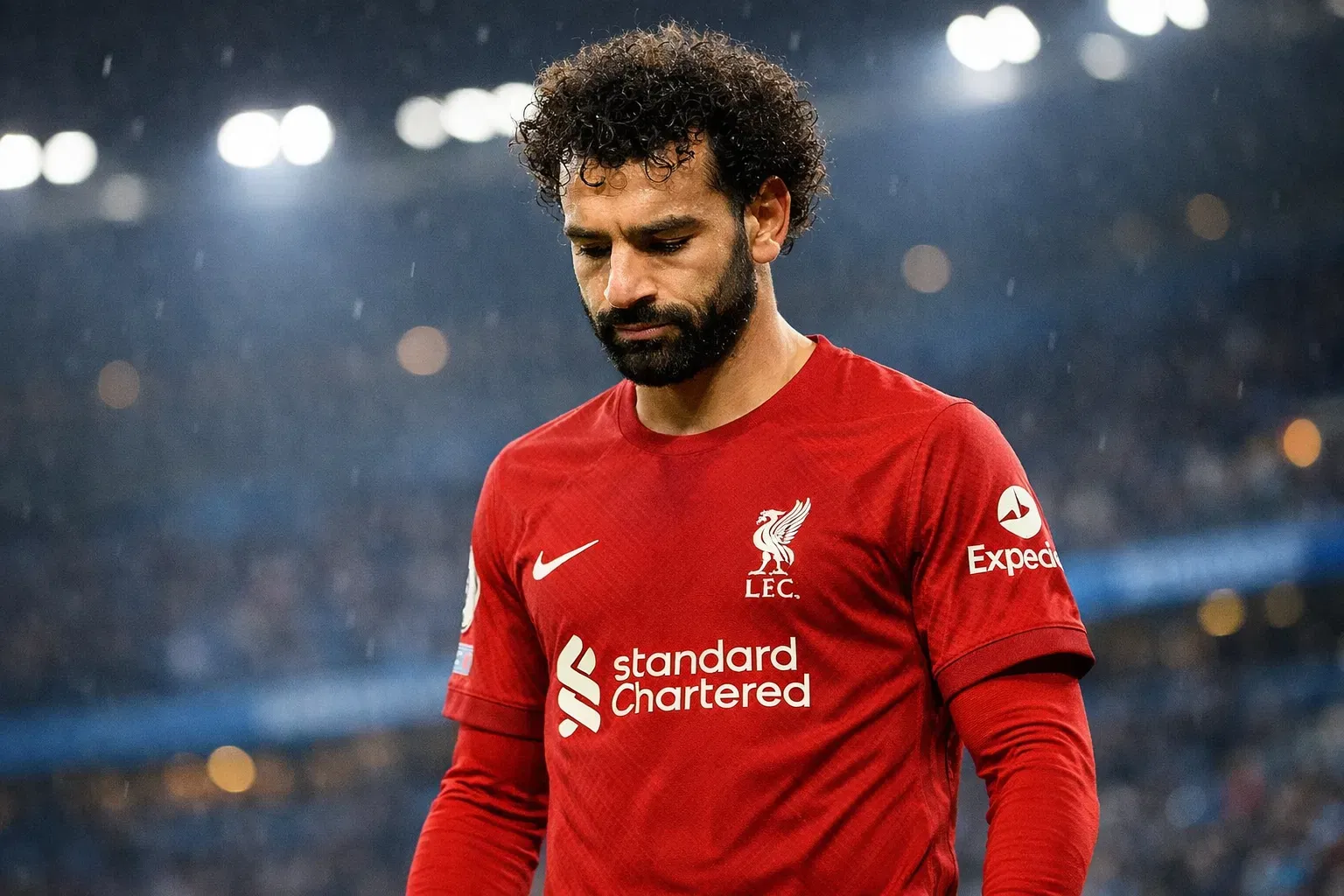
Liverpool’s season has started to feel like a weekly negotiation with the treatment room, and the Mohamed Salah injury update is now the headline every supporter searches for before they dare look at the fixture list. After scoring in a Champions League win over Galatasaray on March 18, Salah’s momentum was halted by a muscle issue that quickly snowballed into missed matches for club and country. With an FA Cup clash against Manchester City looming, Liverpool’s margins in the Premier League are tightening, and the emotional temperature around Anfield is rising.
The latest Mohamed Salah injury update begins with a familiar story: a big European night, a decisive contribution, and then the abrupt thud of bad news. Salah’s goal against Galatasaray on March 18 felt like a reminder that even in a transitional Liverpool campaign, their most reliable finisher still tilts games. Yet the aftermath brought a muscle injury that forced him out of key domestic minutes, leaving Liverpool to improvise in attack.
What makes this Mohamed Salah injury update particularly unsettling is the timing, because Liverpool’s schedule offers no gentle re-entry points. The club is juggling cup ambition, a league sprint for Champions League qualification, and the mental fatigue that comes with constant selection reshuffles. When Salah is absent, Liverpool lose not only goals but structure, because opponents defend differently when his diagonal runs and right-side gravity are missing.
A muscle issue is rarely just “a knock,” and every Mohamed Salah injury update is filtered through that reality. Sprint-heavy wide forwards live on repeated accelerations, decelerations, and sharp changes of direction, which can turn minor discomfort into a lingering problem if rushed. Liverpool’s staff will be weighing the short-term temptation of a quick return against the long-term cost of recurrence. For a player who carries such a load, caution is often the smartest form of ambition.
The international withdrawal sharpened the seriousness of the Mohamed Salah injury update, because Salah rarely steps away from Egypt duty unless the situation demands it. Pulling out of international commitments suggests Liverpool and the national team aligned on protecting the player’s recovery timeline. It also means his rehab can be tightly controlled at the AXA Training Centre, where Liverpool can tailor intensity, monitor fatigue, and plan a return without the disruption of travel and match pressure.
In the latest round of Liverpool FC news, Arne Slot’s comments have carried a careful optimism: hope for a quick recovery, but no guarantees. That measured tone is typical of modern elite management, where transparency can be a competitive disadvantage and false certainty can create backlash. Still, the subtext is clear: Liverpool want Salah available, especially with the FA Cup offering a direct path to silverware and a psychological lift.
The Mohamed Salah injury update becomes even more significant because the opponent is Manchester City, a team that punishes any drop in attacking threat. City can suffocate sides that lack outlets, and Salah is Liverpool’s most credible escape route when pressure builds. Slot’s tactical dilemma is whether to plan as if Salah will start, or to build a full game model without him, then treat his availability as a late bonus rather than a structural necessity.
If the Mohamed Salah injury update ends with him missing out, Liverpool’s right side changes character completely. The team may rely more on central combinations and left-sided progression, which can make their attack easier to predict against an opponent as well-drilled as City. It also shifts the burden of end product onto other forwards, who may offer energy and pressing but not the same ruthless finishing. In knockout football, that difference is often the margin.
For an FA Cup preview, Slot’s optimism reads like a manager trying to keep every option alive until the last training session. The Mohamed Salah injury update may hinge on how he responds to high-speed running and whether he can complete a full session without reaction. Even if he’s cleared, Liverpool must decide whether to start him or use him as a controlled impact substitute. Against City, the first choice brings upside, but also risk.
Liverpool sitting fifth adds urgency to every Mohamed Salah injury update, because the Premier League table is unforgiving when momentum stalls. Champions League qualification is not just prestige; it shapes summer recruitment, squad depth, and the club’s ability to keep elite talent satisfied. Dropped points in this phase can be traced back to tiny moments, and Salah’s presence often turns those moments into goals. Without him, Liverpool’s conversion rate can flatten.
The broader Premier League injury report around Liverpool has become a recurring theme, and it’s not only about who is missing but who is playing through limitations. Rotation becomes harder when multiple positions are compromised, and performance levels can swing from week to week. In a tight race for the top four, even a short run of patched-up lineups can tilt the season. That’s why the Mohamed Salah injury update feels like a league-position story as much as a medical one.
Strip the emotion away and the Mohamed Salah injury update still reads like a spreadsheet problem: expected goals, win probability, and points projection. Salah changes the risk profile of every match because he creates chances from low-probability situations and forces opponents to defend deeper. That, in turn, gives Liverpool more territory and more set-piece pressure, even when they are not at their fluent best. Over a run of fixtures, that advantage accumulates.
Liverpool’s Champions League hopes also complicate the Mohamed Salah injury update, because European intensity can be a stress test for bodies already close to the edge. The tempo is higher, the transitions are sharper, and the emotional spikes are bigger, all of which can influence recovery. Chasing multiple competitions is what elite clubs do, but it demands depth and luck. When luck turns and injuries stack, the calendar stops being a stage and becomes a trap.
While the Mohamed Salah injury update dominates conversation, Liverpool’s challenges widen when other key names appear on the injury list. Alisson’s importance is often felt most when he isn’t there, because his shot-stopping and calm distribution can rescue points on days when Liverpool are ragged. A goalkeeper absence changes how high the defensive line dares to sit and how aggressively the team presses. Those tactical ripples can reach every outfield player.
Federico Chiesa’s situation adds another layer to the Liverpool FC news cycle, because Liverpool need attacking depth precisely when Salah’s minutes are uncertain. Chiesa offers direct running and one-v-one threat, but any fitness concerns limit Slot’s ability to rotate without losing quality. When multiple attackers are unavailable, the remaining options are asked to play more, press more, and decide more. That workload can create the very fatigue that leads to the next injury headline.
In a week dominated by the Mohamed Salah injury update, Alisson’s fitness can feel like the quieter storyline that ends up deciding the tie. Against Manchester City, Liverpool may concede high-quality chances no matter how well they prepare, because City’s patterns can open any defense. Having an elite goalkeeper changes the psychology of those moments, allowing defenders to stay brave and midfielders to keep pressing. Without him, caution can creep in and distances can stretch.
If the Mohamed Salah injury update results in reduced minutes rather than a full return, Chiesa becomes the natural pressure valve—if he’s available. He can replicate some of the vertical threat that keeps opponents honest, even if his style differs from Salah’s. Liverpool need runners who can turn a regain into a counterattack, especially against City’s rest defense. When that outlet exists, Liverpool’s defending becomes more proactive, not merely reactive.
Any FA Cup preview featuring Liverpool and Manchester City eventually becomes a conversation about star power, and the Mohamed Salah injury update sits at the center of it. Salah has been one of the few forwards in England who can consistently hurt City in big moments, not just with goals but with the threat that forces City to alter their spacing. Even when he doesn’t score, he can create the chaos that allows others to arrive free in the box.
The Salah Manchester City subplot also matters because cup ties are emotional events, and Anfield’s mood shifts depending on whether the talisman is in the squad. If Salah is missing, the stadium’s belief has to be generated differently, through early tackles, aggressive pressing, and a sense of collective defiance. If he plays, belief becomes simpler, more instinctive, because supporters have seen him decide these nights before. That emotional edge can be worth a goal.
Manchester City’s preparation will be shaped by the Mohamed Salah injury update, because their defensive priorities change if he starts. With Salah, City must protect the space behind their left-back and manage the timing of midfield cover, often forcing an extra layer of caution. Without him, City can squeeze higher, trust their counter-press more, and take greater risks in possession. Elite teams don’t just react to talent; they react to the problems that talent creates.
If the Mohamed Salah injury update ends in disappointment, Liverpool still have paths to win, but they require collective precision. Slot’s side would need coordinated pressing triggers, ruthless set-piece delivery, and midfield runners arriving on time to compensate for the missing end product. They would also need to be clinical with the few chances that appear, because City rarely allow volume. Cup football can reward discipline, yet it usually demands at least one moment of quality.
It’s easy to reduce the Mohamed Salah injury update to minutes and medical jargon, but for supporters it lands as something more personal. Salah has been a constant through managerial change, tactical evolution, and the natural churn of squads, so his absence feels like the removal of a familiar compass. Fans don’t just worry about goals; they worry about identity, about whether the team still looks like Liverpool in the biggest moments. That’s an emotional tax.
The tension is amplified by the league context, because fifth place feels like a cliff edge rather than a platform. Every Mohamed Salah injury update becomes a referendum on whether Liverpool can sustain a Champions League chase while dealing with physical setbacks. Supporters can accept injuries as bad luck, but they struggle with the sense of opportunities slipping away. The cup tie against City, meanwhile, is both a threat and a promise: pain if it goes wrong, euphoria if it goes right.
When the Mohamed Salah injury update points toward absence, leadership has to come from elsewhere, and that can be healthy in the long run. Senior figures must demand intensity, and younger players must take responsibility rather than waiting for rescue. Liverpool’s best eras have always mixed talent with collective will, where the crowd feels the team pulling in the same direction. If Salah can’t play, the challenge is to make the story about the badge, not the missing name.
Sometimes the most powerful version of a Mohamed Salah injury update is the one that ends with him on the bench, ready. Even a 20-minute cameo can tilt a match, force a tactical adjustment, and lift the crowd into a higher register of belief. For Liverpool, that lift can spill into the next league game, the next European night, the next month. In a season defined by fine margins, the psychological boost of seeing Salah move freely again can be priceless.
Liverpool’s next steps will be judged through the lens of the Mohamed Salah injury update, but the broader truth is that this squad is being tested in every department: depth, resilience, and adaptability. Slot’s hope is that Salah’s recovery accelerates in time to influence the FA Cup and the league run-in, without inviting a damaging relapse. With Alisson and Chiesa also part of the wider fitness picture, Liverpool’s campaign feels like a balancing act performed at full speed. If Salah returns, even gradually, belief will surge; if not, the chase becomes harder, but not hopeless.

Julian Mercer is a lifelong student of the game whose passion for football was sparked at an early age, after stepping onto the grass of Camp Nou as a six-year-old — a moment that left a lasting impression and set him on a permanent path into the sport. Since then, football has been both his lens on the world and his favourite language. Blending traditional fandom with a deep interest in tactics, squad building, and long-term team development, Julian has spent decades analysing the game from every angle. His fascination with football strategy was further shaped through years of immersive play in Football Manager, a series he has followed since the mid-1990s, developing a sharp eye for patterns, player profiles, and the fine margins that define success. At My World Of Football, Julian focuses on the stories beneath the surface — from tactical evolutions and managerial philosophies to the narratives that connect clubs, players, and supporters across generations. His writing aims to balance insight with accessibility, always grounded in a genuine love for the game.
Continue reading more football news