Myworldoffootball
Real Madrid managerial change: Arbeloa under fire
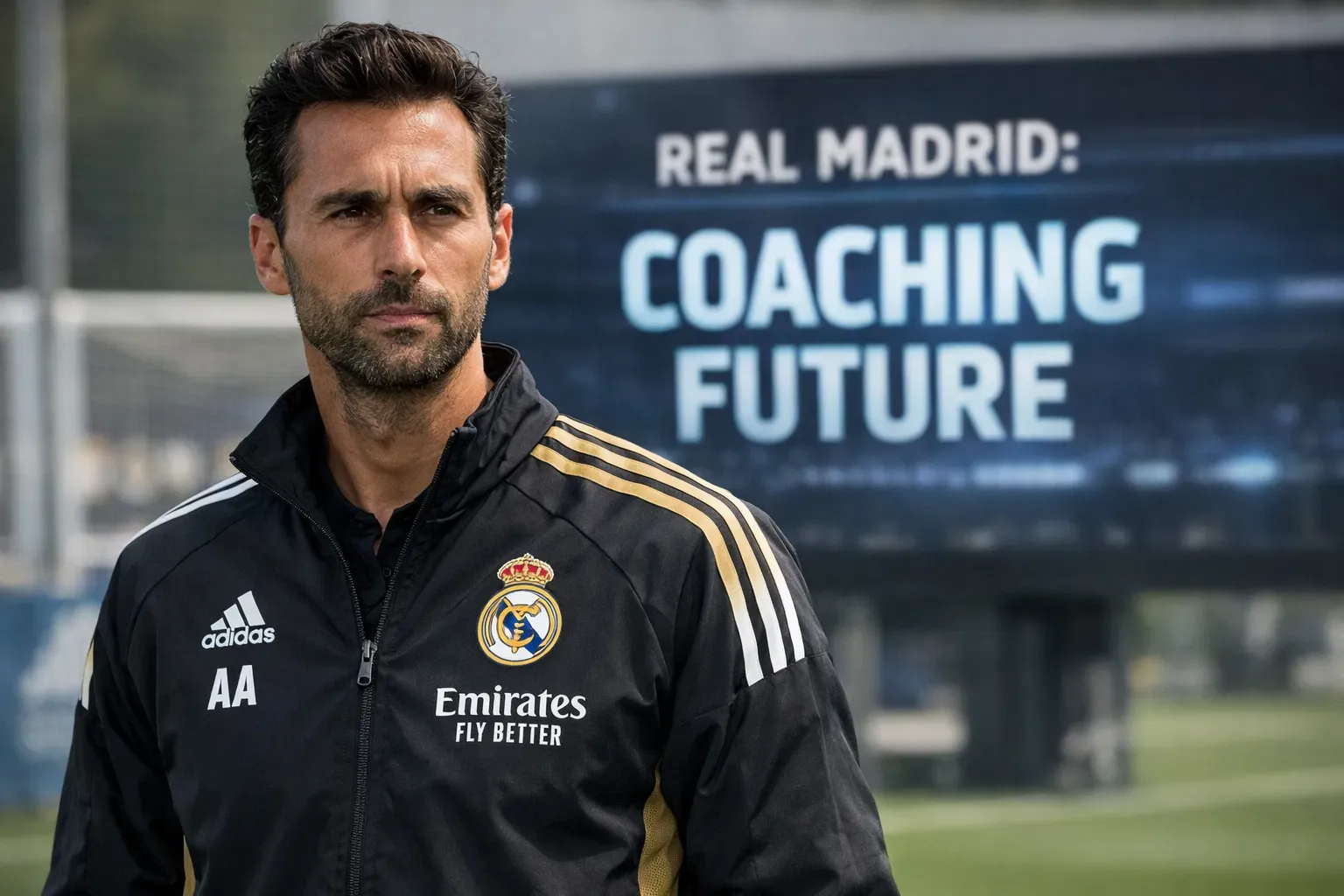
Real Madrid managerial change puts interim Alvaro Arbeloa under intense pressure after Copa del Rey exit, La Liga gap to Barcelona, and Bayern tie.
Real Madrid managerial change puts interim Alvaro Arbeloa under intense pressure after Copa del Rey exit, La Liga gap to Barcelona, and Bayern tie.
There’s a particular kind of noise around the Bernabéu when a season tilts off its expected axis, and the Real Madrid managerial change has created exactly that. The January 2023 decision to sack Xabi Alonso was meant to reset standards, yet it has instead opened a debate about identity, authority, and short-term thinking. Alvaro Arbeloa’s appointment as interim coach sounded romantic on paper, but romance disappears quickly when results wobble. With Bayern Munich looming, Madrid feel caught between nostalgia and necessity.
The Real Madrid managerial change in January 2023 landed with the blunt force of a club that rarely tolerates ambiguity, even when trophies are in reach. Sacking Xabi Alonso wasn’t just a sporting decision; it was a message that the board believed the trajectory was wrong, or at least insufficiently “Madrid.” Fans understood the ruthless logic, but they also sensed risk in pulling the plug midstream. That risk has since become the season’s defining theme.
What makes this Real Madrid managerial change so destabilising is the timing and the symbolism. Alonso represented modern coaching credibility, a bridge between the club’s midfield golden era and a tactical future. Replacing him with Alvaro Arbeloa, a former full-back with strong academy ties, felt like a move designed to calm the dressing room and the stands simultaneously. Instead, the decision has invited constant comparison, and comparisons are unforgiving when points are dropped.
Xabi Alonso’s dismissal created an immediate vacuum of clarity, because his reputation suggested a long-term project rather than a short-term patch. Even when Real Madrid results were uneven, there was a sense of structure: controlled build-up, defined pressing triggers, and a midfield that looked coached rather than improvised. The Real Madrid managerial change removed that framework overnight, and the squad had to re-learn routines mid-season. In a club addicted to momentum, that’s a dangerous experiment.
At Real Madrid, the word “interim” is less a job title than a countdown clock, and that’s where managerial pressure begins to distort decisions. Arbeloa arrived knowing every draw would be interpreted as a referendum, every substitution as a hint of insecurity. The Real Madrid managerial change therefore didn’t just swap coaches; it changed the emotional climate around selection, fitness management, and risk-taking. When a coach is auditioning in public, the team often plays like it too.
Alvaro Arbeloa’s credentials are real, and that’s why the Real Madrid managerial change initially earned a cautious benefit of the doubt. He understands the club’s language, the academy pipeline, and the political geometry of the dressing room. Yet senior management doesn’t hand out patience as a loyalty reward, and fans don’t grade on sentimentality. The interim coach has been asked to deliver stability while also proving he deserves a future beyond the emergency.
The problem is that Arbeloa’s tenure has not aligned with the club’s expectations of control and inevitability. Real Madrid results have looked choppy, with games oscillating between bursts of brilliance and long spells of uncertainty. That inconsistency is fatal in a title race, and it magnifies every tactical compromise. The Real Madrid managerial change was supposed to sharpen the edge; instead, it has sometimes dulled it, especially against organised opponents.
Numbers are not the whole story, but at Real Madrid they become the story when trophies wobble, and Arbeloa’s win percentage being lower than Alonso’s has become a recurring headline. That single statistic has framed the Real Madrid managerial change as regression rather than renovation. It also fuels the suspicion that the club traded a coherent plan for a familiar face. When the Bernabéu starts counting points like a balance sheet, the coach is already in trouble.
Arbeloa has leaned on man-management, trying to revive intensity and simplify roles, but simplification can slide into predictability. The Real Madrid managerial change has produced a side that sometimes attacks in straight lines, relying on individual duels rather than layered patterns. Vinicius Jr. remains the obvious spark, yet even his threat can be isolated when the supporting structure is thin. Madrid’s best nights still exist, but they feel more improvised than engineered.
The Copa del Rey exit became the emotional turning point of the Real Madrid managerial change, because cup competitions are where Madrid measure authority. Losing that route to silverware didn’t just remove a trophy; it removed a safety net that might have softened La Liga frustration. The performance itself mattered as much as the result, with phases of play that looked hesitant and disconnected. For a club that sells certainty, hesitation is the most alarming product.
In the weeks after the cup disappointment, Real Madrid results in the league began to feel heavier, as if the team carried the defeat into every first half. Arbeloa’s choices were scrutinised: the tempo of the press, the balance between control and transition, and the use of wide overloads. The Real Madrid managerial change now had a visible cost, and supporters started asking whether the club had solved a problem or created a bigger one.
One consequence of managerial pressure is rotation that looks like uncertainty rather than strategy, and that has been a theme under Arbeloa. The Real Madrid managerial change has coincided with line-ups that shift too often to build automatisms, especially in midfield connections and full-back support. When players don’t know which partnerships will repeat, they play safer passes and take fewer coordinated risks. Madrid’s ceiling remains high, but their rhythm has been unreliable.
Vinicius Jr. has often been the thermometer for Madrid’s mood, and during this Real Madrid managerial change he has alternated between unstoppable and stranded. When the team’s spacing collapses, he receives the ball with two defenders already set, forced into hero-ball dribbles. When the spacing is right, he creates panic and opens lanes for others. Arbeloa needs the second version more often, because relying on miracles is not a sustainable plan.
The La Liga standings have turned the Real Madrid managerial change into a weekly referendum, because Barcelona’s consistency makes every Madrid wobble feel twice as damaging. A significant gap at this stage doesn’t just threaten the title; it erodes the aura that Madrid can always hunt you down. Fans can accept a bad night, but they struggle to accept a pattern. The league table has become a mirror reflecting Madrid’s uncertainty back at them.
Barcelona’s advantage has also sharpened the tactical questions around Arbeloa’s approach. When Madrid chase games, they can look stretched, with the midfield bypassed and the defence exposed to counters. The Real Madrid managerial change was supposed to bring clearer control, yet matches have sometimes become too open for a team that wants to dominate. If the league race is slipping, Madrid must at least look like Madrid while it slips, and that’s the real anxiety.
Madrid’s best sides have always had a ruthless second phase: after the first attack is stopped, they recycle, re-position, and strike again with better angles. During this Real Madrid managerial change, that second phase has been inconsistent, leading to one-and-done attacks that invite transitions. When opponents survive the first wave, they often find space behind Madrid’s full-backs. Arbeloa’s challenge is to restore that patient suffocation without killing the team’s vertical threat.
The points gap in the La Liga standings is partly explained by what happens in the five seconds after Madrid lose the ball. Under Arbeloa, the counter-press has been uneven, and that exposes centre-backs to sprinting duels they shouldn’t have to take repeatedly. The Real Madrid managerial change has therefore altered the team’s risk profile, making matches feel like coin flips rather than controlled narratives. Against elite opponents, those flips usually land the wrong way.
The Champions League has a way of turning club politics into theatre, and this Real Madrid managerial change is heading straight for a dramatic act against Bayern Munich. In Europe, Madrid’s identity is not negotiable; it is expected, almost ritualistic. Arbeloa knows that one convincing night can change the tone of an entire season, while one timid night can end a career before it begins. That is managerial pressure in its purest form.
Bayern represent the kind of opponent that punishes soft details: late tracking, loose spacing, and half-pressing. For Arbeloa, the tie is not only about tactics but about authority, because the players must believe in the plan when the game tightens. The Real Madrid managerial change has left the squad in a liminal space, unsure whether they are building something new or simply surviving until the next appointment. A European knockout does not allow that ambiguity.
Bayern will target the spaces Madrid leave when they push numbers forward, especially in the channels behind the full-backs. Arbeloa must decide whether to protect those areas with a deeper rest defence or to gamble on winning the ball higher, and that choice will define the Real Madrid managerial change in the public mind. Midfield control will also be decisive, because Bayern thrive when games become end-to-end. In tight ties, set-pieces and second balls often decide legacies.
Real Madrid’s European aura can carry a team through moments of chaos, but it works best when the touchline projects calm. If Arbeloa appears reactive, the players can become reactive too, and that is how Bayern seize initiative. The Real Madrid managerial change has created a fragile confidence that needs reinforcement through a clear, repeatable plan. One brave, coherent performance could make the interim label feel irrelevant; one muddled display will make it permanent in the worst way.
No matter how the season ends, the Real Madrid managerial change has already taught the club something about its own impatience. Sacking Xabi Alonso might still be defended internally as necessary, but the downstream effects are now visible in cohesion, mood, and the way every match feels like a trial. Arbeloa’s future is tied to outcomes, yet it is also tied to whether Madrid look like they are moving toward a defined identity. At the Bernabéu, style is not decoration; it is proof.
If Arbeloa delivers a Champions League surge, the narrative flips quickly, because Madrid are the sport’s greatest masters of reinvention. If the slide continues, the club will likely seek a marquee appointment, and the interim era will be filed as a cautionary tale. Either way, the Real Madrid managerial change will be remembered as a moment when the club chose disruption over continuity. That choice can create greatness, but it can also create drift, and Madrid cannot afford drift for long.
Madrid’s decision-makers will weigh trophies, performances, and dressing-room temperature, but they will also consider optics: what does the club look like to the world? The Real Madrid managerial change has already produced questions from fans about planning and succession, especially when Barcelona appear more settled. A board that prides itself on control hates looking reactive. Arbeloa therefore needs not only wins, but a sense that he is steering rather than merely holding the wheel.
Vinicius Jr. is central to Madrid’s present and future, and the next coach—whether Arbeloa or someone else—must build a structure that multiplies his impact. During this Real Madrid managerial change, his output has often masked wider issues, but it has also highlighted what Madrid can become when the attack is properly supported. The club’s next steps should prioritise patterns that free him without making him the only solution. Madrid’s best eras have always paired stars with systems, not stars instead of systems.
The coming weeks will decide whether this Real Madrid managerial change is remembered as a bold correction or an avoidable wobble in a season that demanded clarity. Arbeloa still has time to reshape the story, but time at Madrid is measured in big nights, not calendar pages. Bayern Munich offer the ultimate stage to prove that his ideas can survive elite pressure and that the squad still believes. If he succeeds, the interim tag dissolves; if he fails, Madrid will move on, as they always do.

Julian Mercer is a lifelong student of the game whose passion for football was sparked at an early age, after stepping onto the grass of Camp Nou as a six-year-old — a moment that left a lasting impression and set him on a permanent path into the sport. Since then, football has been both his lens on the world and his favourite language. Blending traditional fandom with a deep interest in tactics, squad building, and long-term team development, Julian has spent decades analysing the game from every angle. His fascination with football strategy was further shaped through years of immersive play in Football Manager, a series he has followed since the mid-1990s, developing a sharp eye for patterns, player profiles, and the fine margins that define success. At My World Of Football, Julian focuses on the stories beneath the surface — from tactical evolutions and managerial philosophies to the narratives that connect clubs, players, and supporters across generations. His writing aims to balance insight with accessibility, always grounded in a genuine love for the game.
Continue reading more football news