Myworldoffootball
Real Madrid transfers: Riquelme claims Haaland & Rodri
Real Madrid transfers ignite election drama as Enrique Riquelme promises Haaland and Rodri, faces denials, while Florentino Pérez teases a record bid.
Real Madrid transfers ignite election drama as Enrique Riquelme promises Haaland and Rodri, faces denials, while Florentino Pérez teases a record bid.
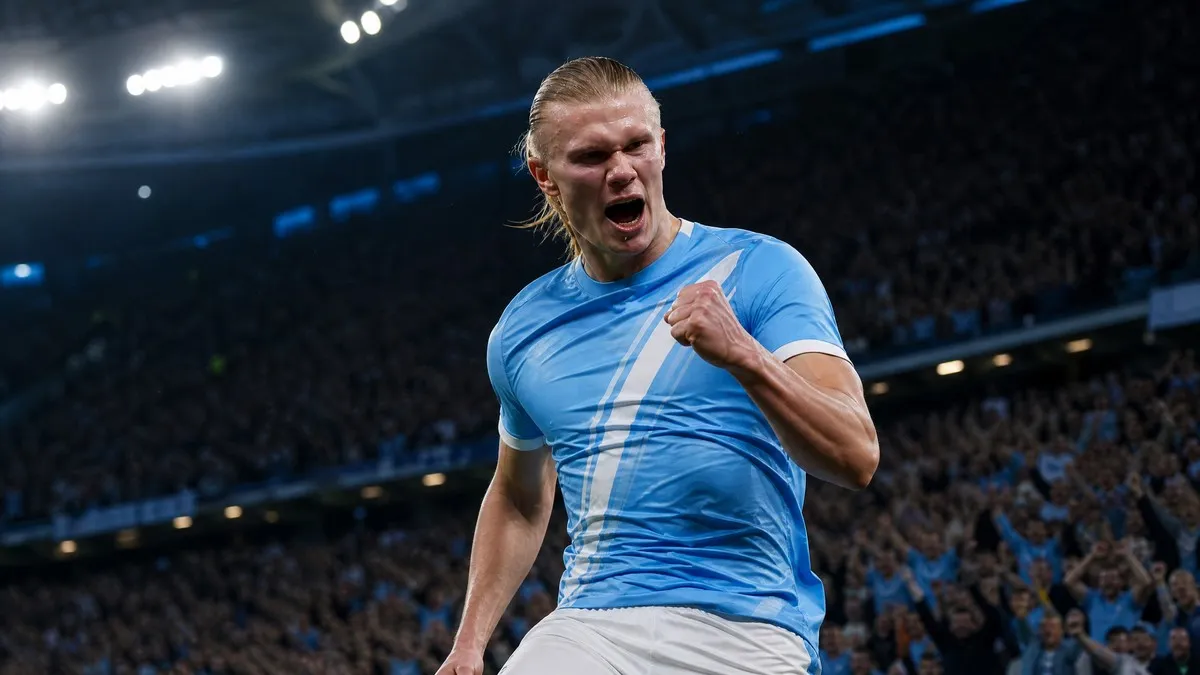
Real Madrid transfers rarely stay confined to the pitch, but this presidential race has turned them into a full-blown campaign weapon. Challenger Enrique Riquelme has gone public with claims that he can deliver Manchester City stars Erling Haaland and Rodri, then doubled down with a headline-grabbing pledge to compensate members if he fails. The club and Haaland’s camp have pushed back quickly, while Florentino Pérez counters with talk of a record bid for a “superstar,” insisting Haaland is not the target. The noise feels familiar, and fans know why.
Riquelme’s pitch is built to dominate timelines: promise two of Europe’s most coveted players, attach a price tag to failure, and dare the electorate to believe. By framing Real Madrid transfers as a contractual obligation rather than a dream, he’s trying to convert skepticism into a wager. The figure—15 million euros—sounds like a personal guarantee to members, a political stunt with legal dressing. It also raises immediate questions about enforceability, timing, and what “deliver” actually means.
In campaign terms, the pledge is clever because it acknowledges the fan base’s fatigue with empty slogans. Real Madrid transfers have been used as electoral bait before, but rarely with a stated financial penalty attached. Riquelme is essentially saying, “Hold me accountable with your vote and your wallet,” which plays well in an era of receipts and deadlines. Yet the more precise the promise, the more vulnerable it becomes to scrutiny from lawyers, journalists, and rival camps.
Socios respond to accountability because they’ve lived through summers of rumors that evaporate the moment a rival club refuses to sell. By offering compensation, Riquelme tries to translate Real Madrid transfers from fantasy into measurable deliverables, like a business plan. It also flatters members by treating them as stakeholders owed restitution, not just supporters asked for patience. Still, many will wonder whether 15 million euros is symbolic compared to the emotional and sporting cost of a failed “Haaland and Rodri” campaign.
The phrase “legally binding” is doing heavy lifting, because election promises usually live in the gray zone between intent and capability. If Real Madrid transfers are blocked by Manchester City’s refusal, player reluctance, or financial rules, does that trigger the payout or offer an escape clause? Political opponents will demand the document, the conditions, and the mechanism for distributing funds to members. Until those details are public, the pledge risks feeling like a headline engineered to travel faster than the paperwork.
Within hours, the pushback arrived, which is typically how modern Real Madrid transfers sagas begin: a claim, a denial, and a frenzy over who benefits. Haaland’s camp distancing itself from the story is significant because it signals there is no active negotiation they want acknowledged. For Manchester City, shutting down talk of Rodri and Haaland is also about dressing-room stability, especially when the club’s season objectives demand focus. In other words, the denials are not surprising, but they do set the tone.
Denials don’t kill rumors; they reshape them into a battle over credibility. Real Madrid transfers often live off the idea that “everyone denies it until it’s done,” and fans know this script by heart. But the political context changes the stakes, because now a candidate’s legitimacy is tied to the plausibility of the moves. If Riquelme can’t show evidence of traction, the denials become ammunition for those portraying him as reckless, opportunistic, or simply out of his depth.
For Haaland’s representatives, a quick denial protects leverage and controls narrative. If Real Madrid transfers chatter swells during an election, it can create pressure for public statements, distract from performance, and invite questions about loyalty. By closing the door publicly, they keep any future options private and avoid being used as campaign material. It also signals to Manchester City that the player’s side won’t destabilize the club for political theater elsewhere.
Rodri is arguably the more structurally important player, which is exactly why his name triggers immediate skepticism. Real Madrid transfers for a world-class holding midfielder are always tempting, but Manchester City’s system is built around Rodri’s control, availability, and tactical intelligence. Even if a player is intrigued, clubs can simply say no, and City have every incentive to do so. For Madridistas, that makes Rodri’s inclusion feel like an ambitious flourish designed to sound definitive rather than feasible.
Pérez has responded in the most Pérez way possible: not by debating the specifics, but by raising the ceiling. A promised €150 million bid for a “superstar” reframes the conversation around institutional power, implying Real Madrid transfers will be massive regardless of who’s campaigning. Crucially, Pérez insists Haaland is not the primary target, which simultaneously cools the election-fueled rumor and keeps Madrid’s options open. It’s a message to members: stability can still be spectacular.
The subtext is that Pérez doesn’t need to name the player to win the news cycle. Real Madrid transfers under his leadership have often relied on timing, discretion, and the club’s gravitational pull rather than public bargaining. By talking about a record bid, he reassures fans that ambition remains intact, while also highlighting the difference between executive strategy and campaign bravado. In elections, that contrast matters: one side offers named dreams, the other offers institutional certainty.
Declaring Haaland “not the priority” is a classic piece of strategic ambiguity. It reduces the risk of being seen as reacting to Riquelme, yet it keeps Real Madrid transfers speculation alive because it invites the next question: if not Haaland, then who? It also avoids antagonizing Manchester City unnecessarily, which can be important in future negotiations across players, agents, and commercial relationships. Fans, meanwhile, will read it as either misdirection or a genuine pivot toward a different profile.
The figure is less about accounting and more about signaling. In the Real Madrid transfers ecosystem, big numbers communicate seriousness to agents and players, and they warn rivals that Madrid can still change a market with one move. For voters, it’s reassurance that the club’s financial muscle remains a competitive advantage, even in an inflated era. Yet it also invites scrutiny about squad balance, because supporters increasingly want not just stars, but coherent planning across positions.
Spanish football has a long memory for campaign-era transfer pledges, and Madrid is not immune to the tradition. Real Madrid transfers have historically functioned as both sporting strategy and political currency, with candidates using marquee names to personify ambition. The logic is simple: a superstar is an instantly understandable plan, while governance reforms feel abstract. This is why the current race feels like a callback, even if the modern market makes “guaranteed” signings far harder to deliver.
What has changed is the speed of the feedback loop. In prior eras, a promise could breathe for weeks before being challenged; now denials, documents, and counterclaims arrive within hours. Real Madrid transfers talk becomes a live fact-checking exercise, and fans play an active role by amplifying clips, translating quotes, and comparing timelines. That environment punishes vagueness and rewards clarity, which is why Riquelme’s detailed pledge is both a strength and a potential trap.
In La Liga news cycles, elections are often framed as a choice between visions, and transfers are the easiest vision to sell. Real Madrid transfers promises work because they compress a complex project into a single image: a player holding a shirt, a stadium roaring, a rival rattled. Candidates borrow the glamour of the market to imply competence in everything else, from finances to sporting structure. But the market is volatile, and voters have learned that glamour doesn’t guarantee delivery.
Release clauses, state-backed revenues, and long-term contracts have made elite players harder to pry loose, even for Madrid. Real Madrid transfers at the very top end now require alignment across player desire, selling-club willingness, and timing, not just money. That reality weakens campaign tactics based on certainty, because the public knows the obstacles. When a candidate claims inevitability, fans immediately ask about contract length, wages, agent relationships, and whether the selling club is even open to a conversation.
Madridistas are dreamers, but they’re also experienced consumers of rumor, and many are treating Riquelme’s claims like a viral clip that needs verification. Real Madrid transfers have taught supporters to separate “interest” from “agreement,” and to recognize how often names are used to build momentum rather than squads. The 15 million euros pledge may impress some, yet for others it reads like a distraction from the harder questions: sporting direction, recruitment structure, and the balance between stars and system.
Skepticism doesn’t mean hostility; it means the bar is high. Fans want to know whether Haaland fits alongside existing attacking options and whether Rodri is even attainable without a seismic break at City. Real Madrid transfers aren’t just about collecting talent; they’re about building a team that wins in April and May, not just in July. In that sense, the election debate is also a debate about identity: galáctico spectacle versus targeted reinforcement.
The smartest fan questions are operational: who negotiates, what’s the timeline, and where does the money sit within wage structure and squad planning? Real Madrid transfers succeed when the club’s leverage is maximized and the dressing room remains stable, so supporters want a process, not just a poster. If Riquelme can’t explain the pathway—agent contact, player intent, City’s stance—then the names become less persuasive. Modern fandom has become a form of due diligence, especially during elections.
Platforms reward certainty, which tempts candidates into absolute language that the market rarely supports. Real Madrid transfers rumors spread fastest when they sound final, and that creates a trap: walking anything back later looks like failure. Overpromising also invites immediate counter-messaging from clubs and camps, as seen with the rapid denials. In this environment, credibility is fragile, and one exaggerated claim can overshadow legitimate policy proposals about youth development, scouting, or financial governance.
The next phase of this saga will be about evidence. If Riquelme can produce credible intermediaries, documented intent, or a coherent explanation of how negotiations would work, he can keep the story alive beyond the initial denials. If not, the conversation will swing back toward Pérez’s track record and the comfort of continuity. Real Madrid transfers talk will remain the loudest campaign soundtrack, but elections are won on trust as much as on fantasies.
For Manchester City, the priority is to project calm and keep their stars focused, which means more denials if the noise continues. For Madrid, the institution will likely avoid being dragged into a candidate’s narrative, preferring to speak through official channels and controlled briefings. Real Madrid transfers are at their most powerful when they’re quiet, because silence preserves leverage and prevents bidding wars. That’s why the loudest promises often feel least aligned with how elite deals are actually completed.
Any Haaland or Rodri transfer would require not just a fee, but a wage structure that doesn’t distort the dressing room. Real Madrid transfers at this level also hinge on the selling club’s incentives, and City have little reason to weaken themselves voluntarily. Even if a player is open to Madrid, timing matters: a year left on a deal is different from a long contract with no pressure to sell. These are the realities that turn campaign certainty into negotiating complexity.
Pérez’s insistence that Haaland isn’t the priority hints at alternative targets and alternative squad needs. Real Madrid transfers could focus on a different kind of superstar—an attacker with positional flexibility, a midfield conductor, or even a defensive leader—depending on how the club evaluates its next Champions League window. Keeping the name secret also prevents price inflation and protects relationships with agents. For fans, that mystery is both thrilling and maddening, but it’s consistent with Madrid’s preference for control.
As the election approaches, the most revealing detail may not be a name but a method: who can speak credibly about negotiations, budgets, and sporting fit. Riquelme has thrown down the gauntlet with Haaland, Rodri, and a 15 million euros guarantee, turning Real Madrid transfers into a referendum on belief. Pérez answers with institutional muscle and the promise of a record bid, while denying that he’s chasing the same headline. In Madrid, truth often arrives late, but the campaign has already ensured one thing: the market will be argued like a derby.

Julian Mercer is a lifelong student of the game whose passion for football was sparked at an early age, after stepping onto the grass of Camp Nou as a six-year-old — a moment that left a lasting impression and set him on a permanent path into the sport. Since then, football has been both his lens on the world and his favourite language. Blending traditional fandom with a deep interest in tactics, squad building, and long-term team development, Julian has spent decades analysing the game from every angle. His fascination with football strategy was further shaped through years of immersive play in Football Manager, a series he has followed since the mid-1990s, developing a sharp eye for patterns, player profiles, and the fine margins that define success. At My World Of Football, Julian focuses on the stories beneath the surface — from tactical evolutions and managerial philosophies to the narratives that connect clubs, players, and supporters across generations. His writing aims to balance insight with accessibility, always grounded in a genuine love for the game.
Continue reading more football news