Myworldoffootball
Stefan de Vrij transfer news: Feyenoord return?
Stefan de Vrij transfer news heats up as Feyenoord chase the Inter center-back. Van Persie factor, Trauner fit, and rivals abroad shape the saga.
Stefan de Vrij transfer news heats up as Feyenoord chase the Inter center-back. Van Persie factor, Trauner fit, and rivals abroad shape the saga.
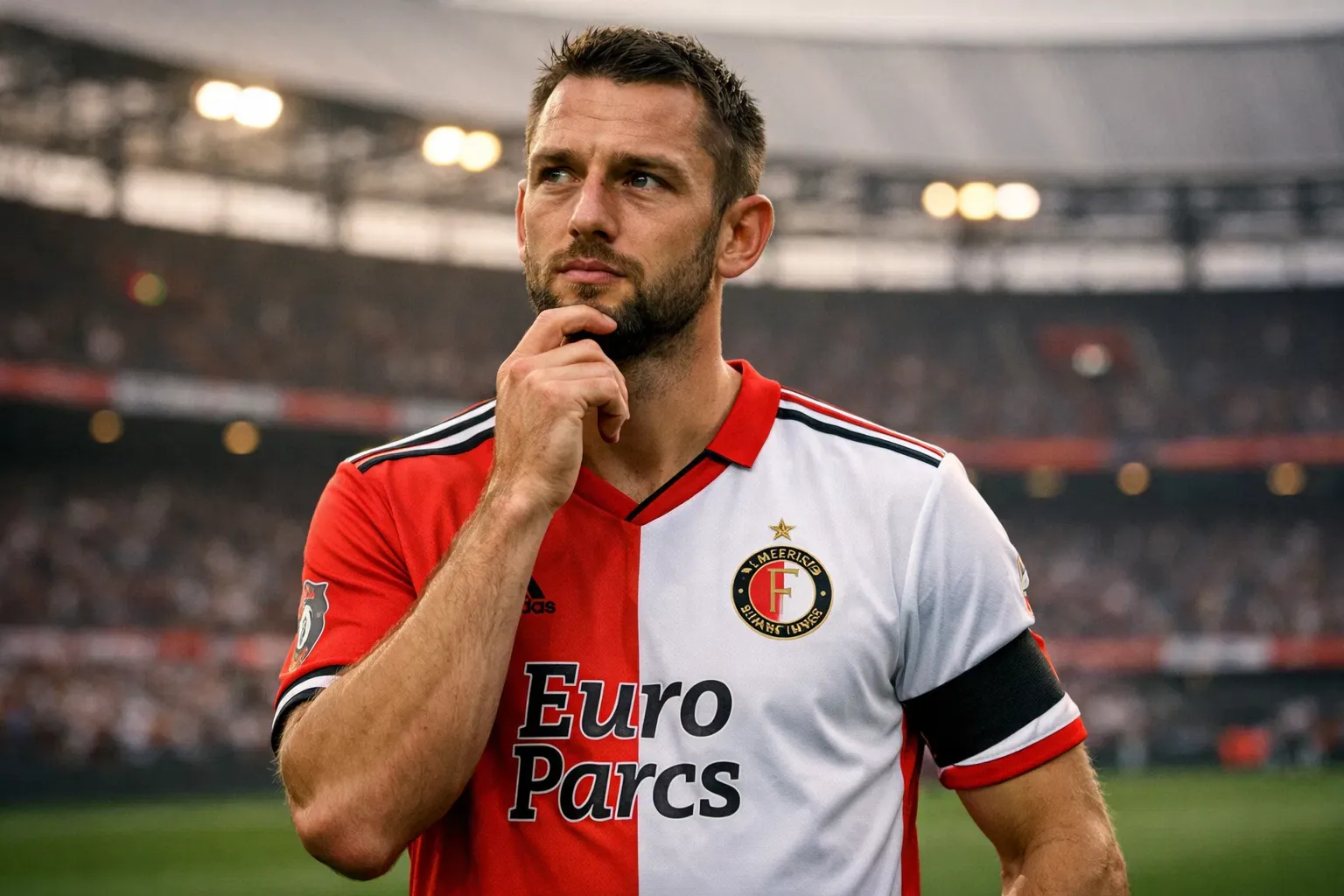
There’s a special kind of tension when a proven defender’s contract clock starts ticking, and Stefan de Vrij transfer news is now living in that space. The 34-year-old Internazionale center-back is being linked with a return to the Eredivisie, with Feyenoord emerging as the romantic and tactical fit. De Kuip loves a homecoming, but modern football deals are rarely simple. With interest from abroad and family preferences in play, this story has become a genuine summer-long thriller.
The loudest element in Stefan de Vrij transfer news is timing, because his Internazionale contract edging toward its end changes everything. When a player of his pedigree gets close to free-agency territory, the market starts circling with different kinds of offers and different kinds of promises. Feyenoord can sell identity, familiarity, and a starring role in the Eredivisie. Inter can sell continuity, Champions League exposure, and the comfort of a system he knows inside out.
Feyenoord’s interest feels more than opportunistic, because the squad profile screams for a stabilising center-back who can manage moments. This isn’t just about adding a name; it’s about raising the baseline of decision-making in big games, especially European nights. Stefan de Vrij transfer news keeps pointing to De Kuip because the club can offer a leadership lane that’s harder to guarantee elsewhere. In Rotterdam he wouldn’t be a rotation option, he’d be a reference point.
In Eredivisie terms, De Vrij projects as a defender who can control matches without needing hero tackles every five minutes. His best work has always been about reading triggers early, holding the line, and turning chaos into routine. That’s why Stefan de Vrij transfer news has supporters talking about “best central defender in the league” rather than simply “useful veteran.” Feyenoord want to win margins, and elite positioning is the ultimate margin.
From Internazionale’s side, the equation is complicated by how valuable calm defenders become when knockout football arrives. Even if Inter are evolving their back line, letting a seasoned organizer walk can create hidden costs in leadership and depth. Stefan de Vrij transfer news often frames this as Inter “moving on,” but big clubs rarely discard reliability lightly. Inter also know that allowing him to leave on favorable terms can preserve goodwill and options for the future.
Feyenoord have built a strong defensive identity in recent seasons, but the calendar is brutal and the squad needs layers. Gernot Trauner has been a key figure, yet the club also has to think about availability, rotation, and the physical demands of multiple competitions. Stefan de Vrij transfer news lands in this context as much as in nostalgia. The pitch argument is simple: add a center-back who reduces variance and makes everyone else better.
What makes the link feel plausible is that De Vrij doesn’t need to be “sold” on what Feyenoord is. He understands the league’s rhythm, the pressure of title races, and the cultural weight of Rotterdam football. Stefan de Vrij transfer news also hints at a role that would be tailored rather than improvised, with Feyenoord potentially planning for him as the organiser next to a more aggressive partner. That’s the kind of clarity players appreciate at 34.
Trauner’s game is built on timing and duels, and pairing him with De Vrij could create a balance between confrontation and control. De Vrij is at his best when he can scan, direct, and choose the right moments to step in, which frees a partner to be more front-foot. Stefan de Vrij transfer news becomes more convincing when you imagine Feyenoord defending leads in Europe, with two smart heads managing space rather than chasing it. That’s how clean sheets become repeatable.
The Eredivisie can be deceptively harsh on veteran defenders because transitions come fast and games stretch quickly. Yet De Vrij’s experience in Serie A and the Champions League suggests he can manage those patterns with positioning and anticipation rather than raw sprinting. Stefan de Vrij transfer news also matters for set pieces, where his timing and organisation can swing tight games. Feyenoord have always valued dead-ball edges, and a leader there is worth points.
One of the juiciest angles in Stefan de Vrij transfer news is the reported positive relationship with Feyenoord coach Robin van Persie. Coaches talk about “buy-in,” but relationships often decide whether a player believes the project is real. Van Persie carries authority in the Dutch game, and his presence can make a return feel like a football decision rather than a sentimental one. For a defender, trusting the coach’s plan is half the battle.
Van Persie’s coaching identity also suggests why De Vrij fits: control, structure, and intelligent risk. A center-back who can execute a high line, communicate distances, and build through pressure is essential if Feyenoord want to dominate domestically and compete in Europe. Stefan de Vrij transfer news keeps circling back to this tactical alignment, because it’s not hard to picture De Vrij as the on-field extension of the coach. That alignment can shorten adaptation time dramatically.
For a player at 34, the pitch is still important, but so is the ecosystem: training load, clarity of role, and respect in decision-making. Van Persie can offer a high-status environment without the chaos that sometimes comes with “big name” signings. Stefan de Vrij transfer news suggests Feyenoord would present him as a leader, not a marketing tool, and that matters for elite professionals. When the role is defined, performance usually follows.
De Kuip can be intense, but it also rewards defenders who communicate and set standards. De Vrij isn’t the chest-thumping type; he leads through positioning, instructions, and calm corrections after mistakes. Stefan de Vrij transfer news therefore isn’t just about who he stops, but about how he stabilises those around him. If Feyenoord’s younger players feel protected by structure, their own confidence and aggression can rise without tipping into recklessness.
Every top club talks about developing defenders, but the best accelerant is a senior center-back who models the details daily. Stefan de Vrij transfer news keeps highlighting his value as a mentor for younger options like Anel Ahmedhodzic and Tsuyoshi Watanabe. The mentoring isn’t a speech; it’s the repetition of scanning, the timing of body shape, and the constant conversation about distances. Those habits can transform prospects into starters.
Feyenoord’s recruitment strategy has often blended prime-age contributors with developing talent, and a De Vrij signing would fit that logic. He could take the hardest minutes, especially in Europe, while still leaving space for younger defenders to grow without being exposed too early. Stefan de Vrij transfer news becomes more than gossip when you consider squad planning: it’s about building a defensive unit that can survive injuries, suspensions, and tactical shifts. That’s how titles are defended, not just won.
The biggest lesson De Vrij can pass on is game management, because many young defenders defend the moment rather than the match. Knowing when to hold the line, when to absorb pressure, and when to slow the tempo after a turnover is an art. Stefan de Vrij transfer news resonates with coaches because he has lived those scenarios at the highest level. If Ahmedhodzic and Watanabe internalise that rhythm, Feyenoord’s defensive ceiling rises quickly.
Veteran defenders often change teams before they even play, simply by raising the daily bar. De Vrij is known for preparation and for treating video analysis as a weapon, not a chore. Stefan de Vrij transfer news therefore includes an invisible upside: better communication patterns between full-backs, midfield screeners, and the center-backs. When the back line speaks the same language, pressing becomes coordinated and errors become rarer. That’s the boring stuff that wins leagues.
No transfer story is complete without competing narratives, and Stefan de Vrij transfer news is complicated by interest from Saudi Arabia, Portugal, and Turkey. Each destination offers a different mix of money, lifestyle, and sporting challenge. Saudi clubs can win on financial power and comfort, while Portugal can offer European football and a tactical league that suits defenders. Turkey can offer intensity, huge crowds, and short-term hero status if things click.
The most human twist in Stefan de Vrij transfer news is the report that his wife is not keen on a move to the Netherlands. That detail matters because returning “home” isn’t always a family dream, especially after building a life abroad. Players can handle pressure, but family happiness is a different kind of non-negotiable. Feyenoord may have to sell not only the project, but the lifestyle package: schools, city fit, and privacy in a football-mad environment.
Saudi clubs can offer a contract that reframes the rest of a career, plus a controlled environment where veterans often extend their playing years. Portugal can pitch a blend of technical football and European qualification routes, with cities that appeal to families. Turkey can pitch emotion, scale, and immediate importance, which some players crave late in their careers. Stefan de Vrij transfer news stays alive because these alternatives are credible, not just agent noise.
For Feyenoord supporters, the idea of De Vrij returning to the Eredivisie feels like destiny, but players live beyond the stadium. A spouse’s preference can tilt a decision more than tactical diagrams, especially when multiple good offers exist. Stefan de Vrij transfer news will likely hinge on whether Feyenoord can make Rotterdam feel like a step forward rather than a step back. If the family is unconvinced, even the best football argument can fall short.
The practical side of Stefan de Vrij transfer news is about timing and leverage. If his Inter deal is truly near expiry, Feyenoord’s best route is to act early, define the role, and avoid a bidding war they can’t win. If there’s an extension option or a last-minute Inter push, the negotiation becomes less about romance and more about numbers and guarantees. Feyenoord will need clarity on wages, bonuses, and contract length to keep the plan sustainable.
Feyenoord also have to decide what they want the signing to represent: a short-term fix or a two-year defensive cornerstone. A one-year deal might feel safe financially, but it may not be attractive enough to beat foreign offers. Stefan de Vrij transfer news suggests the club must prioritise respect and stability, because elite veterans don’t want constant uncertainty. If they can offer a clear pathway into leadership, and perhaps a future role, the pitch becomes stronger.
De Vrij will still care about the level of the weekly challenge, and Feyenoord can credibly sell ambition. Competing for the Eredivisie title, playing in Europe, and leading a big club in a football city is not a retirement plan. Stefan de Vrij transfer news becomes persuasive when framed as a final prime chapter: a chance to define a team, not just join one. For a defender, legacy often comes from organising winners.
Supporters tracking Stefan de Vrij transfer news should pay attention to small signals rather than dramatic headlines. Comments from Van Persie about leadership needs, any movement involving Gernot Trauner’s role, and Feyenoord’s other center-back targets will reveal how serious the pursuit is. Inter’s actions matter too, especially if they recruit in his position or offer a late extension. The next weeks will likely bring carefully worded statements that say more than they seem to.
Whatever the final decision, Stefan de Vrij transfer news has already achieved one thing: it has forced everyone to imagine Feyenoord’s ceiling with an elite organiser at the back. A return to De Kuip would be a statement that the Eredivisie can still attract top-level experience for football reasons, not only nostalgia. Yet the pull of foreign offers and family comfort is real, and that’s why this saga remains so gripping. Until the contract pen hits paper, every update will feel like a turning point.

Julian Mercer is a lifelong student of the game whose passion for football was sparked at an early age, after stepping onto the grass of Camp Nou as a six-year-old — a moment that left a lasting impression and set him on a permanent path into the sport. Since then, football has been both his lens on the world and his favourite language. Blending traditional fandom with a deep interest in tactics, squad building, and long-term team development, Julian has spent decades analysing the game from every angle. His fascination with football strategy was further shaped through years of immersive play in Football Manager, a series he has followed since the mid-1990s, developing a sharp eye for patterns, player profiles, and the fine margins that define success. At My World Of Football, Julian focuses on the stories beneath the surface — from tactical evolutions and managerial philosophies to the narratives that connect clubs, players, and supporters across generations. His writing aims to balance insight with accessibility, always grounded in a genuine love for the game.
Continue reading more football news