Myworldoffootball
Sunderland Premier League finish sparks Le Bris debate
Sunderland Premier League finish stuns the league as Le Bris earns acclaim, while Tuchel’s World Cup calls and Arsenal-PSG final fuel debate.
Sunderland Premier League finish stuns the league as Le Bris earns acclaim, while Tuchel’s World Cup calls and Arsenal-PSG final fuel debate.
The final weekend delivered the kind of chaos the Premier League sells to the world, but nobody saw Sunderland writing the loudest twist. The Sunderland Premier League finish of seventh under Régis Le Bris has landed like a flare across the division, turning a season that began with survival talk into a Europe-tinged celebration. At the same time, Thomas Tuchel’s World Cup player selections are already dividing opinion, and the Champions League final preview between Arsenal and Paris Saint-Germain promises to define legacies. Clinton Morrison, speaking for BetFinder, has been blunt: form matters, but so do the manager’s tactical decisions.
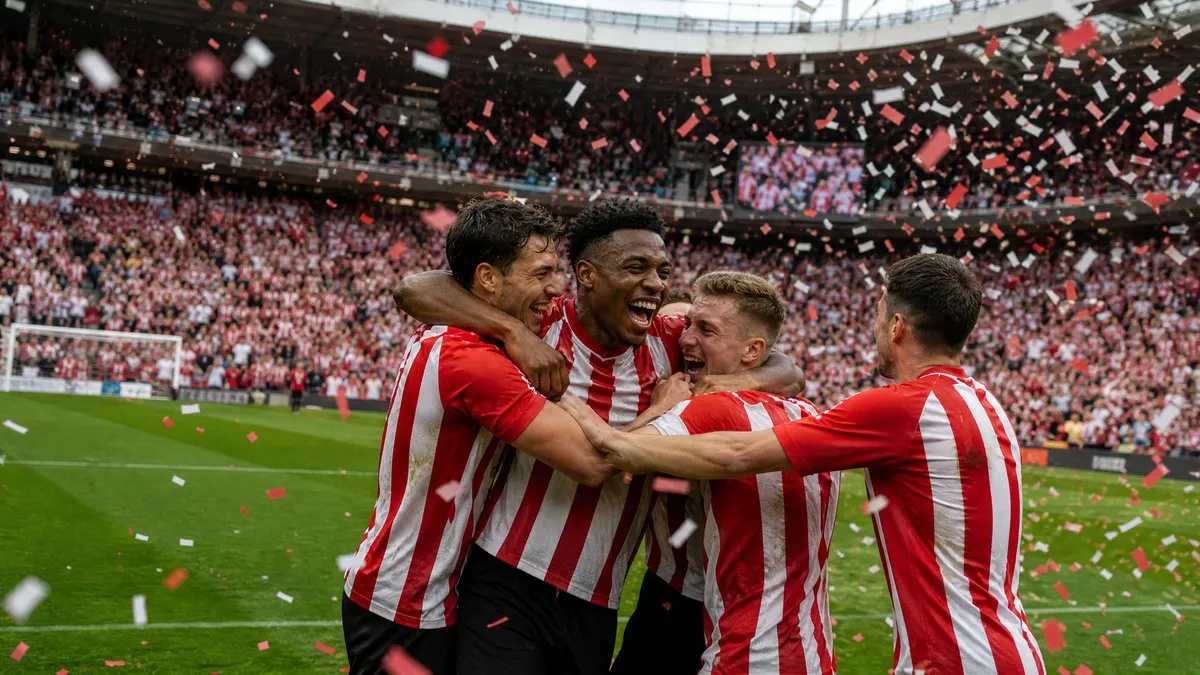
The Sunderland Premier League finish in seventh is more than a tidy number on a table; it is a cultural reset for a club that has spent years chasing stability. The sense around the Stadium of Light is that a ceiling has been lifted rather than merely touched, because seventh implies consistency across months, not a lucky sprint. Sunderland’s best stretches were marked by brave pressing, quick wide combinations, and a refusal to accept “plucky underdog” as an identity.
What makes the Sunderland Premier League finish so compelling is how it arrived without the usual big-club safety nets. There were injuries, there were spells of fatigue, and there were moments when opponents tried to bully Sunderland into retreating. Instead, Le Bris kept leaning into proactive football, trusting patterns and roles rather than ripping up the plan after one bad result. By May, the league’s middle class looked nervously over its shoulder, because Sunderland had become the side nobody enjoyed playing.
Manager of the Season debates usually tilt toward title winners, but the Sunderland Premier League finish forces a different question: what is the hardest job done best? Le Bris has turned a young, hungry group into a coherent unit with a clear tactical language, and that is elite coaching. He has also managed the psychological load of expectation, because as Sunderland climbed, every match carried the weight of “don’t blow it.” That calm is why his name is now in serious conversations.
Seventh place can be dismissed as “best of the rest,” yet the Sunderland Premier League finish resonates because it changes what the club can credibly target next. It impacts recruitment, because players who once viewed Sunderland as a project now see a platform. It impacts belief, because supporters begin seasons expecting big nights rather than hoping for them. And it impacts the league, because it signals that a well-coached side can jump the queue without spending like the traditional powers.
Clinton Morrison insights, delivered with the directness fans appreciate, have centered on one theme: reward what is happening now, not what happened two years ago. In his view, the Sunderland Premier League finish is proof that momentum is real when it is built on repeatable habits rather than vibes. Sunderland’s football was brave, but it was also practical, because transitions were rehearsed and defensive distances were controlled. That blend is what separates a fun story from a sustainable one.
Morrison also points out that the Sunderland Premier League finish should make bigger clubs uncomfortable, because it highlights how quickly a clear plan can close gaps. Sunderland didn’t win every duel or dominate every game, but they were rarely confused about what they were trying to do. When you know your next pass before the ball arrives, you play faster, and you suffer less. That is coaching, and it is why the club’s rise doesn’t feel like a one-season miracle.
Speaking on behalf of BetFinder, Morrison framed the Sunderland Premier League finish as the kind of outcome that punters miss if they only chase headlines. Upsets happen, but patterns matter more, and Sunderland’s performances had been trending upward long before the table made it obvious. The data points—shot quality, field tilt, and pressing efficiency—supported the eye test. In other words, Sunderland didn’t just “nick” seventh; they earned it through repeatable strengths.
The Sunderland Premier League finish has created an unusual emotional cocktail among fans: celebration mixed with the anxiety of maintaining standards. Supporters have waited a long time to feel this proud, yet they know the league punishes complacency instantly. Morrison’s view is that this pressure can be healthy if it sharpens recruitment and keeps the dressing room hungry. The danger is believing the climb is automatic, because next season opponents will prepare for Sunderland like a serious rival.
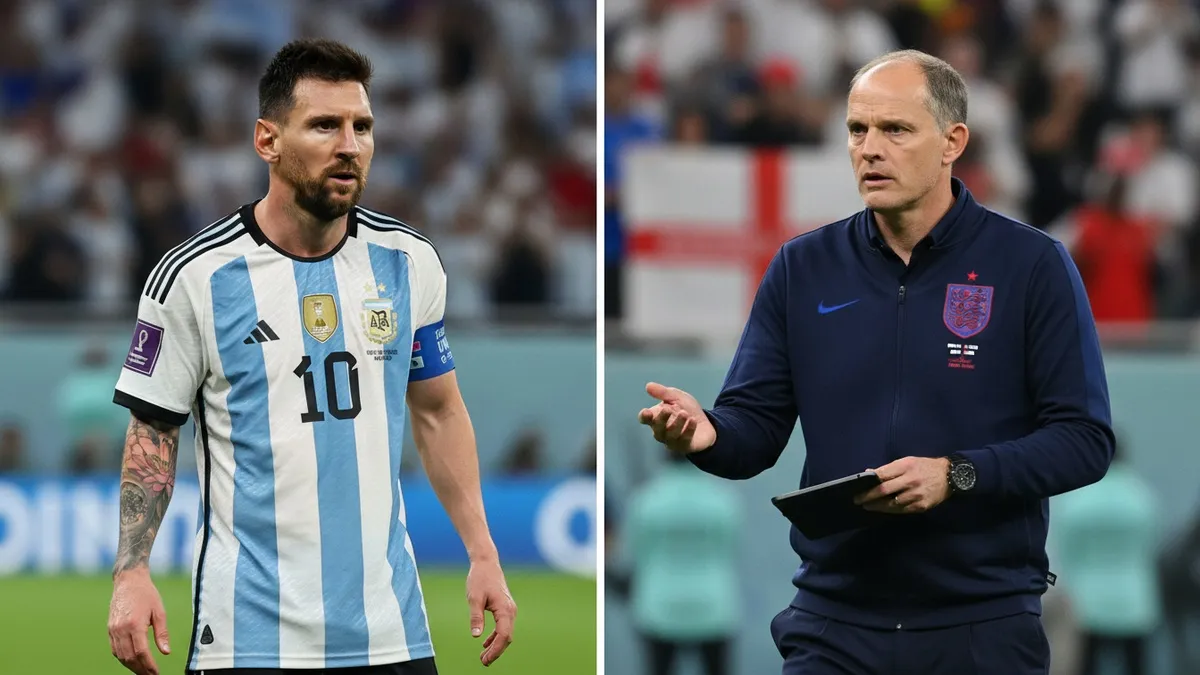
Thomas Tuchel squad decisions have become the next battleground, because international football magnifies every omission into a referendum on competence. As the World Cup approaches, fans want the in-form names, even if they don’t fit the manager’s preferred structure. That is where the tension lives, and it has been amplified by the Sunderland Premier League finish, which reminded everyone how quickly form can transform a player’s level. Tuchel’s job is to pick a squad, but also to sell a story about why those picks make sense.
The headline debates have circled around World Cup player selections that feel stubborn rather than strategic, particularly the exclusion of Morgan Gibbs-White and Trent Alexander-Arnold. Tuchel, like many elite coaches, values control in possession and security in rest-defense, and he may see certain profiles as non-negotiable. Yet Morrison argues that international camps are short, so the simplest advantage is selecting players who are already playing well. If the public can’t see the logic, the noise becomes a problem.
Leaving out Morgan Gibbs-White is the kind of call that triggers instant backlash because it looks like ignoring form in favor of hierarchy. His recent performances have shown energy between the lines, bravery under pressure, and the ability to carry a team through messy phases. Morrison’s stance is that World Cup player selections should reward exactly that, because tournaments are decided by moments when structure breaks. If Tuchel wants intensity and invention, Gibbs-White appears to tick those boxes right now.
The Trent Alexander-Arnold debate is never really about talent; it is about what kind of risks a manager is willing to live with. Tuchel may worry about defensive transitions, especially against elite wingers, but Morrison counters that tournament football also demands chance creation from deep areas. World Cup player selections are about problem-solving, and Trent solves problems few others can even see. If you’re chasing a goal late, his passing range becomes a tactical cheat code.
In the middle of the noise, Harry Kane remains the simplest selection on the sheet, because he is both a scorer and a structure. He drops to connect play, he finishes under pressure, and he gives teammates a reference point when matches get frantic. The controversy sits behind him, where Thomas Tuchel squad decisions must balance control, pace, and chemistry. The Sunderland Premier League finish has reminded observers that form can elevate a group, but international managers often default to familiarity.
Morrison’s broader point is that World Cup player selections should be less about reputations and more about roles that complement each other quickly. A tournament squad needs specialists: ball-winners, tempo-setters, wide runners, set-piece threats, and game-changers off the bench. The frustration around Tuchel’s omissions is that fans can name the current specialists who appear to match those needs. When the manager chooses differently, he must prove the alternative roles function under the highest stress.
Tuchel’s teams are typically built on spacing, pressing triggers, and carefully managed transitions, which means his World Cup player selections are rarely random. He may prioritize full-backs who tuck in, midfielders who protect zones, and forwards who press in coordinated waves. That framework can explain why a creative but less “system-disciplined” player might miss out, even if his club form is excellent. The risk, as Morrison notes, is that strict adherence can reduce spontaneity in knockout football.
Fan reaction has been split between excitement for the World Cup and frustration at names left behind, and that split is understandable. Supporters watch weekly football and feel they are witnessing truth in real time, so they want World Cup player selections to reflect that. Managers, however, hear a different demand: build a balanced squad that can survive tactical puzzles across seven games. The Sunderland Premier League finish sits in the background as a reminder that bold choices can be rewarded, but only if they’re coherent.
The Champions League final preview writes itself because it is not just Arsenal versus Paris Saint-Germain; it is a clash of narratives about how clubs should be built. Arsenal arrive with the chance to complete a historic Premier League-Champions League double, while PSG chase the validation that has so often slipped away. The Sunderland Premier League finish has added a domestic subplot about coaching excellence, but Europe remains the sharpest stage for judging managers. One night can rewrite the season’s memory.
For Arsenal, the final is also about proving that their evolution under Mikel Arteta has reached its intended destination. They have become comfortable controlling games, but finals are rarely comfortable, and PSG’s transition threat can punish any overconfidence. Morrison’s read is that Arsenal must respect the chaos moments, because PSG can turn a tidy match into a track meet in two passes. The tactical question is whether Arsenal can keep their structure while still playing with enough ambition to win.
Arsenal PSG match analysis begins with midfield control, because whoever dictates the second ball and the counter-press will dictate the rhythm. Arsenal want sustained pressure and set-piece territory, while PSG want to lure pressure and break into space. Morrison highlights that finals are often decided by full-back decisions: when to step in, when to hold, and when to gamble. Those micro-choices determine whether you pin an opponent back or hand them the exact transition they crave.
If Arsenal complete the double, their recruitment pitch becomes irresistible, and their internal standards harden overnight. Players stop talking about “project” and start talking about “dynasty,” which changes how the dressing room handles adversity. The Sunderland Premier League finish shows how quickly a club’s self-image can shift, and Arsenal would experience that on a global scale. Even a narrow defeat, though, could leave a psychological scar, because opportunities for a double do not come on schedule.
This season has felt like a referendum on coaching because the biggest stories are not only about budgets, but about ideas. The Sunderland Premier League finish has pushed Le Bris into the same conversation space as managers with far richer squads, while Arteta stands one match from immortality. Morrison’s argument is that supporters can now see patterns more clearly than ever, so they judge managers on identity as much as results. When the football is coherent, fans forgive the odd bad day.
There is also a shared lesson between Sunderland’s rise and Arsenal’s European push: clarity travels. Players improve faster when roles are defined, and squads suffer fewer confidence crashes when the plan doesn’t change weekly. Thomas Tuchel squad decisions sit in that same ecosystem, because selection is an extension of philosophy. Choose players who fit your ideas, and you can build quickly; ignore form too aggressively, and you risk losing the dressing room’s belief that performances are rewarded.
The Sunderland Premier League finish offers a blueprint that even richer clubs can learn from: recruit for traits that match the manager’s game model. Sunderland looked athletic, technically brave, and mentally stubborn, which suggests alignment between coaching and recruitment. Morrison notes that this is how you avoid expensive mismatches that clog squads and force constant tactical compromises. When your signings fit the idea, you can rotate without losing your identity, and that is how surprise seasons become sustained competitiveness.
Manager of the Season arguments are usually binary—title winner versus overachiever—but this year feels like a genuine shortlist. The Sunderland Premier League finish makes Le Bris impossible to ignore, while Arteta’s potential double would be an historic statement of control and evolution. Tuchel, meanwhile, is being judged in advance, because World Cup player selections are now scrutinized like club transfers. Morrison’s view is simple: the best managers marry principle with pragmatism, and the public can sense when that balance is real.
As the confetti settles, the Sunderland Premier League finish remains the season’s most joyful disruption, a reminder that smart coaching can bend the table’s usual logic. Yet football never pauses, and the next arguments are already raging: Thomas Tuchel squad decisions, World Cup player selections, and whether omissions like Morgan Gibbs-White and Trent Alexander-Arnold will be regretted. Then comes Arsenal versus Paris Saint-Germain, a final that could crown Arteta or deepen PSG’s longing. Morrison’s takeaway fits all three stories: form matters, but only when it is harnessed by a clear plan.

Julian Mercer is a lifelong student of the game whose passion for football was sparked at an early age, after stepping onto the grass of Camp Nou as a six-year-old — a moment that left a lasting impression and set him on a permanent path into the sport. Since then, football has been both his lens on the world and his favourite language. Blending traditional fandom with a deep interest in tactics, squad building, and long-term team development, Julian has spent decades analysing the game from every angle. His fascination with football strategy was further shaped through years of immersive play in Football Manager, a series he has followed since the mid-1990s, developing a sharp eye for patterns, player profiles, and the fine margins that define success. At My World Of Football, Julian focuses on the stories beneath the surface — from tactical evolutions and managerial philosophies to the narratives that connect clubs, players, and supporters across generations. His writing aims to balance insight with accessibility, always grounded in a genuine love for the game.
Continue reading more football news