Myworldoffootball
Thomas Tuchel England World Cup squad: Cole’s XI
Joe Cole England predictions after Uruguay draw and Japan loss: why he wants Bukayo Saka exclusion and a new England World Cup lineup for Tuchel.
Joe Cole England predictions after Uruguay draw and Japan loss: why he wants Bukayo Saka exclusion and a new England World Cup lineup for Tuchel.
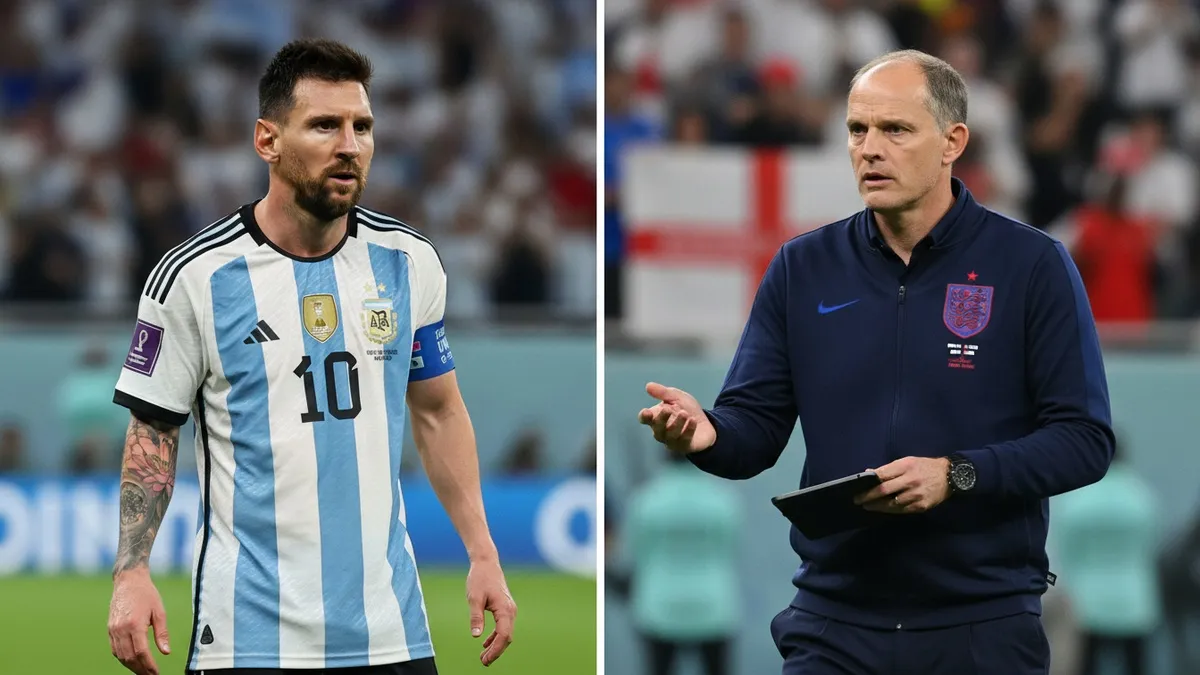
England’s March international break was supposed to be a steadying rehearsal, but it ended up feeling like a warning flare. A 1-1 draw with Uruguay and a 1-0 defeat to Japan left familiar questions hanging in the air: are England evolving, or merely rotating? Into that noise stepped Chelsea icon Joe Cole with a bold, headline-grabbing view of the Thomas Tuchel England World Cup squad. His central claim is simple and provocative: leave Bukayo Saka out of the starting XI to increase England’s chances of winning.
The Uruguay draw and Japan loss weren’t catastrophic results in isolation, but they carried an uncomfortable sameness for fans watching England’s rhythm stall. The tempo dipped at key moments, transitions looked cautious, and the final pass often arrived a second late. That matters because the Thomas Tuchel England World Cup squad is being judged against elite tournament standards, not friendly-level patience. When opponents pressed with conviction, England sometimes looked like a team still negotiating its identity.
Tuchel’s early months are inevitably about information gathering, yet the international break performance suggested the margin for experimentation is tightening. England’s build-up play had spells of control, but control without incision becomes predictable at World Cup pace. The Thomas Tuchel England World Cup squad conversation now revolves around balance: who provides width, who breaks lines, and who covers the spaces left behind. Those are selection problems, but they are also philosophical ones.
Uruguay’s equaliser felt like a reminder that England can dominate periods yet still drift into vulnerable moments. When the ball moved quickly into England’s midfield corridors, the defensive shape sometimes reacted rather than anticipated. That’s why the Thomas Tuchel England World Cup squad debate is already leaning toward experience and game management, not just talent. You can carry one risky profile in a tournament XI, but carrying several becomes an invitation.
Japan’s 1-0 win was built on intensity, coordinated pressing, and brave running beyond the ball, which forced England into rushed decisions. England weren’t outclassed, but they were outworked in the phases that decide tight knockout games. If the Thomas Tuchel England World Cup squad is to win seven matches, it must cope with opponents who sprint into duels and transitions like it’s minute 90. That means selecting players who thrive when the game turns chaotic.
Joe Cole England predictions rarely land softly, and his suggestion of a Bukayo Saka exclusion from the starting lineup was always going to split the room. Cole’s argument isn’t that Saka lacks quality; it’s that England may need a different blend of profiles to maximise tournament efficiency. In his view, the Thomas Tuchel England World Cup squad should prioritise tactical flexibility and defensive stability on the right side, even if that means sacrificing a star’s automatic status.
It’s a particularly fascinating call because Saka has been one of England’s most reliable attackers in major tournaments and qualifiers. Yet Cole is essentially asking Tuchel to treat the World Cup like a chessboard rather than a popularity contest. The Thomas Tuchel England World Cup squad will be judged by outcomes, and Cole believes outcomes improve when roles are crystal clear and the right flank is less exposed. That framing turns “Saka out” into “structure in.”
Cole’s point, read carefully, is about role clarity: he wants a right-sided setup that can defend, progress the ball, and still threaten without overcommitting. In that model, Saka’s strengths might be better used as an impact option or a matchup-specific starter. The Thomas Tuchel England World Cup squad will face opponents who target wide spaces relentlessly, and Cole is effectively asking for a right flank built to absorb pressure before it attacks.
The counterargument is obvious: Bukayo Saka is often England’s cleanest route from stress to relief, the winger who carries the ball out of trouble and pins full-backs deep. Removing him could make England easier to press and less threatening in early phases of matches. The Thomas Tuchel England World Cup squad also has to score when games get tight, and Saka’s end product and decision-making are already tested on big nights. Tuchel must decide whether structure outweighs that proven value.
Cole’s suggested lineup leans into experience at the back, naming Jordan Pickford in goal and Reece James as a key defensive and attacking reference point. He also mentions Nico O’Reilly as part of a shape designed to be more adaptable within games, even if that selection would raise eyebrows for supporters who prefer established international minutes. The broader idea is that the Thomas Tuchel England World Cup squad needs players comfortable in multiple systems, because tournaments demand in-game problem solving.
At its heart, Cole’s XI is a bet on tactical flexibility: full-backs who can invert or overlap, defenders who can defend large spaces, and a midfield that can rotate positions without losing its bearings. That’s very Tuchel in spirit, even if the personnel is debatable. The Thomas Tuchel England World Cup squad is likely to be shaped by the coach’s preference for controllable chaos, where England can press in waves and still keep a rest-defence structure behind the ball.
Pickford remains England’s most tournament-hardened goalkeeper, and his distribution can accelerate England’s attacks when opponents push up. Reece James, when fit, offers an elite blend of duel-winning, crossing, and underlapping runs that can change the geometry of a match. For the Thomas Tuchel England World Cup squad, that pairing signals a desire to be decisive in moments: quick restarts, aggressive switches, and a right side that can dominate physically as well as technically.
Including Nico O’Reilly in any England World Cup lineup is the kind of projection that screams “coach’s player,” someone selected for specific tactical tasks rather than name recognition. Tuchel has often valued multifunctional profiles who can interpret space and follow complex pressing triggers. If the Thomas Tuchel England World Cup squad is built to morph between a back four and a back three, then a player comfortable drifting between zones becomes valuable. The challenge is whether international football allows enough rehearsal time to make that gamble pay.
Cole’s midfield proposal—Declan Rice, Elliot Anderson, and Jude Bellingham—reads like an attempt to combine security, legs, and vertical threat. Rice is the anchor and organiser, Bellingham the box-to-box match-winner, and Anderson the connector who can press, carry, and keep the ball moving. The Thomas Tuchel England World Cup squad needs a midfield that can survive against elite counterattacks while still creating enough central overloads to free the forwards.
This trio also hints at a more modern England: less reliant on slow possession and more comfortable winning the ball high and attacking quickly. Rice’s positional discipline can protect adventurous full-backs, while Bellingham’s timing into the box is a constant scoring threat. For the Thomas Tuchel England World Cup squad, the key question is chemistry—how quickly these relationships can become automatic, especially when opponents force England into second-ball battles and scrappy phases.
Rice’s value isn’t only tackling; it’s his ability to sense danger early and plug holes before they become emergencies. In tournament football, that anticipation saves goals, and it also lets more creative players take risks. The Thomas Tuchel England World Cup squad will be judged by its ability to control transitions, because knockout games are often decided by one broken shape. Rice is the closest thing England has to a structural guarantee, and Cole builds everything else around him.
Bellingham is already England’s most influential all-phase midfielder, capable of carrying through pressure and arriving late to finish chances. Anderson, linked here as a complementary runner and presser, would add bite and connective tissue between lines. The Thomas Tuchel England World Cup squad needs midfielders who can do more than circulate possession; they must win duels, sprint back after turnovers, and still have the composure to play forward. That blend is what Cole is chasing with this pairing.
To make a Bukayo Saka exclusion even remotely palatable, England must replace his output with a different kind of threat. Cole points toward Cole Palmer and Anthony Gordon as attacking options, which implies a front line built on clever positioning, quick combinations, and aggressive running in behind. The Thomas Tuchel England World Cup squad may need more variety in how it hurts opponents: not just wing isolation, but also half-space creation and third-man runs that disorganise compact blocks.
Palmer offers a playmaker’s brain in a forward’s body, drifting into pockets to slip passes or shoot early, while Gordon brings relentless verticality and pressing energy. Together, they could give England an edge in matches where the tempo is frantic and space appears briefly rather than consistently. The Thomas Tuchel England World Cup squad must be equipped to win ugly games too, and players who can press, counter-press, and still create in tight windows become invaluable when rhythm disappears.
Palmer’s rise has been defined by calm decision-making under pressure, and that trait translates well to tournament football where moments come fast. He can operate as a right-sided creator, a central connector, or even a false winger who drifts inside to overload midfield. For the Thomas Tuchel England World Cup squad, Palmer represents controlled unpredictability: he doesn’t force the spectacular, but he repeatedly finds the profitable option. That’s exactly what England lacked at times against Uruguay and Japan.
Gordon is a different kind of weapon, one built for intensity and territory. He presses like he means it, runs beyond defenders without hesitation, and drags back lines deeper, which can create room for midfielders to step into shooting zones. In the Thomas Tuchel England World Cup squad, that kind of runner can be the antidote to sterile possession, especially when opponents sit in and dare England to break them down. His challenge is end product consistency, but his threat profile is clear.
Selection debates are always louder when injuries hover, and England’s concerns around key players like Harry Kane and Saka only intensify the scrutiny. Tuchel is being asked to build a stable core while also preparing contingency plans for absences that could reshape the entire attack. The Thomas Tuchel England World Cup squad must be resilient enough to lose a star and still function, which is why Cole’s emphasis on structure and flexibility resonates even with those who dislike his headline call.
The pressure on Tuchel is unique because England’s talent pool creates expectation, not excuses. Supporters can see the depth at Arsenal, Manchester City, Newcastle United, Chelsea and beyond, and they want that depth turned into a coherent tournament machine. The Thomas Tuchel England World Cup squad will ultimately be measured by whether it has a clear Plan A and a ruthless Plan B, not by whether every fan’s favourite name makes the XI. That’s the harsh arithmetic of international football.
If Kane isn’t fully fit, England’s attacking structure changes, because his dropping movements and link play are central to how others run beyond. If Saka is carrying a knock, his explosiveness and one-v-one sharpness can dip, which affects England’s right-side threat. The Thomas Tuchel England World Cup squad must therefore include role-specific alternatives, not just “good players,” because tournament minutes demand clarity. Tuchel’s job is to pick combinations that still work when the headline names are limited.
Tuchel can use camps to test ideas, but at some point the testing has to stop and partnerships have to harden into instinct. Defenders need to know when midfielders will cover, wingers need to know when full-backs will overlap, and pressing triggers must be shared language. The Thomas Tuchel England World Cup squad will be at its best when decisions are automatic, not debated mid-match. Cole’s intervention, controversial as it is, pushes the conversation toward that necessary certainty.
England’s disappointment against Uruguay and Japan doesn’t have to be prophecy, but it does have to be information. Joe Cole England predictions have thrown petrol on the selection debate, yet the underlying theme is sensible: tournament winners are built on balance, not just brilliance. Tuchel now has to decide whether the boldest call—Bukayo Saka exclusion from the starting XI—creates a stronger collective, or whether it removes a match-winner England can’t replace. The Thomas Tuchel England World Cup squad will be judged mercilessly, but it still has the tools to win if the final blueprint is clear.

Julian Mercer is a lifelong student of the game whose passion for football was sparked at an early age, after stepping onto the grass of Camp Nou as a six-year-old — a moment that left a lasting impression and set him on a permanent path into the sport. Since then, football has been both his lens on the world and his favourite language. Blending traditional fandom with a deep interest in tactics, squad building, and long-term team development, Julian has spent decades analysing the game from every angle. His fascination with football strategy was further shaped through years of immersive play in Football Manager, a series he has followed since the mid-1990s, developing a sharp eye for patterns, player profiles, and the fine margins that define success. At My World Of Football, Julian focuses on the stories beneath the surface — from tactical evolutions and managerial philosophies to the narratives that connect clubs, players, and supporters across generations. His writing aims to balance insight with accessibility, always grounded in a genuine love for the game.
Continue reading more football news