Myworldoffootball
Virgil van Dijk World Cup future: Oranje decision
Virgil van Dijk weighs his World Cup future with the Netherlands, reflecting on Euro 2024, Liverpool glory, mental prep, and possible retirement.
Virgil van Dijk weighs his World Cup future with the Netherlands, reflecting on Euro 2024, Liverpool glory, mental prep, and possible retirement.
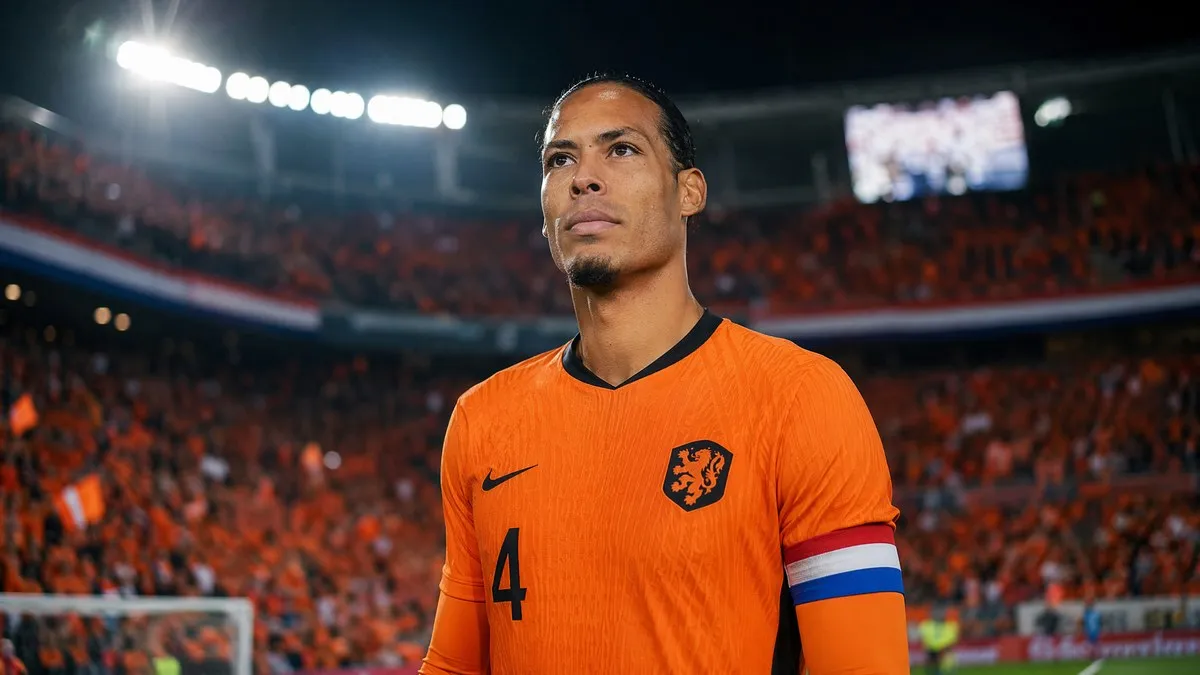
Virgil van Dijk has never sounded like a man chasing headlines, yet his recent honesty has landed like a thunderclap around the Netherlands national team. With another World Cup on the horizon, the Liverpool FC captain admits the Virgil van Dijk World Cup future conversation is real, and it might point toward a final bow in orange. He’s not making promises, not drawing timelines, just acknowledging that careers don’t last forever. For supporters, that uncertainty adds an extra edge to every qualifier, every anthem, every last-ditch block.
When Van Dijk talks about the next World Cup, he doesn’t frame it as a victory lap or a farewell tour, but he also doesn’t hide from reality. The Virgil van Dijk World Cup future question is tied to age, workload, and the sheer weight of international football, where every mistake becomes national property. He has hinted this could be his last major tournament, and that alone changes the emotional temperature around Oranje.
What stands out is his emphasis on enjoyment, a word elite players rarely lead with when discussing a World Cup. Van Dijk is effectively saying that if the Virgil van Dijk World Cup future does end at that tournament, he wants memories that feel lived-in rather than endured. That mindset isn’t soft; it’s survival, especially for a defender who lives in constant concentration. Enjoyment, for him, is focus without fear.
Uncertainty is uncomfortable, but it can also sharpen standards inside a dressing room, especially when a captain admits the end might be closer than the beginning. The Virgil van Dijk World Cup future debate forces the Netherlands national team to think about leadership succession without panic. It also pushes younger defenders to absorb his habits now, because there may not be another tournament cycle to learn from him at this level.
Captaining a national side is different from wearing the armband at Liverpool FC, because the time together is shorter and the scrutiny is more personal. Van Dijk has carried that burden through tournaments where one moment can define a summer. If the Virgil van Dijk World Cup future ends after the World Cup, it will be partly because the role demands emotional energy as much as physical durability. He’s been the calm face of pressure for years.
The Euro 2024 exit hit the Dutch camp hard, and Van Dijk didn’t pretend otherwise. He described a tough emotional period afterward, the kind that lingers beyond the flight home and into preseason. For a player already weighing the Virgil van Dijk World Cup future, a tournament disappointment can feel like a warning sign, asking whether the cost is still worth paying. Those moments test even the most resilient leaders.
Yet the story didn’t end in that sadness, because his club season offered a different kind of healing. Winning with Liverpool FC brought rhythm, confidence, and the simple joy of doing your job well week after week. That success matters to the Virgil van Dijk World Cup future conversation, because it reminds him what peak performance feels like. Rejuvenation isn’t a slogan; it’s the return of clarity after emotional fog.
International football compresses emotion into a few weeks, so when it ends badly the mind keeps replaying scenes like a highlight reel you can’t switch off. Van Dijk’s openness about the Euro 2024 aftermath shows how thin the margins are between pride and emptiness. The Virgil van Dijk World Cup future becomes more complicated when the last memory is pain, because the body heals faster than the mind. That’s why mental preparation is now a central theme.
A championship season provides structure that international breaks can’t replicate, and Van Dijk thrives on structure. Training daily with familiar teammates, building patterns, and feeling the crowd’s belief at Anfield can restore a player’s sense of control. That restoration feeds directly into the Virgil van Dijk World Cup future, because it proves he can still lead a title-winning defence. It’s easier to commit to one more tournament when your club form says you’re still among the best.
Numbers can feel cold, but Van Dijk’s international totals tell a story of influence as much as longevity. With 91 matches and 12 goals for the Netherlands national team, he’s not just a centre-back who clears crosses; he’s a set-piece weapon and a tone-setter. Those figures also intensify the Virgil van Dijk World Cup future question, because he’s already built a legacy that doesn’t require endless extensions. At some point, the résumé is complete.
There’s also the way he plays that makes those caps feel heavier than a simple tally. Van Dijk’s best performances are about control: stepping into midfield, organising the line, and making chaos look predictable. If the Virgil van Dijk World Cup future ends after the World Cup, Oranje will lose more than aerial dominance; they’ll lose a defensive language everyone understands. Replacing that isn’t just about talent, it’s about trust.
Twelve goals from centre-back positions underline how Van Dijk turns dead balls into momentum shifts. In tournament football, where games tighten and space disappears, those moments can decide a group stage or a quarter-final. The Virgil van Dijk World Cup future matters partly because his leadership shows up on the scoreboard, not only in tackles. He’s the kind of defender opponents mark like a striker, and that changes how the Netherlands attack corners.
If the World Cup becomes his last tournament, the Netherlands national team will face a tactical and emotional void at once. Van Dijk’s presence allows full-backs to push higher and midfielders to press with confidence, because the back line feels protected. The Virgil van Dijk World Cup future, therefore, isn’t only his personal decision; it shapes how coaches plan the next cycle. His successor won’t just inherit a position, but a responsibility to steady the entire system.
Van Dijk’s comments underline a truth fans often forget: international tournaments don’t just test legs, they test identity. Players become symbols, and every action is interpreted through national expectation, especially for captains. The Virgil van Dijk World Cup future is being weighed against that hidden tax, the mental bill that arrives after the final whistle. He has spoken about preparing mentally for what’s ahead, as if bracing for a storm he already knows well.
Mental preparation isn’t simply meditation or motivational speeches; it’s the discipline of managing noise. Van Dijk has to balance club obligations, family life, and the constant analysis that follows the Netherlands national team everywhere. That balance becomes harder as talk of player retirement grows louder, because every decision is framed as a legacy choice. The Virgil van Dijk World Cup future sits at the centre of that noise, and his calm approach is a way of controlling it.
When a captain loses at a major tournament, the defeat feels public and personal at the same time. Van Dijk can’t hide behind form or selection debates, because he is the face of the team’s response. That’s why Euro 2024 hurt so deeply, and why the Virgil van Dijk World Cup future discussion carries emotional weight. Captains don’t just process their own disappointment; they carry everyone else’s too, from teammates to fans.
Modern elites talk more openly about boundaries, and Van Dijk’s focus on enjoying the tournament hints at a deliberate strategy. Enjoyment can be a boundary: a reminder to live the days rather than drown in outcomes. For the Virgil van Dijk World Cup future, that approach could be the difference between extending his international career or choosing player retirement after the World Cup. If he can protect his headspace, he can still protect the penalty area.
Van Dijk’s rejuvenation is inseparable from Liverpool FC’s success, because confidence at club level often dictates how a player enters international camps. A champion’s season restores belief in the body and in the methods that keep it strong across months. That’s significant for the Virgil van Dijk World Cup future, because it suggests he isn’t limping toward the finish line. Instead, he’s arriving at the next challenge with momentum, and momentum changes decisions.
There’s also a tactical carryover between club and country that benefits him. At Liverpool FC he’s asked to defend big spaces, manage transitions, and lead a high line under pressure, which mirrors the demands of modern international football. If the Virgil van Dijk World Cup future includes one last tournament, he’ll enter it battle-hardened and tactically current. The question isn’t whether he can still play; it’s how long he wants to keep paying the emotional price.
Player retirement often begins as a whisper, not a statement, and winning can silence that whisper for a while. When you’re lifting trophies, the daily grind feels justified, and the pain has a purpose. That’s why the Virgil van Dijk World Cup future feels more open-ended after a triumphant Liverpool FC campaign. Success doesn’t guarantee another year, but it makes the idea of stopping harder to accept, because the game is still giving back.
Being a leader at Liverpool FC means living with expectations that don’t pause for international breaks. Van Dijk has to return from Oranje duty and immediately perform at a level where one draw becomes a crisis. That constant demand feeds into the Virgil van Dijk World Cup future decision, because it’s not just about the World Cup itself. It’s about whether he can keep meeting two sets of elite standards at once, without sacrificing health or joy.
Legacy conversations can feel premature, but Van Dijk has earned them through consistency and stature. The Virgil van Dijk World Cup future is essentially a question of timing: when does a great captain choose to step aside so the next era can begin cleanly? He’s not signalling an immediate exit, only acknowledging that the World Cup could be the natural endpoint. That honesty gives the Netherlands national team time to plan rather than scramble.
For supporters, the emotional pull is obvious: they want one more run with their leader at the heart of defence. But Van Dijk’s framing suggests he’s weighing more than sentiment; he’s measuring what he can give without draining himself. The Virgil van Dijk World Cup future will likely be decided by how the tournament feels day to day, not only by the final result. Sometimes a player knows it’s time because the experience stops feeling sustainable.
Every great national side eventually has to replace a captain, and the best transitions start before the farewell match. If the Virgil van Dijk World Cup future ends after the World Cup, Oranje must ensure new voices have already been empowered in camp. That doesn’t mean pushing him out; it means sharing leadership so the team doesn’t collapse into uncertainty. A stable succession protects young defenders from being judged against an impossible standard overnight.
The phrase “last tournament” changes how people watch, because every group game feels like a chapter in a closing book. Teammates can also feel the urgency, sometimes playing freer, sometimes playing tighter, depending on the mood. The Virgil van Dijk World Cup future, if it points to a final appearance, could unify the squad around a clear mission: give the captain a run worthy of his service. But it can also add pressure, which is why his focus on enjoyment is so important.
Whether Van Dijk continues after the World Cup or chooses to close the Oranje chapter, his message is already shaping the conversation around international football. He’s reminding fans that tournaments are not just tactical puzzles, but emotional marathons that demand mental preparation as much as fitness. The Virgil van Dijk World Cup future remains undecided, and that uncertainty will follow every camp like a quiet subplot. For now, the Netherlands national team can take comfort in one certainty: when he steps on the pitch, he still looks like the standard.
Julian Mercer is a lifelong student of the game whose passion for football was sparked at an early age, after stepping onto the grass of Camp Nou as a six-year-old — a moment that left a lasting impression and set him on a permanent path into the sport. Since then, football has been both his lens on the world and his favourite language. Blending traditional fandom with a deep interest in tactics, squad building, and long-term team development, Julian has spent decades analysing the game from every angle. His fascination with football strategy was further shaped through years of immersive play in Football Manager, a series he has followed since the mid-1990s, developing a sharp eye for patterns, player profiles, and the fine margins that define success. At My World Of Football, Julian focuses on the stories beneath the surface — from tactical evolutions and managerial philosophies to the narratives that connect clubs, players, and supporters across generations. His writing aims to balance insight with accessibility, always grounded in a genuine love for the game.
Continue reading more football news