
Huesca
HUE Spain
SpainHuesca Stadium
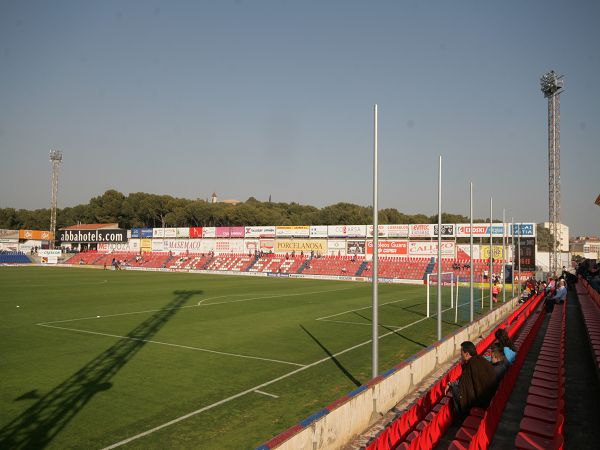
Estadio El Alcoraz
SD Huesca plays at El Alcoraz, a compact, characterful stadium located in Huesca, the capital of the province of Huesca in Aragon, northeastern Spain, at the foot of the Pyrenees mountains. With a capacity of approximately 9,844 spectators, El Alcoraz has been Huesca's home since 1947 and the stadium takes its name from the historic Battle of Alcoraz fought near the city in 1096. The ground has a traditional design with a covered main stand and open sections that reflect the straightforward character of a provincial Aragonese football club. Huesca is a city of approximately 52,000 inhabitants, making it one of the smallest cities to host La Liga football in the competition's history.
SD Huesca's two La Liga seasons (2018–19 and 2020–21) were remarkable achievements for a club from such a small city. Despite both seasons ending in relegation, the experience of La Liga football at El Alcoraz generated extraordinary community excitement, with sold-out crowds for every home match and national media attention on a city and stadium that rarely attracted such scrutiny. Huesca's La Liga debut in 2018–19 — their first-ever top-flight season — was a landmark in Spanish football, confirming that even the smallest cities can occasionally participate in La Liga through sustained hard work and intelligent management.
El Alcoraz's modest scale creates an intimate and intense atmosphere that makes it one of La Liga 2's more challenging away venues. The stadium's location in Huesca — a city that serves as a gateway to the Pyrenees and to popular ski resorts, National Parks, and mountain tourism — gives it a distinctive context within Spanish football. SD Huesca's continued La Liga 2 presence demonstrates the sustainability of their professional football project, and the club's excellent academy and recruitment have maintained competitive quality. El Alcoraz remains one of Spanish football's more authentic small-ground experiences, where the scale of the venue amplifies the passion of the local community into something far more intense than capacity alone would suggest.