Rafael Leao transfer news: Man United move
Rafael Leao transfer news as Manchester United target AC Milan’s star. Fee talk, contract pressure, Barcelona interest, and Premier League fit.
Read more →

Latest updates from the world of football
Rafael Leao transfer news as Manchester United target AC Milan’s star. Fee talk, contract pressure, Barcelona interest, and Premier League fit.
Julian Alvarez transfer news: Barcelona discuss a Lewandowski successor with Atletico Madrid, but €120m demands and FFP rules complicate a deal.
Arne Slot stays at Liverpool as Champions League qualification drives plans. Denzel Dumfries Liverpool transfer talk grows, impacting Dutch options.
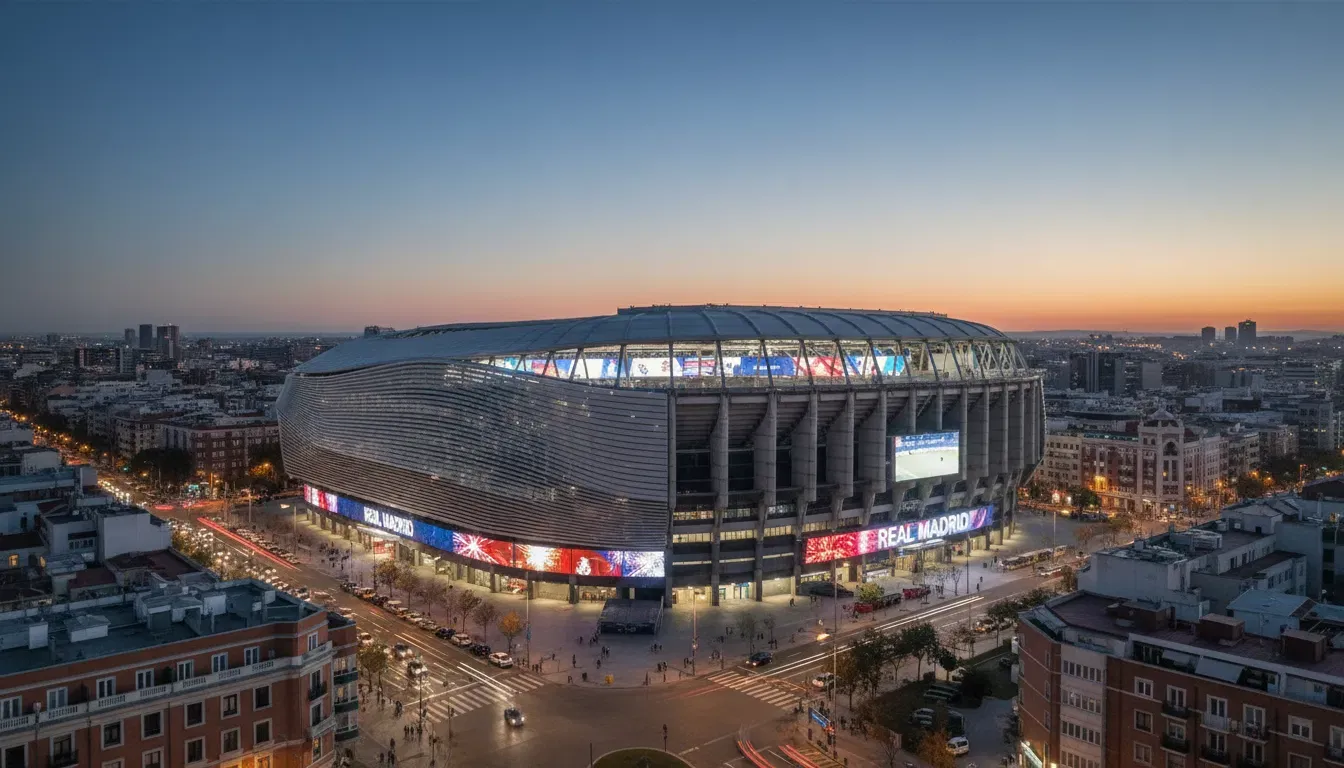
Introduction: the Santiago Bernabéu The Santiago Bernabéu Stadium has always been more than just the home of Real Madrid. Since its opening in 1947, it has stood as a symbol of ambition, prestige and competitive dominance, hosting European finals, historic matches and generations of elite players. But in modern football, identity alone is no longer enough. As the economics of the game have shifted—driven by broadcast growth, commercial expansion and escalating player costs—the role of the stadium has fundamentally changed. The Bernabéu is no longer just a venue for football. It is becoming a central pillar of Real Madrid’s financial model. The recent redevelopment represents one of the most ambitious stadium transformations in world sport, not simply modernising infrastructure but redefining how a football club generates revenue.

Atlético Madrid are often portrayed as football’s ultimate overachievers—a club built on structure, discipline and the leadership of Diego Simeone. But behind that identity lies a recruitment model that has quietly delivered both sporting success and financial stability over the past two decades. Unlike Real Madrid’s La Fábrica or Barcelona’s La Masia, Atlético’s academy has never operated as a large-scale production engine. Instead, the club has built a hybrid system in which transfer-market efficiency replaces academy volume as the primary source of value creation. Using the same analytical framework as the Real Madrid and Barcelona study, this article examines Atlético Madrid’s transfer profitability and academy contribution from 2005 to 2025.
Karim Adeyemi transfer news as Arsenal weigh a €60m move for the Dortmund winger, with Man United interest, Arteta tactics fit, and salary demands.
Italy World Cup 2026 replacement rumors swirl as U.S. politics, Iran entry concerns, and FIFA regulations collide—Meloni insists spots are won on pitch.
Ajax sit fifth in the Eredivisie standings, but Josip Sutalo insists Ajax Champions League qualification is still possible by winning the last four matches.
Paul Simonis Sparta Rotterdam talks gather pace as Wolfsburg contract negotiations continue. What the KNVB Beker winner could change in Rotterdam.
Xavi Simons World Cup injury concerns grow after a serious knee issue vs Wolves as Spurs win 1-0. Latest knee injury update and Koeman dilemma.
Feyenoord director appointment nears as Dennis te Kloese exits. Robert Eenhoorn emerges as favorite, with Dick Advocaat consulted for continuity.
Clinton Morrison breaks down the Premier League title race as Arsenal and Manchester City face defining fixtures, with Chelsea and Tottenham drama too.
Bukayo Saka return Arsenal boosts Arteta’s Premier League title race hopes ahead of Arsenal vs Newcastle after an Achilles injury and recent struggles.
Tottenham’s first 2026 league win vs Wolves came with a brutal Tottenham Hotspur injury crisis as Xavi Simons and Dominic Solanke worries deepen.
Paolo Zampolli’s Italy-for-Iran idea stirs World Cup 2026 debate. We unpack Iran World Cup participation, FIFA rules, politics, and Italy’s form.
Dies Janse transfer news: Club Brugge open talks as Ajax plan summer overhaul. Groningen coach backs Janse after standout loan spell.
Arne Slot transfer news as Liverpool back him amid a tough run, with Chelsea and Ajax circling. What it means for Salah, Robertson and fans.
Endrick Real Madrid transfer for €60m lit up 2024, but limited minutes and Mbappe’s arrival pushed the Brazilian wonderkid to a Lyon loan.