Myworldoffootball
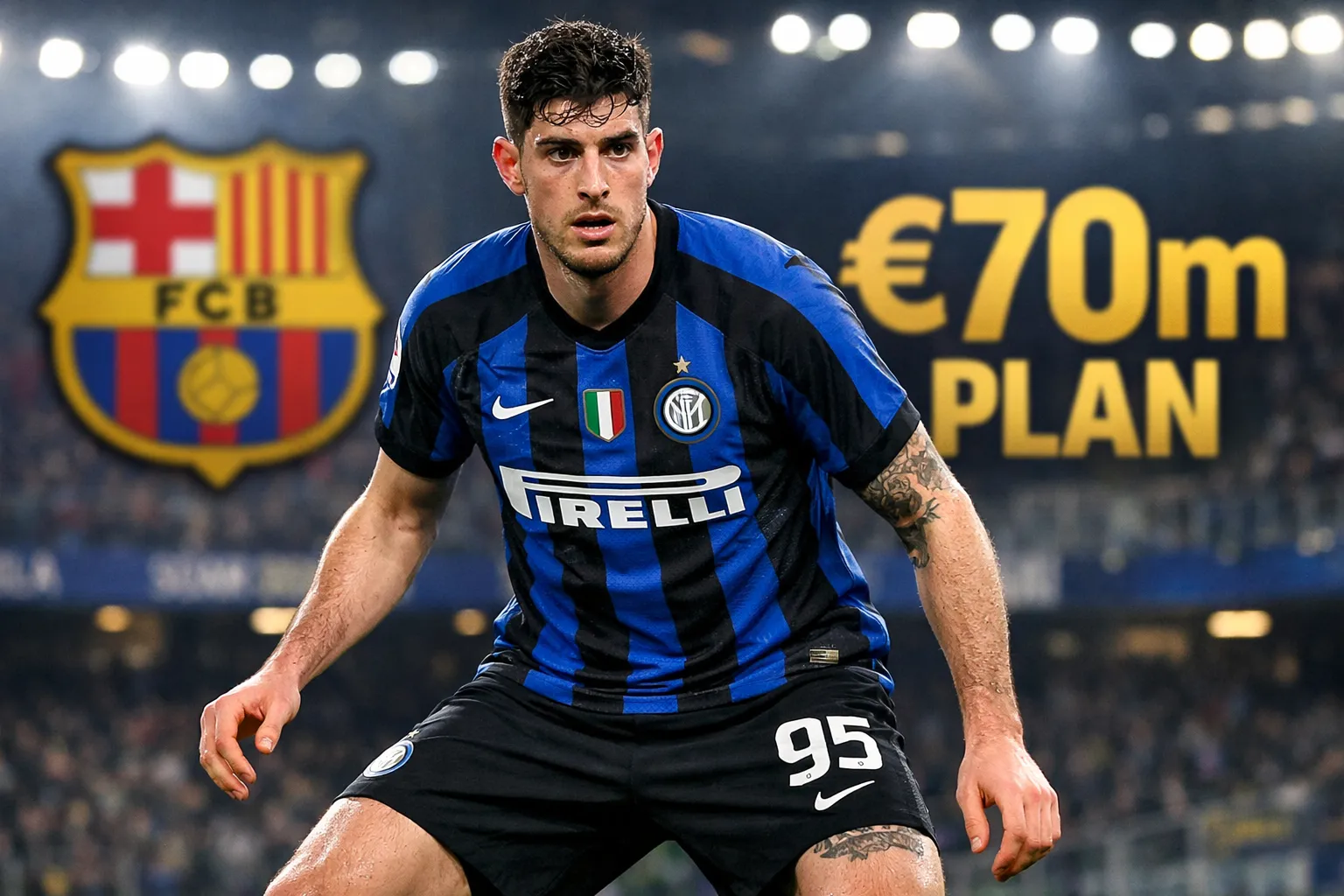
Alessandro Bastoni transfer: Barcelona’s €70m plan
Barcelona transfer news: the Alessandro Bastoni transfer tops the list, but Inter want €70m and Financial Fair Play issues may force Plan B options.
Barcelona transfer news: the Alessandro Bastoni transfer tops the list, but Inter want €70m and Financial Fair Play issues may force Plan B options.
Barcelona’s summer planning has a familiar soundtrack: ambition, urgency, and the hard thud of Financial Fair Play issues landing on every conversation. Yet the club’s defensive priorities are unmistakable, with the Alessandro Bastoni transfer emerging as the headline chase for next season. Reports suggest Barcelona have already tested the waters on the player’s appetite for a move, and the idea of Bastoni Camp Nou is gaining traction. Inter Milan, however, are not in the mood to negotiate cheaply.
Barcelona transfer news coming out of the club paints a clear picture: the next squad refresh starts at the back, not up front. The recruitment team sees a left-sided centre-back as the most strategic upgrade, especially one comfortable defending space and building play under pressure. That is why the Alessandro Bastoni transfer has been elevated from “interesting” to “priority,” with internal conversations treating him as the standard-setter for the project. The club’s sporting logic is coherent even if the finances are not.
What makes the Alessandro Bastoni transfer so attractive is that it solves multiple problems at once for Barcelona’s evolving structure. Bastoni is a true Inter Milan defender in the modern sense, aggressive in duels but also calm when stepping into midfield to progress the ball. Barcelona want a defender who can widen the pitch, break lines, and still recover quickly when the press is beaten. In their eyes, a single elite signing can stabilise the entire defensive ecosystem.
In Barcelona’s preferred build-up, the left centre-back is often the first playmaker, not merely a safety valve. The Alessandro Bastoni transfer appeals because he carries the ball with authority, hits diagonal passes early, and can disguise his intentions when opponents jump to press. He also understands when to slow the tempo, letting midfielders reset their angles rather than forcing risky vertical balls. That blend of bravery and discretion is exactly what Barcelona have lacked in key European nights.
There is also symbolism in making an elite defender the marquee move, and Barcelona know it. For years, the club’s biggest outlays have been associated with goals, not prevention, yet recent seasons have exposed how thin the margins are when the back line wobbles. By pushing the Alessandro Bastoni transfer to the top of the agenda, Barcelona are effectively telling supporters that control starts with structure. If Bastoni Camp Nou happens, it would feel like a philosophical shift as much as a tactical one.
Inter’s stance is straightforward and unapologetic: their key pieces are not on the market, and that includes Bastoni. The club’s valuation around €70 million is not a negotiating trick; it reflects age, pedigree, contract leverage, and the scarcity of elite left-footed centre-backs. From Inter’s perspective, the Alessandro Bastoni transfer would only be discussed if Barcelona arrive with an offer that changes their planning. Anything less is viewed as an invitation to waste time.
Inter also have sporting reasons to resist, and they are arguably stronger than the financial ones. Bastoni is central to their defensive identity, comfortable in a back three and capable of morphing into a back four without losing his bearings. He gives them progression from deep and the ability to defend wide channels when wing-backs are caught high. Selling an Inter Milan defender of that influence would force a risky rebuild, and Inter would demand a premium for the inconvenience.
Inter’s negotiating posture is strengthened by the simple fact that they do not need to sell Bastoni to survive. Even in an era where Italian clubs often trade to balance books, Inter can point to the sporting cost of replacing him and the market inflation for defenders in their mid-twenties. That is why the Alessandro Bastoni transfer is being framed as a “make us move” deal, not a “let’s talk” deal. Barcelona must persuade Inter, not merely ask.
The reported €70 million figure is also a message, aimed as much at other suitors as at Barcelona. Inter are signalling that Bastoni is in the bracket of defenders who reshape teams, not rotational pieces who can be prised away with clever add-ons. For Barcelona, that means the Alessandro Bastoni transfer cannot be built on optimism alone; it needs credible funding and a structure Inter respect. Otherwise, the conversation ends before it truly begins.
Barcelona’s challenge is not scouting, persuasion, or even football logic; it is arithmetic. Financial Fair Play issues continue to shape every decision, and the club’s room to manoeuvre is tied to sales, wage control, and the timing of revenue recognition. That is why negotiations for the Alessandro Bastoni transfer are anticipated rather than active, with groundwork being laid while the club waits for clearer budget signals. Barcelona can want Bastoni Camp Nou, but wanting is not spending.
Even if Barcelona can assemble a headline fee, the total package matters under modern regulation. Wages, agent commissions, signing bonuses, and amortisation schedules all count, and a €70 million player quickly becomes a much larger commitment over the contract term. The Alessandro Bastoni transfer therefore hinges on Barcelona designing a deal that fits the rulebook as well as Inter’s expectations. It is a delicate balancing act, made harder by the club’s need to keep the squad competitive in multiple competitions.
That is why Barcelona’s reported move to gauge Bastoni’s interest makes practical sense before any formal bid. If the player is open to the idea, Barcelona can justify the internal effort of building a compliant financial plan and exploring creative structures. If he is not, the Alessandro Bastoni transfer becomes a costly distraction from other Barcelona defensive targets. In a constrained market, time is a currency, and Barcelona cannot afford to spend it on a mirage.
If Barcelona do progress, the structure will likely be the battleground: instalments, performance add-ons, and potentially player exchanges to reduce immediate cash outlay. Inter may be skeptical of complex proposals, but even they understand the modern transfer economy often rewards flexibility. For Barcelona, the Alessandro Bastoni transfer might only be possible if the first-year cost is controlled and the accounting works cleanly. Financial Fair Play issues do not kill dreams; they force them to be engineered.
The most interesting phase of the Alessandro Bastoni transfer may not be the bidding war, but the quiet positioning that comes before it. Barcelona want to know whether Bastoni is intrigued by the sporting pitch: a leading role, a huge stage, and the chance to be the defensive cornerstone of a new cycle. Inter, meanwhile, will want reassurance that their dressing room remains stable, because uncertainty can ripple through a squad. The player’s voice, even when muted, shapes the temperature of every meeting.
Timing will matter because Barcelona’s summer is likely to be defined by dominoes. A sale or two could unlock spending power, while delays could push the club into late-window improvisation. Inter will also monitor their own targets and the broader market, because selling an Inter Milan defender like Bastoni requires a replacement plan that is both affordable and trustworthy. The Alessandro Bastoni transfer therefore sits at the intersection of two clubs’ calendars, and neither wants to blink first.
Barcelona’s strongest argument may be the sporting project rather than the cheque. The club can offer a clear pathway to being the starting left centre-back, a system built around ball dominance, and a brand that still carries enormous pull among elite players. The idea of Bastoni Camp Nou is not just about aesthetics; it is about role definition and status. If Bastoni believes he can become the face of Barcelona’s defence, the Alessandro Bastoni transfer gains momentum.
Inter’s counterpitch is equally compelling because it is rooted in reality rather than romance. Bastoni is already a leader in a structure that maximises his strengths, surrounded by teammates who understand his movements and cover his risks. Inter can promise continuity, trophies, and a tactical home that does not require adaptation. That is why the Alessandro Bastoni transfer will not be decided by one phone call; it will be a tug-of-war between comfort and challenge, between staying central and becoming iconic elsewhere.
Barcelona are not naïve about how difficult the Alessandro Bastoni transfer could become, so the scouting department has kept alternative routes open. The club’s shortlist reportedly includes Tottenham’s Micky van de Ven and Borussia Dortmund’s Nico Schlotterbeck, two defenders with the athletic and technical profile Barcelona admire. These names are not mere media garnish; they are functional contingency plans if Inter refuse to engage or if Financial Fair Play issues tighten further. In modern windows, Plan B is often Plan A in disguise.
Still, it is telling that Barcelona continue to circle back to Bastoni as the preferred option. Alternatives might be more attainable on paper, but Barcelona believe Bastoni offers the rare blend of elite distribution, defensive intelligence, and big-game temperament. That is why Barcelona transfer news keeps returning to the Alessandro Bastoni transfer as the central storyline, even while other dossiers are updated. The club is effectively preparing multiple doors, but it has already chosen the room it wants to enter.
Van de Ven appeals because his speed changes the geometry of a back line, allowing teams to press higher with less fear of being exposed. For Barcelona, that recovery pace could be transformative in transition-heavy matches where one mistake becomes a sprint duel. The complication is that Tottenham rarely sell cheaply, and Premier League pricing can be as brutal as Inter’s €70 million stance. If the Alessandro Bastoni transfer stalls, Van de Ven becomes a logical pivot, but not necessarily a bargain.
Schlotterbeck offers a different flavour: aggressive stepping into midfield, ambitious passing, and the confidence to defend on the front foot. Barcelona like those traits because they align with a proactive identity, but they also come with volatility if the team’s rest defence is not perfectly organised. Borussia Dortmund’s negotiating position can be flexible depending on their own squad plans, which may make him more accessible than some options. If the Alessandro Bastoni transfer becomes impossible, Schlotterbeck fits the “Barcelona defensive targets” template with fewer financial gymnastics.
If the Alessandro Bastoni transfer is completed, Barcelona would not just be buying a defender; they would be buying a new reference point. Bastoni’s presence would encourage the team to build more confidently from the left, create cleaner angles into midfield, and sustain pressure after losing the ball. He would also change how opponents press Barcelona, because a defender who can break lines forces attackers to choose between chasing and protecting space. Bastoni Camp Nou would be a tactical event, not merely a transfer headline.
But with that comes pressure, and Barcelona understand that the biggest signings carry the loudest expectations. A €70 million Inter Milan defender arriving under Financial Fair Play issues would be judged immediately, sometimes unfairly, through the lens of cost and symbolism. Every mistimed tackle becomes a talking point, every stray pass a clip on social media. The Alessandro Bastoni transfer would therefore demand not only quality but emotional resilience, because the Camp Nou spotlight can be as sharp as any striker’s studs.
Barcelona’s left side has often been a mix of improvisation and compromise, with roles shifting depending on injuries and form. Bastoni could stabilise that corridor by offering reliable progression and a defender who is comfortable defending wide when the full-back goes. His ability to step out with the ball would also free a midfielder to occupy higher zones, improving spacing in the final third. That is the hidden value of the Alessandro Bastoni transfer: it upgrades multiple phases with one profile.
The flip side is strategic risk, because transfer windows punish hesitation. If Barcelona invest too much time in the Alessandro Bastoni transfer and Inter remain unmoved, the club could find alternatives priced up or already taken. That is why parallel work on Van de Ven and Schlotterbeck is essential, not optional, even if Bastoni remains the dream. Barcelona transfer news may focus on the glamour name, but sporting departments win windows by protecting themselves from dead ends. The smartest clubs chase stars while keeping escape routes open.
For now, the Alessandro Bastoni transfer sits in that tantalising space between credible pursuit and complicated reality, with Barcelona pushing the narrative forward and Inter holding the line. The next steps depend on money, timing, and whether the player’s interest becomes more than a feeler. If Barcelona can solve their Financial Fair Play issues and present a proposal Inter respect, Bastoni Camp Nou could become the summer’s defining defensive story. If not, Van de Ven or Schlotterbeck may end up being the pragmatic answer to an ambitious question.

Julian Mercer is a lifelong student of the game whose passion for football was sparked at an early age, after stepping onto the grass of Camp Nou as a six-year-old — a moment that left a lasting impression and set him on a permanent path into the sport. Since then, football has been both his lens on the world and his favourite language. Blending traditional fandom with a deep interest in tactics, squad building, and long-term team development, Julian has spent decades analysing the game from every angle. His fascination with football strategy was further shaped through years of immersive play in Football Manager, a series he has followed since the mid-1990s, developing a sharp eye for patterns, player profiles, and the fine margins that define success. At My World Of Football, Julian focuses on the stories beneath the surface — from tactical evolutions and managerial philosophies to the narratives that connect clubs, players, and supporters across generations. His writing aims to balance insight with accessibility, always grounded in a genuine love for the game.
Continue reading more football news