Myworldoffootball
Hans Cornelis Sporting Charleroi: Sacking After Slide
Hans Cornelis Sporting Charleroi ends after Westerlo defeat. From early revival to eight losses in nine, Charleroi act amid Jupiler Pro League fears.
Hans Cornelis Sporting Charleroi ends after Westerlo defeat. From early revival to eight losses in nine, Charleroi act amid Jupiler Pro League fears.
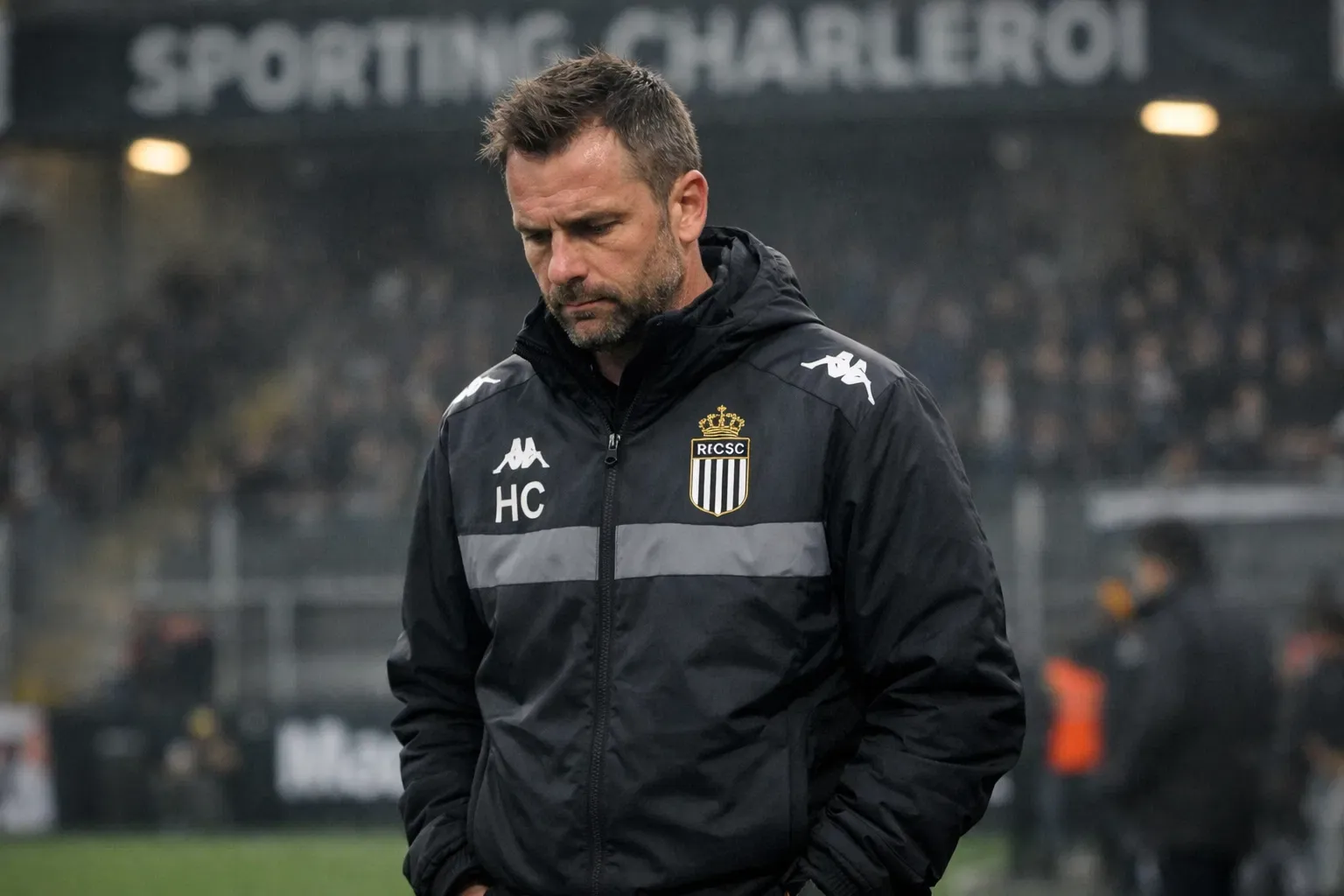
Sporting Charleroi pulled the plug on Hans Cornelis’s reign on April 7, 2026, and the timing says everything about a club suddenly gripped by anxiety. The Westerlo defeat that night didn’t just sting; it felt like the latest chapter in a collapse the board could no longer spin. Hans Cornelis Sporting Charleroi began as a brisk, hopeful reset in December, but it ended in familiar Belgian football turmoil. Now the questions turn from the coach to the people who hired him, backed him, and watched the slide.
The immediate trigger was clear: the Westerlo defeat that sealed Hans Cornelis Sporting Charleroi as an experiment gone sour. Charleroi looked short of ideas, slower to second balls, and strangely passive when the match demanded edge. In the stands, the mood shifted from frustration to resignation, the kind that tells you supporters already sense the decision before it’s announced. When a club starts losing its “fight” identity, a coach becomes the easiest lever to pull.
In Sporting Charleroi news, the language around the dismissal was blunt, because the numbers were impossible to soften. One win in seven matches is bad; eight losses in nine games is catastrophic by any Jupiler Pro League standard. The board framed it as a necessary reset, yet it also read like a last-ditch attempt to stop the table from swallowing them. The Cornelis sacked headline arrived quickly, but the crisis had been building for weeks.
Charleroi didn’t just lose to Westerlo; they lost the plot in the spaces between their lines. The shape that had once looked compact under Hans Cornelis Sporting Charleroi became stretched, with midfield runners arriving late and defenders asked to defend too much grass. Westerlo were comfortable playing through pressure that never fully arrived, and the home side’s transitions looked labored. By the final whistle, it felt less like a single bad night and more like a system that had stopped working.
Belgian clubs often treat football coaching changes as a quick fix, but the best boards know it’s a gamble, not a cure. With Hans Cornelis Sporting Charleroi, the hierarchy clearly decided the dressing room needed a jolt, even if it meant admitting the winter appointment had run out of runway. The danger is that a sacking can also distract from deeper issues, like recruitment balance and leadership clarity. Charleroi’s management chose the shock button, because the alternative was drifting into danger quietly.
The story starts with disruption, when Rik De Mil left for AA Gent and Charleroi scrambled to protect their season. Hans Cornelis Sporting Charleroi was presented as a coach with ideas, energy, and the ability to build quick cohesion. The early messaging leaned on “fresh methods” and a renewed hunger, and for a time it landed with supporters who wanted change without chaos. December appointments can be risky, but the first weeks suggested the club had timed it well.
It helped that Cornelis spoke in practical football terms rather than grand promises, a tone that tends to play well in a working-class stadium. Training sessions were described as sharper, more intense, and more specific in the final third, and players appeared to buy in quickly. Sporting Charleroi news outlets highlighted the new staff’s attention to detail, from pressing triggers to set-piece routines. In those early days, Hans Cornelis Sporting Charleroi looked like the kind of mid-season switch that actually lifts a squad.
What changed first was the defensive spacing, which suddenly looked less panicked and more coordinated. Hans Cornelis Sporting Charleroi tightened the distances between the midfield and back line, reducing the chaotic end-to-end stretches that had hurt them earlier. The pressing wasn’t constant, but it was purposeful, with clear cues for when to jump and when to hold. That structure gave players the confidence to attack with more bodies, because they trusted the safety net behind them.
Replacing a coach like Rik De Mil is never just tactical; it is emotional and political, because players often have loyalties that don’t vanish overnight. Hans Cornelis Sporting Charleroi had to win over a room that had just been told to move on, and he did it initially by simplifying responsibilities. Yet De Mil’s exit to AA Gent also raised expectations, because it implied Charleroi had been doing something right. In that context, Cornelis wasn’t only chasing points; he was chasing legitimacy.
The early signature moment was the win against Anderlecht, a result that felt bigger than three points. Charleroi played with a bite that had been missing, and the crowd responded like it was seeing its team again. Hans Cornelis Sporting Charleroi looked brave without being reckless, pressing at the right moments and defending their box with conviction. In a league where confidence can swing quickly, that night acted like a battery charge for everyone around the club.
Then came the cup upset over Club Brugge, the kind of occasion that can define a short tenure. It wasn’t just that Charleroi won; it was the way they managed the rhythm, resisting Brugge’s waves and striking with belief when openings appeared. Sporting Charleroi news celebrated the tactical discipline, and Cornelis’s reputation rose with every replayed highlight. At that stage, Hans Cornelis Sporting Charleroi seemed to be building a narrative of resilience and clever underdog planning.
Against elite opponents, Charleroi found clarity: defend compactly, break decisively, and treat every duel as a statement. Hans Cornelis Sporting Charleroi benefited from the simplicity of knockout and big-game psychology, where concentration is naturally higher. The squad showed it could suffer without folding, and that it had enough quality to punish mistakes. Those wins suggested the ceiling was real, and they made the later collapse even more baffling to supporters.
Veterans like Jérémy Taravel became symbolic in this period, because leadership often determines whether a tactical plan survives pressure. When Charleroi were at their best, Taravel’s organization and calm helped the team keep its shape, especially when defending deep. But leadership is also tested when results turn, and the later run exposed how quickly composure can leak away. Hans Cornelis Sporting Charleroi needed on-pitch generals, yet the team increasingly looked like it was arguing with itself in real time.
The decline didn’t arrive as a single collapse; it crept in through small failures that kept repeating. Charleroi began conceding first more often, which changed the emotional texture of matches and forced riskier decisions earlier. Hans Cornelis Sporting Charleroi also seemed to lose the sharpness in transition that had fueled the Anderlecht and Brugge highs. When a team stops believing it can score the next goal, every opponent starts looking more dangerous than they actually are.
Eight losses from nine games is the kind of sequence that kills not only a coach, but also a club’s sense of direction. The margins in the Jupiler Pro League can be unforgiving, and Charleroi’s slide down the standings turned each week into a referendum on the bench. Sporting Charleroi news increasingly focused on body language—hands on hips, late tackles, arguments over assignments—because tactics can’t explain everything. By the time the Cornelis sacked decision landed, many fans felt it had been delayed, not rushed.
Opponents began playing around Charleroi’s pressure, and the pressing triggers that once looked coordinated became half-steps and hesitations. Hans Cornelis Sporting Charleroi often found itself caught between two ideas: press high and risk space behind, or sit deeper and surrender territory. In attack, the chance creation dried up, with too many moves ending in hopeful deliveries rather than designed combinations. That combination—uncertain pressure and blunt attacking tools—invites long losing runs.
No coach can fully escape the psychological drag of a shrinking points cushion, because fear changes decision-making. Players clear balls they would normally control, midfielders stop turning under pressure, and forwards snatch at chances because they feel the clock ticking. Hans Cornelis Sporting Charleroi also had to manage the wear-and-tear of a demanding schedule, where knocks and fatigue quietly reduce intensity. When confidence dips, even a decent performance can unravel after one bad moment, and Charleroi lived that scenario repeatedly.
Once the coach goes, the spotlight swivels to recruitment and leadership, and Charleroi’s hierarchy will feel that heat. Club management decisions are rarely judged in isolation; they are judged by the sequence, and this sequence reads like reactive steering. Hans Cornelis Sporting Charleroi was supposed to stabilize the season after De Mil’s exit, but stability never arrived for long enough to become an identity. The board’s challenge now is to convince supporters that the next appointment is strategy, not panic.
There is also the question of squad construction, because coaching changes can only do so much if the roster lacks balance. If you don’t have enough ball progression from midfield, you end up defending too much and asking your back line to be perfect. If you lack speed in wide areas, counters become slower and easier to stop, especially against organized Jupiler Pro League sides. Sporting Charleroi news has already begun asking whether Cornelis was backed with the right profiles, or simply asked to improvise with mismatched pieces.
The Cornelis sacked announcement may calm the immediate anger, but it can also create uncertainty if the club’s messaging feels hollow. Players listen closely to how a club talks about a departing coach, because it signals how they might be treated next. Hans Cornelis Sporting Charleroi ends with a sense of unfinished business, and the dressing room will need clarity fast to avoid drifting. The smartest boards pair a dismissal with a clear short-term plan, not vague promises about “new energy.”
Charleroi’s bigger fight is to avoid becoming a club that changes direction every time results wobble. In the Jupiler Pro League, the teams that consistently survive and grow tend to know what they are, even when they lose. Hans Cornelis Sporting Charleroi didn’t fail because of one idea; it failed because the club couldn’t sustain a coherent version of itself through adversity. If the next coach is chosen purely as an antidote to the last one, the cycle simply repeats with a different face.
The immediate priority is points, because league position doesn’t care about narratives or good intentions. Charleroi must find a way to stop conceding cheap goals and start collecting results that restore basic belief. Hans Cornelis Sporting Charleroi leaves behind a squad that has experienced both a surge and a slump in the same season, which can be emotionally exhausting. The next staff will need to simplify, stabilize, and rebuild trust quickly, especially if the fixture list offers little mercy.
Yet the longer-term question is whether the club uses this moment to modernize its decision-making. The best-run sides treat coaching as one part of a wider football operation, where recruitment, performance, and analytics align with a defined style. Sporting Charleroi news will track whether the board doubles down on quick fixes or invests in a clearer sporting project. If this becomes another stop-start chapter, the Westerlo defeat will be remembered not only as a bad night, but as a warning that went unheeded.
An interim coach’s job is rarely to revolutionize; it is to reduce chaos and buy time. That means tightening set-piece defending, narrowing the gaps between lines, and making selection decisions that reward form and effort. Hans Cornelis Sporting Charleroi showed earlier that the group can respond to clear instructions, so the raw material for a bounce still exists. But unity must be rebuilt, because a team on an eight-loss run often fractures into cliques of blame and self-protection.
Supporters don’t demand perfection, but they demand honesty and a sense of fight, especially at a club like Charleroi. After the Cornelis sacked decision, fans will watch for visible signs: players sprinting back, duels contested, and a plan that makes sense even when it fails. Hans Cornelis Sporting Charleroi will be debated for months, but the club can shift the conversation by setting transparent targets and explaining its football logic. If management hides behind clichés, the pressure will simply move upstairs and stay there.
In the end, Hans Cornelis Sporting Charleroi will be remembered as a tenure of extremes: early adrenaline, famous nights, and then a plunge that became impossible to defend. The Westerlo defeat merely provided the clean headline, while the deeper story is a club struggling to hold a steady course in a league that punishes hesitation. Charleroi now faces the hardest part—proving this wasn’t just another spin of the coaching carousel. If they get the next call wrong, the table will deliver consequences faster than any press release can.

Julian Mercer is a lifelong student of the game whose passion for football was sparked at an early age, after stepping onto the grass of Camp Nou as a six-year-old — a moment that left a lasting impression and set him on a permanent path into the sport. Since then, football has been both his lens on the world and his favourite language. Blending traditional fandom with a deep interest in tactics, squad building, and long-term team development, Julian has spent decades analysing the game from every angle. His fascination with football strategy was further shaped through years of immersive play in Football Manager, a series he has followed since the mid-1990s, developing a sharp eye for patterns, player profiles, and the fine margins that define success. At My World Of Football, Julian focuses on the stories beneath the surface — from tactical evolutions and managerial philosophies to the narratives that connect clubs, players, and supporters across generations. His writing aims to balance insight with accessibility, always grounded in a genuine love for the game.
Continue reading more football news