Myworldoffootball
Lamine Yamal World Cup: Spain’s New Superstar
From Euro 2024 breakout to Barcelona titles and Ballon d’Or runner-up, Lamine Yamal World Cup hopes grow as Spain builds a team-first plan.
From Euro 2024 breakout to Barcelona titles and Ballon d’Or runner-up, Lamine Yamal World Cup hopes grow as Spain builds a team-first plan.
Euro 2024 didn’t just introduce a new star; it accelerated a career that already felt inevitable. Lamine Yamal, still only 16 during the tournament, played with the calm of a veteran and the daring of a street footballer, turning tight moments into highlights and pressure into fuel. Spain’s flawless group stage raised the bar for everyone, but it also framed the conversation around one question: what does the Lamine Yamal World Cup story look like when the stakes rise again?
Spain’s group campaign at Euro 2024 was the kind of statement that changes expectations overnight. Croatia, Italy, and Albania were handled with a control that felt old-school Spanish, yet sharper and more vertical than recent versions. The most telling detail was the clean sheet, a defensive backbone that allowed the forwards to play with freedom. In that structure, Lamine Yamal World Cup chatter began early because he looked like a difference-maker, not a passenger.
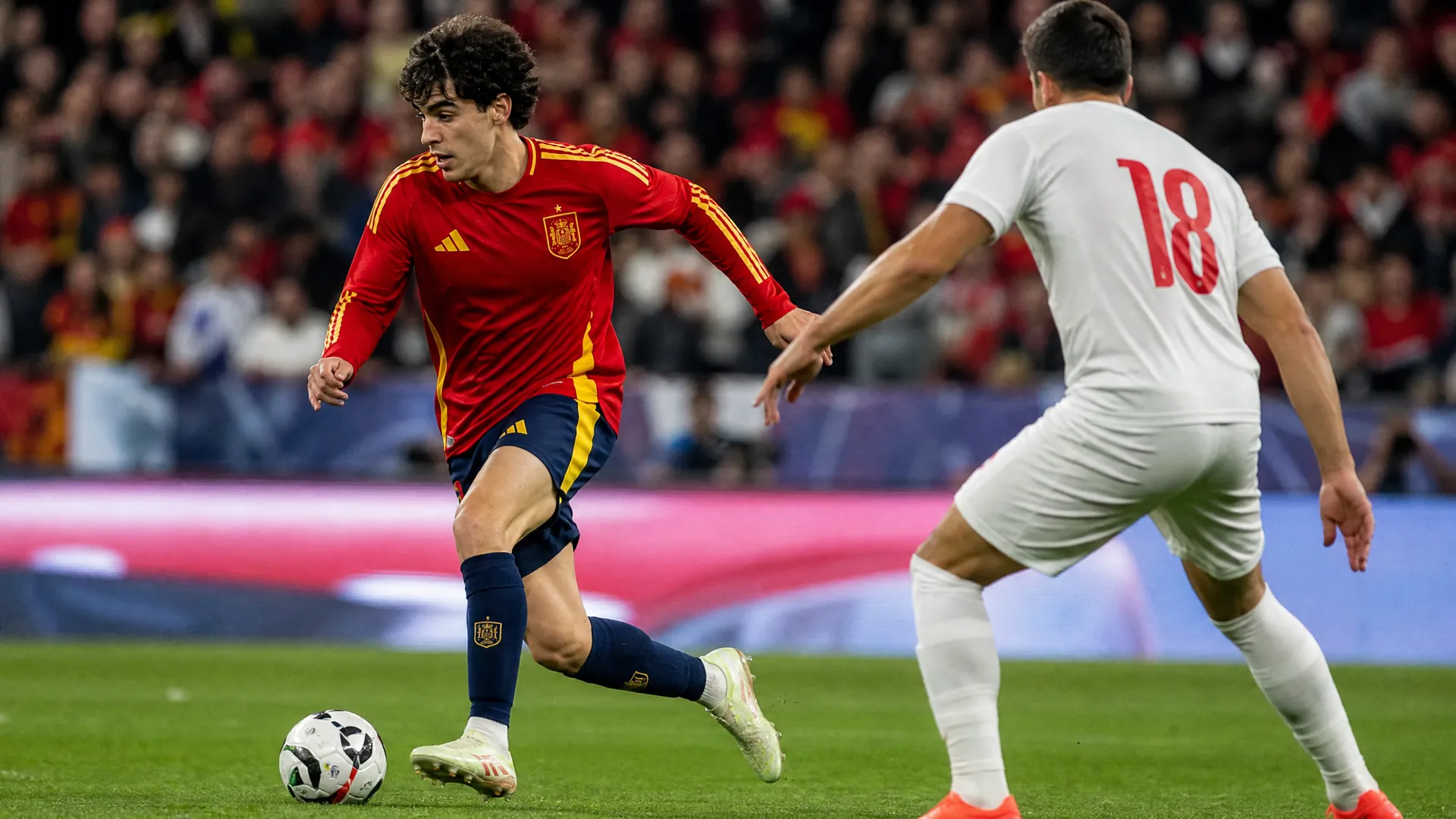
What made Spain’s run feel sustainable was how many players carried responsibility without needing constant rescue. The tempo in midfield, the aggression in the press, and the discipline between the lines gave Spain a platform to rotate and still dominate. Even when opponents tried to crowd the wings, Spain’s spacing created one-on-ones that suited their wide players. That’s where the Lamine Yamal World Cup narrative gained momentum, because he kept winning those duels with startling ease.
There’s a difference between giving a teenager minutes and giving him the keys, and Spain edged toward the second option. Yamal’s decision-making was the giveaway: he didn’t just dribble for applause, he dribbled to move defenders and open lanes. His final ball came early, often before the full-back could set his feet, and that timing is rare in young football talent. It’s the kind of trait that makes the Lamine Yamal World Cup projection feel less like hype and more like planning.
Spain’s defensive record mattered because it reduced the emotional temperature of matches, giving creators room to take chances. When you’re not chasing, you can probe, recycle, and wait for the moment to strike, which is ideal for a winger who thrives on reading body shape. Yamal benefited from that stability, but he also contributed by working back and pressing with intent. Those details are why the Lamine Yamal World Cup conversation now includes maturity, not just talent.
Mikel Merino’s praise landed because it didn’t sound like the usual teammate politeness. He spoke about Yamal as someone who absorbs pressure and still plays with personality, the hardest balance in tournament football. Merino, now with Arsenal and long trusted by the Spain national team, understands what high-stakes nights demand from a midfielder and from the attackers ahead of him. When he frames the Lamine Yamal World Cup outlook as a collective mission, it carries weight.
Merino’s comments also hinted at something tactical: Spain’s midfielders are learning to trust the winger early, releasing the ball sooner and letting him decide the next action. That trust is earned through consistency, and Yamal’s Euro 2024 performances provided it. The relationship between a secure midfield and a fearless wide player is often what separates good teams from winners. It’s why the Lamine Yamal World Cup storyline is inseparable from how Merino and others manage games around him.
Merino’s admiration centers on choices, not tricks, because choices are what survive knockout football. Yamal’s willingness to keep the ball when needed, to draw fouls, and to reset the attack shows an understanding of rhythm. He also looks comfortable receiving under pressure with his back half-turned, which invites contact but protects possession. Those are veteran habits, and they make the Lamine Yamal World Cup expectation feel like a logical next step rather than a leap.
When a player becomes a phenomenon, the dressing room has to manage the spotlight as much as opponents do. Merino’s emphasis on teamwork isn’t a cliché; it’s a shield that keeps Yamal from carrying an unfair emotional load. Spain can celebrate his brilliance while making it clear that structure, pressing, and defensive work still define the team. If that balance holds, the Lamine Yamal World Cup journey can be ambitious without becoming suffocating.
Since the Euros, Yamal’s development has continued at Barcelona, where weekly pressure is its own form of education. Winning back-to-back La Liga titles isn’t just a medal count; it’s proof that he can perform when teams sit deep, when crowds demand invention, and when every touch is analyzed. Barcelona’s environment forces repetition of high-level decisions, and that repetition hardens a player quickly. It’s another reason the Lamine Yamal World Cup discussion now includes readiness, not only potential.
At club level, Yamal has also learned to live inside different game states, from protecting a lead to chasing a late winner. Barcelona’s possession-heavy style asks wingers to be patient, to hold width, and to attack the box at the right moment rather than constantly forcing the dribble. Those are difficult lessons for any teenager, yet he’s shown he can adapt without losing his edge. That adaptability is central to the Lamine Yamal World Cup forecast because international football demands quick tactical shifts.
La Liga defenses rarely offer open grass, especially to a winger with a growing reputation, so Yamal has had to find solutions in crowded corridors. He’s improved at using the full-back as a decoy, slipping inside to combine, then reappearing wide for the return pass. That off-ball intelligence is the quiet upgrade fans sometimes miss when watching highlights. For the Lamine Yamal World Cup ambition, those subtle movements matter as much as spectacular dribbles.
At Barcelona, the expectation is that a player creates chances every week, not just once a month in a viral clip. Yamal’s growth has been in making his actions repeatable: scanning before receiving, shaping to cross early, and recognizing when to attack the far post. Those habits turn talent into output, and output builds trust from teammates. If Spain want the Lamine Yamal World Cup plan to work, they need that same trust to transfer seamlessly onto the international stage.
Finishing as the Ballon d’Or runner-up would be astonishing at any age, but for a teenager it becomes a cultural moment as well as a sporting one. Awards can distort perception, yet they also confirm that the football world is watching closely and judging him against the elite. The danger is that every match becomes a referendum, but the upside is that he’s already learning to handle global scrutiny. That’s relevant to the Lamine Yamal World Cup narrative because the tournament amplifies everything.
What’s most intriguing is that the Ballon d’Or conversation around Yamal isn’t built solely on goals. It’s built on influence, on how he changes defensive shapes and forces opponents to tilt their coverage. Coaches plan for him, full-backs double up, and midfielders slide across, which creates space elsewhere. That gravitational pull is a superstar trait, and it’s why the Lamine Yamal World Cup expectation is now tied to how Spain exploit the space he creates for others.
When a player is compared to icons, the mind can become a battleground, especially at an age when most are still learning their craft. Yamal’s advantage is that he plays with visible joy, which often signals freedom rather than fear. Still, the challenge will be maintaining that lightness when a World Cup approaches and every opponent targets him. The healthiest version of the Lamine Yamal World Cup story is one where his personality survives the pressure intact.
Being a Ballon d’Or runner-up suggests voters saw more than highlight reels; they saw a player who impacts matches in multiple phases. Yamal’s tracking back, his ability to win fouls, and his patience in recycling possession all count in elite evaluations. He’s becoming a complete winger rather than a pure entertainer, and that’s the pathway to longevity. For Spain, a more complete Yamal makes the Lamine Yamal World Cup blueprint far more stable.
Spain’s next challenge is designing a World Cup approach that maximizes Yamal while keeping the team’s identity intact. International football punishes one-dimensional plans, and opponents will arrive with specific schemes to isolate him, foul him early, or block his left-foot angles. Spain must counter with rotations, midfield support, and overlapping runs that create doubt in the defender’s mind. If they do, the Lamine Yamal World Cup storyline becomes less about rescue missions and more about controlled superiority.
Merino’s insistence on teamwork fits perfectly here because the best way to protect a star is to ensure he’s not the only threat. Spain can use Yamal as the trigger for switches of play, dragging coverage to one side and attacking the weak side with speed. They can also vary his starting position, sometimes keeping him wide, sometimes letting him drift inside to overload midfield. Those variations will shape how far the Lamine Yamal World Cup campaign can go.
To keep Yamal dangerous, Spain can create a triangle around him: a supporting midfielder for bounce passes, a full-back for overlaps, and a central runner to threaten the box. That structure turns doubles into dilemmas, because if two defenders jump him, someone else is free. Early switches of play can also punish teams that over-tilt toward his flank. With smart mechanics, the Lamine Yamal World Cup plan becomes a system, not a solo act.
World Cups are marathons disguised as sprints, and managing a young football talent across seven games is as much medical as tactical. Spain will need to choose when to push him and when to let others carry the creative load, especially in group-stage matches that can be controlled. Protecting him from accumulated knocks is crucial because opponents will test the referee’s limits. A fresh Yamal late in the tournament is the dream scenario for the Lamine Yamal World Cup objective.
Fans are already treating the next tournament like a stage built for him, and that excitement is both a gift and a trap. Social media turns every feint into a prophecy, every quiet game into a crisis, and that noise can seep into the way people evaluate real performance. The job of experienced observers is to separate development from drama, and to explain why a player’s growth isn’t linear. That measured tone is essential when discussing the Lamine Yamal World Cup horizon.
Joe Mewis’s long experience in football journalism adds credibility to the way this story is framed, because it’s rooted in context rather than frenzy. The best reporting doesn’t just praise; it explains how systems, teammates, and timing shape a player’s output. It also remembers that tournaments are decided by margins, not marketing. With that lens, the Lamine Yamal World Cup conversation becomes richer: it’s about Spain’s collective ceiling as much as one prodigy’s rise.
Supporters sense that Spain have rediscovered a blend they’ve missed: control with genuine one-v-one threat. Yamal represents that shift, the kind of winger who can win a match even when the midfield is locked. That feeling creates anticipation that spreads beyond Spain, because neutral fans love a fearless teenager on the biggest stage. If Spain harness that energy without letting it inflate expectations, the Lamine Yamal World Cup run can feel like a celebration rather than a burden.
The smartest coverage will track how Yamal solves new problems, not just how many goals he scores. When opponents start showing him down the line, does he cross earlier, combine inside, or win set pieces? Those adaptations are the true markers of elite development. Journalists like Mewis, with years of reference points, can highlight those patterns and calm the temperature after inevitable dips. That balance will shape how the public experiences the Lamine Yamal World Cup story.
Spain’s next major tournament will test everything Euro 2024 hinted at: the defensive base, the midfield control, and the courage to let a teenager decide moments. Yamal’s rise at Barcelona, his Ballon d’Or runner-up finish, and Merino’s grounded praise all point in the same direction—this is a star growing into responsibility without losing his spark. The Lamine Yamal World Cup dream won’t be won by highlights alone, but if Spain stay team-first, they’ll give him the best stage possible.

Julian Mercer is a lifelong student of the game whose passion for football was sparked at an early age, after stepping onto the grass of Camp Nou as a six-year-old — a moment that left a lasting impression and set him on a permanent path into the sport. Since then, football has been both his lens on the world and his favourite language. Blending traditional fandom with a deep interest in tactics, squad building, and long-term team development, Julian has spent decades analysing the game from every angle. His fascination with football strategy was further shaped through years of immersive play in Football Manager, a series he has followed since the mid-1990s, developing a sharp eye for patterns, player profiles, and the fine margins that define success. At My World Of Football, Julian focuses on the stories beneath the surface — from tactical evolutions and managerial philosophies to the narratives that connect clubs, players, and supporters across generations. His writing aims to balance insight with accessibility, always grounded in a genuine love for the game.
Continue reading more football news