Myworldoffootball
Moises Caicedo Chelsea contract: deal runs to 2033
Chelsea FC news as Moises Caicedo signs a long-term contract extension to 2033, cementing his leadership, form, and growing legacy at Stamford Bridge.
Chelsea FC news as Moises Caicedo signs a long-term contract extension to 2033, cementing his leadership, form, and growing legacy at Stamford Bridge.
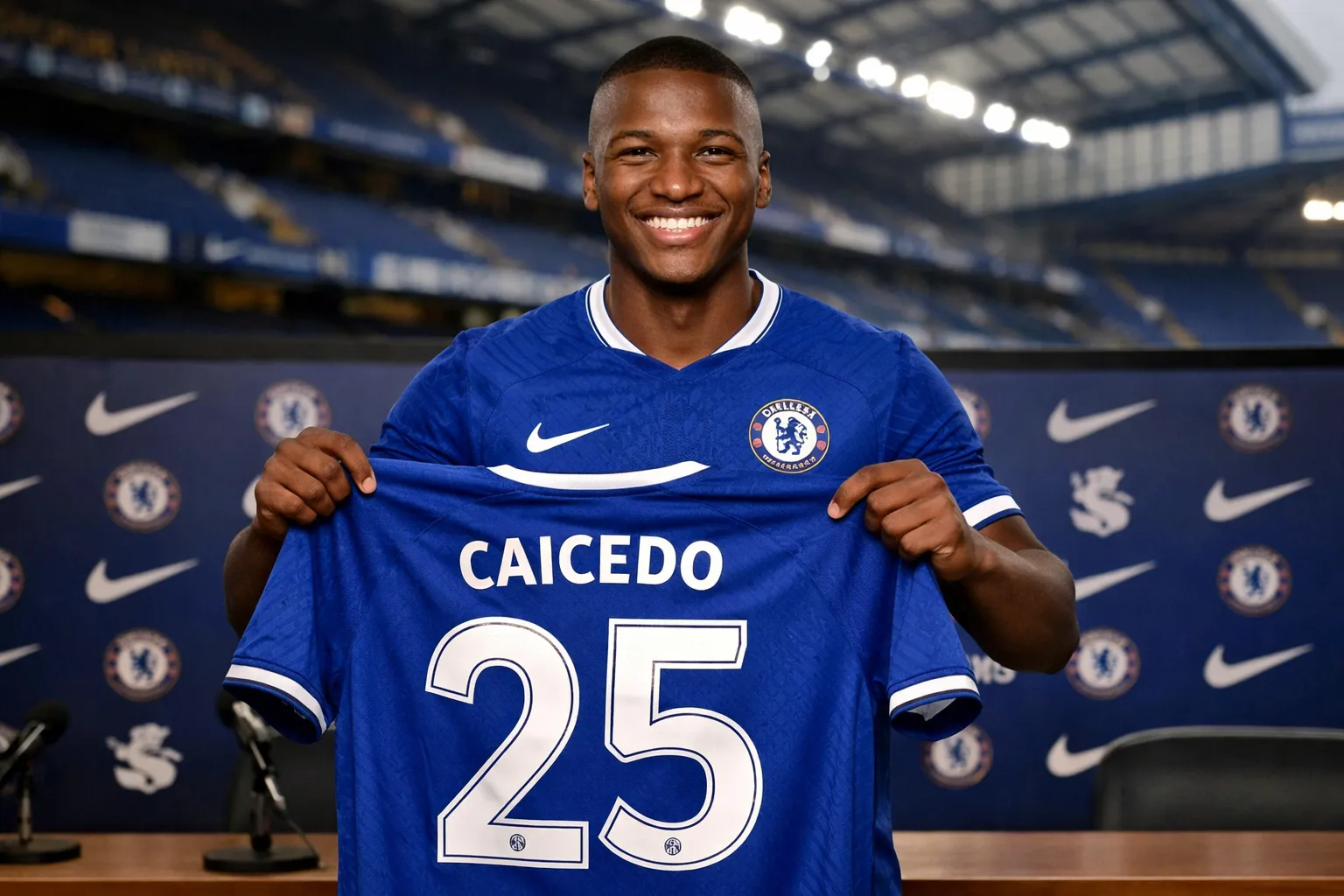
Chelsea have made their loudest statement of intent without kicking a ball: the Moises Caicedo Chelsea contract has been officially extended, tying the Ecuadorian midfielder to Stamford Bridge until 2033. In an era when elite Premier League midfielders are courted relentlessly, the club have chosen certainty, continuity, and a clear tactical spine. Caicedo has already racked up 140 appearances since arriving from Brighton, collecting silverware and trust in equal measure. For supporters, it reads like a promise that the rebuild has a centrepiece.
The headline is uncomplicated, but the message is layered: the Moises Caicedo Chelsea contract runs until 2033, a rare length even in modern football’s era of long deals. Chelsea are effectively placing their midfield identity in his hands for the better part of a decade. It also signals confidence that his best years are still to come, not already banked. In contract language, this is the club choosing a cornerstone rather than a stopgap.
For Caicedo, the Caicedo contract extension is as much about belonging as it is about security, and his own words have underlined that emotional element. He has spoken about happiness, commitment, and the desire to win more in blue, which matters in a dressing room still shaping its hierarchy. The Moises Caicedo Chelsea contract also reduces the constant transfer noise that can hover over a star midfielder. It’s a commitment that invites long-term planning, not weekly speculation.
From a Premier League perspective, the Moises Caicedo Chelsea contract is a market signal as well as a sporting one, because it narrows the pool of available elite ball-winners. Rivals cannot simply wait for an opening; Chelsea have shut the door early and firmly. The Caicedo contract extension also strengthens Chelsea’s leverage in any future conversation, even if football’s unpredictability always leaves a back door. For now, it’s a statement that the club intend to compete, not merely develop.
A Premier League midfielder’s prime can stretch long if the fundamentals are right—durability, discipline, and the ability to adapt tactically—and Caicedo has shown all three. The Moises Caicedo Chelsea contract to 2033 suggests the club believe he can evolve from elite destroyer to complete controller. It also gives managers a stable reference point when building pressing structures and rest-defence shapes. In short, it’s not just years on paper; it’s a tactical timeline.
The Brighton to Chelsea transfer was always going to be judged harshly, because big fees invite instant verdicts and small margins. Yet Caicedo has moved beyond that early noise by stacking performances, adapting to different partners, and surviving managerial tweaks. The Moises Caicedo Chelsea contract feels earned precisely because his role is no longer theoretical; it’s visible every week. When Chelsea need control, he provides it; when they need chaos contained, he provides that too.
Those 140 appearances tell a story of reliability more than glamour, the kind of availability that quietly wins you points across a season. Chelsea FC news cycles often chase the next attacking spark, but Caicedo has become the metronome behind the highlight reel. The Moises Caicedo Chelsea contract rewards that consistency, while also acknowledging the physical and mental load he carries. In a squad still learning itself, he has been one of the few constants.
At Brighton, Caicedo’s brilliance often lived in transitional moments, snapping into duels and springing the first pass forward with minimal fuss. At Chelsea, the Brighton to Chelsea transfer has demanded a wider palette: more touches under pressure, more leadership in restarts, and more involvement in set-up phases. The Moises Caicedo Chelsea contract reflects that expanded job description, because he has proved he can handle it. He’s not just a ball-winner now; he’s a reference point.
Reaching 140 appearances in such a short window is a trust exercise, both from coaches and from teammates who need his positioning to be predictable. The Moises Caicedo Chelsea contract is partly a reward for being the player others can build habits around. When full-backs push, he covers; when centre-backs split, he offers an outlet; when the press is beaten, he sprints back into frame. Those are the invisible actions that become indispensable.
Chelsea’s recent success has been defined by moments, but also by the platform that makes those moments possible. Caicedo’s contribution in competitions such as the UEFA Conference League and the FIFA Club World Cup has often been about control—killing transitions, winning second balls, and ensuring the team’s shape survives emotional swings. The Moises Caicedo Chelsea contract is therefore not just a reward for domestic form. It’s recognition that he travels well, and that his game scales to knockout football.
Big matches tend to expose midfielders, because space tightens and errors become goals. Caicedo’s growing reputation is built on reducing those errors, even when the tempo is brutal and the crowd is louder than the coach. Chelsea FC news may focus on scorers, but trophies are usually decided by who wins the middle third. The Moises Caicedo Chelsea contract is Chelsea claiming ownership of that battleground for years to come.
European ties often hinge on the “ugly minutes” after a goal, after a substitution, or after a controversial decision, when structure is most likely to break. Caicedo has repeatedly been the player who restores order, taking the simple pass, drawing a foul, or making the tackle that resets momentum. The Moises Caicedo Chelsea contract feels like a direct response to those sequences, because they are hard to teach and harder to replace. They are also the moments supporters remember later, once the trophy is lifted.
The FIFA Club World Cup can feel like a different sport: unfamiliar opponents, strange rhythms, and a sense that reputation is on the line as much as the result. Caicedo’s composure in those environments has helped Chelsea look like Chelsea, rather than tourists with a badge. The Moises Caicedo Chelsea contract is a bet that he can keep delivering that calm when the spotlight widens. For a club with global ambitions, that matters as much as any domestic storyline.
Leadership can be loud, but at Chelsea it has often been about reliability, standards, and doing the same hard thing repeatedly. Caicedo wearing the captain’s armband in crucial matches is not a marketing flourish; it’s a reflection of dressing-room gravity. The Moises Caicedo Chelsea contract aligns with that trajectory, because clubs don’t hand long deals to players they don’t see as culture carriers. He has become a reference point for intensity, especially when games drift.
What stands out is how his leadership style fits modern squads, where age hierarchies are less rigid and influence comes from performance. Caicedo leads by being available, by covering teammates, and by making the unglamorous run that keeps a press intact. The Caicedo contract extension therefore reads as an investment in character as well as talent. It suggests Chelsea see him as a future captain, not just an occasional stand-in with the armband.
Chelsea is a club where noise is constant—transfer chatter, tactical debates, social media pressure—and that environment can swallow players who need calm to function. Caicedo’s quiet authority has been his superpower, because he doesn’t chase headlines; he chases the next duel. The Moises Caicedo Chelsea contract protects that influence by keeping him central to the project. When younger players look for cues, they often follow the midfielder who never hides.
The captain’s armband is ultimately a trust exercise in crisis management, especially in matches where the plan collapses and someone has to drag the team back to basics. Caicedo has shown he can do that with positioning, tempo control, and the occasional tactical foul that stops a counter. The Moises Caicedo Chelsea contract is Chelsea formalising that trust for the long term. It’s also a sign that his influence is felt beyond his own position.
For a long time, Caicedo’s reputation was built on defensive excellence—duels, interceptions, recoveries—and that remains the foundation. But the new layer is output, and eight goals in total marks a meaningful shift in how he impacts games. A Premier League midfielder who can both protect and puncture is rare, and Chelsea have clearly noticed. The Moises Caicedo Chelsea contract is partly a reward for that evolution from specialist to complete midfielder.
His goal-scoring improvement also changes how opponents defend Chelsea, because they can’t simply allow him space at the edge of the box while tracking runners elsewhere. When Caicedo arrives late, he creates a new problem, and that helps the forwards by pulling markers into uncomfortable decisions. The Moises Caicedo Chelsea contract therefore isn’t only about keeping a destroyer; it’s about keeping a growing threat. If his shooting and timing continue to sharpen, the ceiling rises again.
Opposition analysts used to build plans around forcing Caicedo to be the one who finishes moves, assuming his value was in the build-up rather than the final action. Eight goals have started to rewrite that scouting report, because confidence changes technique and technique changes decision-making. The Moises Caicedo Chelsea contract locks in a player who is adding layers at the right age. For Chelsea, that’s the ideal development curve: stability first, then expansion.
Even with improved output, his defensive craft remains the heartbeat of his game, and it’s what allows Chelsea to play with ambition. When the front line presses, Caicedo’s reading of second balls turns pressure into sustained attacks rather than one-off sprints. The Moises Caicedo Chelsea contract is a commitment to that platform, because it underpins everything else the team wants to do. Goals are a bonus; control is the constant.
Being named Chelsea Player of the Season for 2024-25 is the kind of accolade that reflects week-to-week excellence rather than a short hot streak. It’s also a supporter-driven endorsement that his value is understood beyond tactical circles. The Moises Caicedo Chelsea contract arriving after that recognition feels like a natural next step, aligning club strategy with fan sentiment. When a midfielder wins that award, it usually means the team trusted him when nothing else worked.
Looking ahead to 2033 invites bigger questions: what does legacy look like in an age of constant churn, and how do you become synonymous with a club again? Caicedo has a chance to be that rare modern figure, a long-term anchor in a squad that will inevitably change around him. The Moises Caicedo Chelsea contract creates the runway for that story, but it also raises expectations. With time secured, the next demand is dominance.
Supporters tend to reward honesty in performance, and Caicedo’s game is built on honest work: tracking runners, contesting 50-50s, and taking responsibility when the ball is hot. Winning Chelsea Player of the Season suggests fans see him as the team’s competitive conscience, the player who keeps standards from slipping. The Moises Caicedo Chelsea contract then becomes a shared relief, because it keeps a fan favourite at the core. In a stadium that values graft, he fits.
The most interesting part of the Moises Caicedo Chelsea contract is what it enables next, because long-term certainty allows smarter recruitment and clearer tactical identity. Chelsea can now choose complementary profiles—creative eights, aggressive full-backs, or a second pivot—knowing the base is secure. It also allows coaching staff to refine automatisms around his strengths, such as pressing triggers and build-up rotations. When the anchor is stable, the rest of the ship can be redesigned with confidence.
Chelsea supporters will read the Moises Caicedo Chelsea contract as more than paperwork, because it’s a rare piece of clarity in a sport that often feels temporary. A deal to 2033 suggests the club believe he can be the midfielder who defines an era, not merely survives it, and his own comments have matched that ambition. With 140 appearances already, silverware on the shelf, and leadership growing, the next chapter is about turning consistency into dominance. If Caicedo keeps evolving, this contract could become Chelsea’s smartest long-term decision of the decade.

Julian Mercer is a lifelong student of the game whose passion for football was sparked at an early age, after stepping onto the grass of Camp Nou as a six-year-old — a moment that left a lasting impression and set him on a permanent path into the sport. Since then, football has been both his lens on the world and his favourite language. Blending traditional fandom with a deep interest in tactics, squad building, and long-term team development, Julian has spent decades analysing the game from every angle. His fascination with football strategy was further shaped through years of immersive play in Football Manager, a series he has followed since the mid-1990s, developing a sharp eye for patterns, player profiles, and the fine margins that define success. At My World Of Football, Julian focuses on the stories beneath the surface — from tactical evolutions and managerial philosophies to the narratives that connect clubs, players, and supporters across generations. His writing aims to balance insight with accessibility, always grounded in a genuine love for the game.
Continue reading more football news