Myworldoffootball
Raphael Guerreiro Bayern Munich contract ends in June
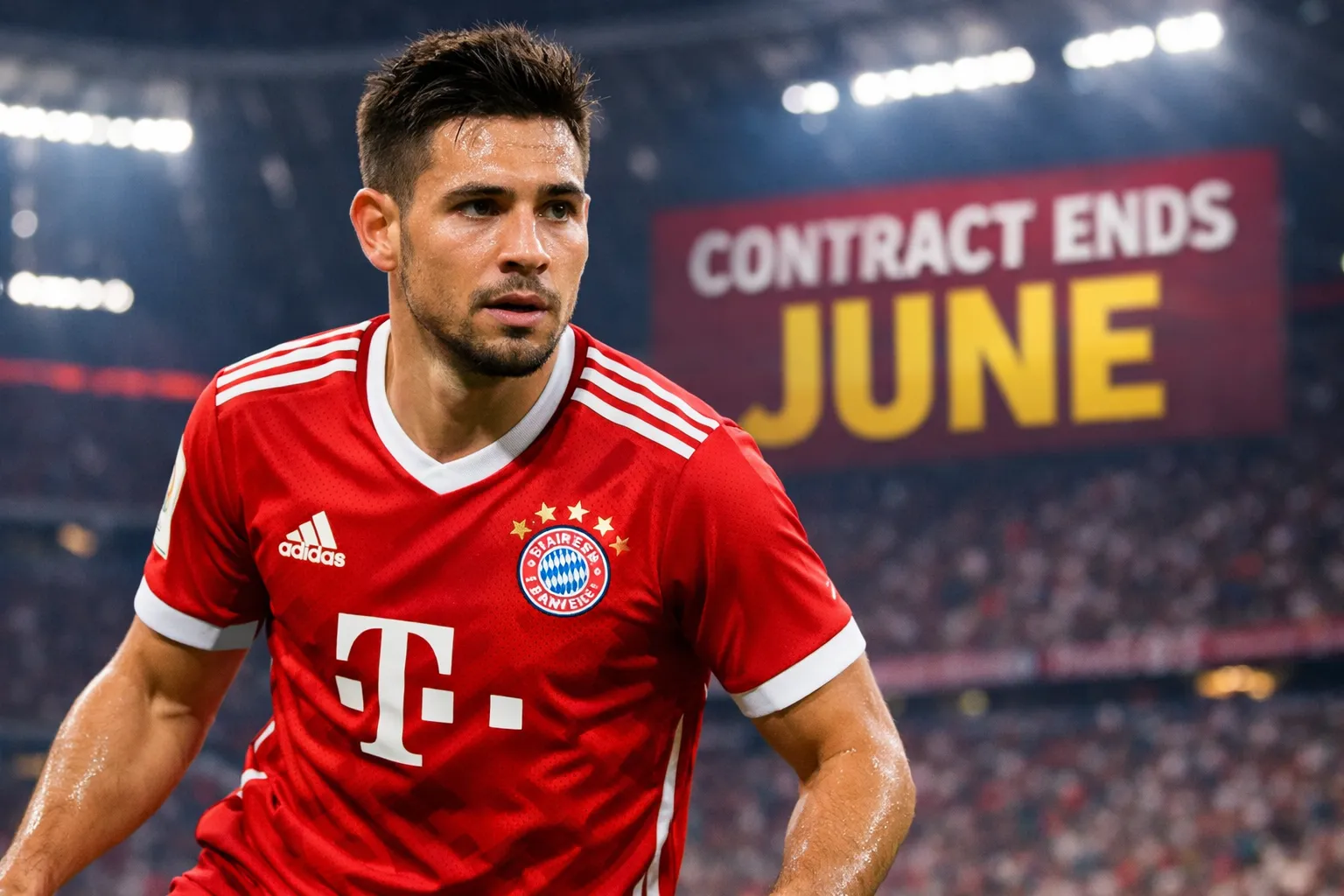
Bayern Munich confirm Raphael Guerreiro will leave in June as his contract ends, closing a three-year spell with trophies, versatility and key stats.
Bayern Munich confirm Raphael Guerreiro will leave in June as his contract ends, closing a three-year spell with trophies, versatility and key stats.
Bayern Munich have made it official: the Raphael Guerreiro Bayern Munich contract will not be renewed, and the Portuguese veteran will depart at the end of June after three busy, trophy-tinged seasons in Bavaria. For a player who arrived quietly on a free transfer from Borussia Dortmund in 2023, he leaves having become a trusted solution to multiple tactical problems. His exit lands as a notable piece of Bayern Munich news, because his value was never just minutes played, but how he made the squad function.
The club’s announcement frames the Raphael Guerreiro Bayern Munich contract situation as a clean, respectful parting rather than a messy negotiation, and that tone matters in a dressing room that has seen plenty of churn. Ending a deal in June gives Bayern clarity for squad planning, wage structure, and the summer market. It also gives Guerreiro the chance to choose his next step without a mid-season scramble. In modern squad-building, clean endings are almost as valuable as big signings.
From Bayern’s perspective, the Raphael Guerreiro Bayern Munich contract reaching its natural endpoint fits a broader recalibration under sporting leadership that wants sharper age profiles and more durable availability. Guerreiro is 32, and while his football IQ is elite, Bayern’s schedule punishes even minor physical decline. Still, this is not a “pushed out” story; it reads as a mutual recognition that the cycle is complete. That nuance is essential to understanding this Bayern Munich news update.
Sporting director Max Eberl’s praise landed on professionalism and personality, which is often code for a player who trains hard, accepts rotation, and keeps standards high when the spotlight is elsewhere. In the Raphael Guerreiro Bayern Munich contract conversation, that matters because Bayern’s dressing room is built on internal competition. Guerreiro’s willingness to play left-back one week and midfield the next reduced friction and raised tactical flexibility. Those intangibles are difficult to replace with a simple transfer fee.
When the Raphael Guerreiro Bayern Munich contract ends in June, Bayern’s recruitment priorities shift subtly, because they are losing a player who covered two or three roles with one squad slot. That can lead to either a specialist replacement at left-back or a multi-position profile who can invert into midfield. It also impacts how Bayern manage younger options, because Guerreiro’s minutes were often the bridge between development and results. In the context of Bundesliga updates, squad depth is frequently the difference in April and May.
Guerreiro arriving from Borussia Dortmund on a free transfer in 2023 carried its own storyline, because Bayern signing from a direct rival always changes how fans interpret value. Yet the move quickly looked like smart business, the kind that wins titles in the margins. The Raphael Guerreiro Bayern Munich contract was never about resale value; it was about immediate utility and experience. Bayern got a player already adapted to the Bundesliga’s tempo, refereeing style, and tactical variety.
What made the transfer work is that Guerreiro’s skill set translated instantly into Bayern’s positional play. He is comfortable receiving under pressure, can play through the half-spaces, and has the touch to connect triangles in tight areas. Even when he wasn’t a guaranteed starter, he was rarely a liability, which is crucial for a club that expects dominance. In Bayern Munich news terms, he became the definition of “plug-and-play” at elite level.
Because the Raphael Guerreiro Bayern Munich contract began without a transfer fee attached, Bayern could treat his wages as the primary investment, and that often improves the risk-reward equation. If a player contributes across multiple competitions, the “cost per minute” becomes extremely favorable. Guerreiro’s output—goals, assists, and ball progression—meant Bayern weren’t just saving money; they were buying flexibility. In a league where rivals are increasingly data-driven, such efficiency is a quiet weapon.
Moving from Borussia Dortmund to Bayern Munich always adds emotional pressure, but Guerreiro handled it with a calm that matched Eberl’s comments about character. The Raphael Guerreiro Bayern Munich contract period showed a player who didn’t chase headlines about rivalry; he chased performance standards. That approach helped him avoid becoming a symbol of the transfer, and instead become a contributor to results. For fans tracking Bundesliga updates, it’s a reminder that professionalism can neutralize narrative noise.
The best summary of Guerreiro’s three-year stint is that he gave Bayern solutions: left-back in a back four, wing-back when systems shifted, and a midfielder when the build-up needed an extra passer. The Raphael Guerreiro Bayern Munich contract era coincided with tactical experimentation, and his profile made those experiments safer. He could overlap, invert, or hold width depending on the match plan. That adaptability is why coaches kept returning to him in high-stakes moments.
His technical security was the foundation of his versatility. Guerreiro can receive on the half-turn, play progressive passes into the pocket, and combine in short spaces near the box, which is why he sometimes looked like a midfielder even when listed as a defender. Bayern’s positional game demands that kind of comfort, especially against deep blocks. As Bayern Munich players go, he was the type who improved the team’s rhythm, not just its defensive coverage.
At left-back, Guerreiro’s value was rarely about raw pace; it was about timing and angles. During the Raphael Guerreiro Bayern Munich contract run, he often chose the right moment to step inside and create a passing lane rather than sprinting to the byline every time. That subtlety helped Bayern sustain pressure and counter-press immediately after losing the ball. His calm in the final third also reduced waste, a big deal for a team that can face 70% possession games weekly.
When deployed in midfield, Guerreiro offered a different kind of control: he could circulate possession quickly and still threaten with late runs. The Raphael Guerreiro Bayern Munich contract story includes matches where his presence in central areas allowed Bayern to overload one side and free a winger on the opposite flank. That’s tactical value you don’t always see in basic stats. For fans following Bayern Munich news, those cameos often explained why he stayed important even when not starting regularly.
Numbers rarely capture a player’s full influence, but Guerreiro’s Bayern record is strong even before context: 89 appearances, 12 goals, and 8 assists. Those are excellent returns for someone used across defensive and midfield roles, and they underline how he contributed in decisive areas. In the Raphael Guerreiro Bayern Munich contract discussion, the stats matter because they show he wasn’t merely “cover.” He produced in the moments Bayern needed secondary scorers and creators.
His goal contributions also reflect the type of chances he takes: arriving late at the edge of the box, finding space at the far post, or combining quickly for a cutback finish. Bayern’s attacking structure creates those opportunities for intelligent movers, and Guerreiro consistently read them well. For Bundesliga updates watchers, it was a reminder that full-backs and hybrid midfielders can tilt games without dominating the ball. That’s part of why his departure feels significant.
Guerreiro leaves with the satisfaction of helping secure a Bundesliga title and lifting the DFL-Supercup, and those trophies are the currency Bayern ultimately measure everything by. The Raphael Guerreiro Bayern Munich contract era wasn’t defined by one iconic moment, but by reliable contributions that kept the machine running. In a title race, points often hinge on rotations during congested weeks. Having a player who can start three different roles without lowering the level is how champions survive the calendar.
If you view the Raphael Guerreiro Bayern Munich contract through a deeper lens, the key numbers are also about continuity: appearances across competitions, minutes in different positions, and availability when injuries hit. Bayern’s season arcs often include periods where they must reinvent their back line or midfield on short notice. Guerreiro’s presence reduced the need for emergency tactical compromises. That kind of “structural stability” rarely trends in highlight reels, but coaches and teammates feel it every week.
Guerreiro’s international record—65 caps for Portugal, plus involvement in Euro 2016 and the UEFA Nations League triumph—added a layer of elite experience that Bayern value in pressure moments. The Raphael Guerreiro Bayern Munich contract wasn’t just a domestic signing; it was Bayern bringing in a player accustomed to tournament football and high-stakes knockout ties. That mentality shows in small decisions: when to slow a game, when to take a tactical foul, when to keep the ball.
Portugal’s success also shaped his adaptability, because international football forces players to learn new roles quickly and execute them with minimal training time. That background translated well to Bayern’s frequent tactical tweaks. In Bayern Munich news cycles, fans often focus on star forwards, but teams win in Europe with intelligent connectors. Guerreiro’s ability to interpret space and keep passing sequences alive made him a stabilizer when matches became chaotic.
Those Portugal triumphs were built on game management as much as flair, and Guerreiro carried that into the Raphael Guerreiro Bayern Munich contract period. Bayern sometimes need to protect a narrow lead away from home or calm a stadium after conceding first, and experienced internationals help set the tempo. He understood when to recycle possession, when to draw pressure, and when to switch play to reset the opponent’s press. It’s a subtle influence that supports Bayern’s identity of control.
The Raphael Guerreiro departure also raises an intriguing question about his next club choice: he will want a platform that keeps him sharp for Portugal selection. Even if younger options push for places, a dependable, tactically flexible veteran can still be valuable in tournament squads. Bayern have given him three years of high-level training and match rhythm, and he leaves with credibility intact. For Bundesliga updates readers, it’s another example of the league serving as a springboard for international longevity.
Both sides have emphasized ending the season strongly, and that framing shapes how supporters will remember the Raphael Guerreiro Bayern Munich contract era. Bayern are a club that expects professionalism until the final whistle, and Guerreiro’s reputation suggests he will deliver exactly that. The best exits at elite clubs are the ones where the player remains fully engaged, helping in rotation and mentoring, rather than mentally checking out. That’s the tone Bayern want heading into decisive fixtures.
For Bayern, the Raphael Guerreiro departure is also a reminder that squad churn is constant, even when a player has “worked.” They must replace not only his minutes, but his ability to smooth over tactical transitions. For fans, it’s a moment to appreciate a signing that didn’t arrive with fireworks, yet produced real value. In the bigger Bayern Munich news landscape, these are the departures that quietly reshape a team’s texture more than people expect.
Replacing Guerreiro is tricky because the Raphael Guerreiro Bayern Munich contract covered multiple positions with one dependable profile. Bayern can either buy a specialist left-back and separately add a midfield connector, or target a modern hybrid who can invert and play inside. The second option is rarer and often more expensive, because that skill set is in demand across Europe. In Bundesliga updates, you’ll see Bayern’s recruitment judged not just on quality, but on whether they regain that flexibility.
When the Raphael Guerreiro Bayern Munich contract ends, his legacy will likely be defined by reliability: a player who adapted, contributed, and avoided drama. At a club where expectations can crush newcomers, he brought steadiness and technical assurance. His 89 appearances are evidence of trust earned, not gifted, and his goal involvement shows he wasn’t just filling space. Bayern Munich players come and go, but the ones remembered fondly are those who made the team easier to coach.
As Bayern and Guerreiro head toward a June goodbye, the story feels refreshingly straightforward: a successful partnership reaching a natural conclusion. The Raphael Guerreiro Bayern Munich contract chapter delivered trophies, tactical solutions, and a level of professionalism that Max Eberl clearly values in shaping the squad’s culture. For supporters, it’s a chance to enjoy the final weeks without bitterness, appreciating a player who crossed from Borussia Dortmund and still earned respect. The best farewells are the ones that keep the focus on football.

Julian Mercer is a lifelong student of the game whose passion for football was sparked at an early age, after stepping onto the grass of Camp Nou as a six-year-old — a moment that left a lasting impression and set him on a permanent path into the sport. Since then, football has been both his lens on the world and his favourite language. Blending traditional fandom with a deep interest in tactics, squad building, and long-term team development, Julian has spent decades analysing the game from every angle. His fascination with football strategy was further shaped through years of immersive play in Football Manager, a series he has followed since the mid-1990s, developing a sharp eye for patterns, player profiles, and the fine margins that define success. At My World Of Football, Julian focuses on the stories beneath the surface — from tactical evolutions and managerial philosophies to the narratives that connect clubs, players, and supporters across generations. His writing aims to balance insight with accessibility, always grounded in a genuine love for the game.
Continue reading more football news